
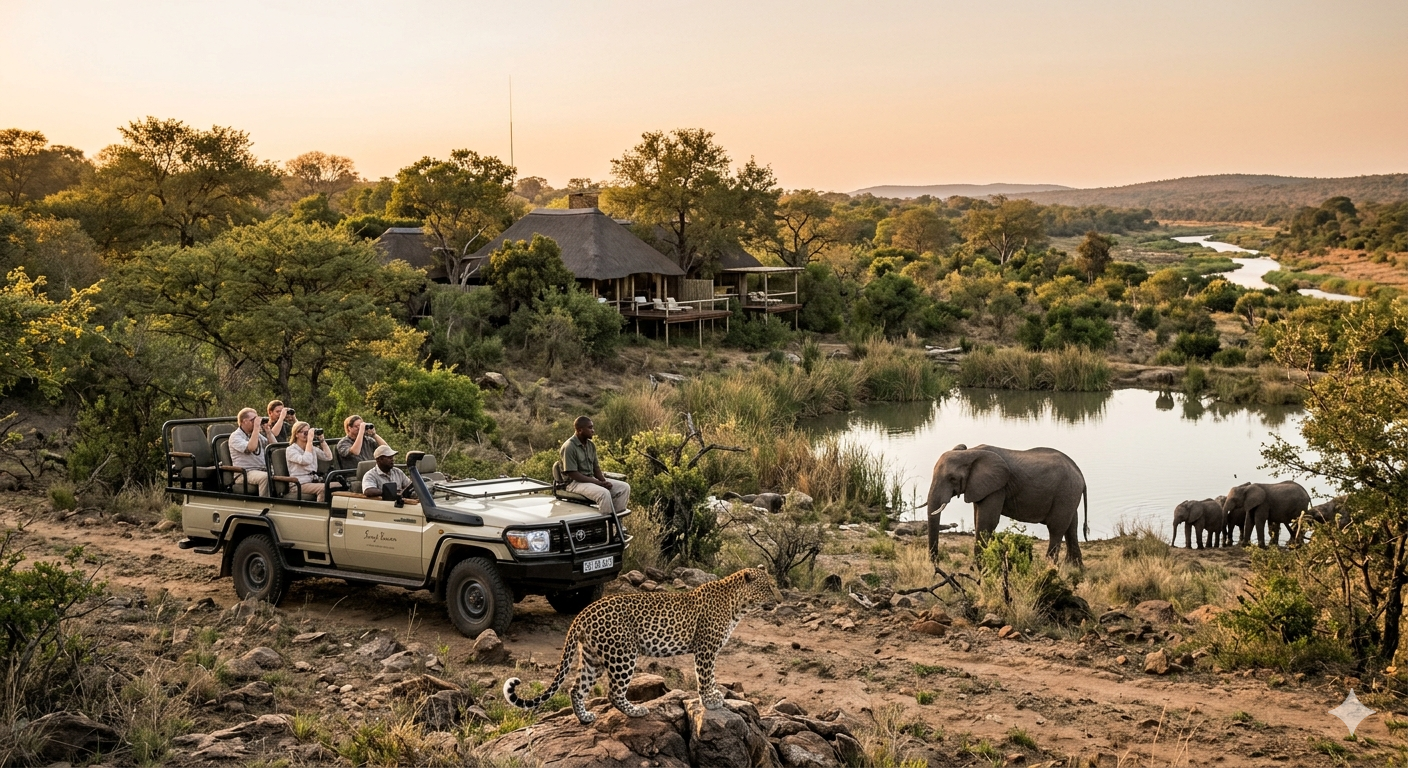
The African bushveld holds a specific kind of magic that is difficult to describe until you have stood within it. As the sun begins to dip below the horizon, painting the sky in bruised purples and burnt oranges, the air cools and the landscape transforms. In this corner of the world, specifically within the Greater Kruger ecosystem, there is one destination that stands as the pinnacle of luxury and wildlife density. An Exclusive Safari Sabi Sand experience is not merely a vacation; it is a profound immersion into one of the most prestigious wildlife sanctuaries on the planet.
Spanning over 65,000 hectares of pristine wilderness, the Sabi Sand Game Reserve shares a 50-kilometer unfenced border with the Kruger National Park. This lack of physical barriers allows wildlife to roam freely across a massive landscape, yet the Sabi Sand remains distinct. It is a collection of private reserves where the focus is on exclusivity, intimacy, and the highest standard of guiding. Here, the "Big Five" are not just present; they are residents that have become habituated to the presence of safari vehicles, offering photographers and nature lovers encounters that are often measured in feet rather than yards.
The Heritage and Heart of the Sabi Sand Game Reserve
To understand the allure of an Exclusive Safari Sabi Sand trip, one must look back at the history of this remarkable land. The reserve was formed in the 1950s by a group of pioneering landowners who shared a vision of conservation over commercial farming. Unlike many other regions that were utilized for agriculture or cattle, these families recognized the inherent value of the native flora and fauna. By dropping internal fences and managing the land as a cohesive unit, they created a sanctuary that predates many of the continent's most famous parks.
Today, the reserve is managed with a "wildlife first" philosophy. Because the land is privately owned, the rules of engagement differ significantly from public national parks. In the Sabi Sand, expert rangers and trackers are permitted to drive off-road. This is a critical distinction for anyone seeking a truly Exclusive Safari Sabi Sand experience. When a leopard is spotted deep in a thicket or a pride of lions is found lounging far from the designated tracks, your vehicle can maneuver through the bush to bring you within sight of the action. This flexibility ensures that guests spend more time observing animals and less time squinting through binoculars from a distant road.
The ecological health of the region is supported by two perennial rivers: the Sabi and the Sand. These water sources act as lifeblood for the reserve, attracting a staggering diversity of species. While the Big Five (lion, leopard, elephant, buffalo, and rhino) are the primary draw, the reserve is also home to over 300 tree species, 500 bird species, and a variety of rare animals like the African wild dog and cheetah.
Why Leopards Define the Exclusive Safari Sabi Sand
If there is one animal that has put this reserve on the global map, it is the leopard. Traditionally the most elusive of the big cats, leopards are notoriously difficult to track and observe in the wild. However, the Sabi Sand is widely considered the best place in the world for leopard sightings.
The secret lies in generations of habituation. Because these cats have grown up seeing safari vehicles since birth, they do not view them as a threat or as prey. This "neutral" relationship allows for extraordinary behaviors to be witnessed. It is not uncommon on an Exclusive Safari Sabi Sand to watch a leopard hunt, groom its cubs, or protect a kill from a hyena, all while being just a few meters away.
The Role of the Tracker-Ranger Team
The success of these sightings is not down to luck alone. It is a result of the incredible skill of the tracker-ranger teams. Most luxury lodges in the Sabi Sand employ a two-person team: a ranger who drives and provides ecological context, and a tracker who sits on a jump-seat at the front of the vehicle.
The tracker is a master of the "ancient art" of reading the bush. They look for flattened grass, broken twigs, and specific paw prints in the sand to determine where an animal has gone. This level of expertise adds a layer of intellectual depth to the safari. You aren't just looking at animals; you are learning to read the stories written in the dirt. This specialized service is a cornerstone of the Exclusive Safari Sabi Sand promise.
Luxury Lodges: Where Elegance Meets the Wild
Accommodation in the Sabi Sand is synonymous with "ultra-luxury." The lodges here are regularly featured at the top of world travel rankings, offering a blend of sophisticated design and rugged wilderness. Each lodge operates within its own private sector of the reserve, ensuring that guest numbers are kept low and the feeling of "crowding" is non-existent.
Iconic Names in the Reserve
· Singita: Known for its minimalist "ecstatically beautiful" design, Singita Ebony and Boulders lodges offer some of the most refined experiences in Africa.
· Londolozi: A family-run reserve with a deep focus on conservation and photography. Londolozi is famous for its "Leopard of Londolozi" legacy.
· Sabi Sabi: Home to the famous Earth Lodge, which is carved into the earth and offers a surreal, high-design atmosphere.
· MalaMala: One of the oldest and largest private reserves, often cited for having some of the most productive game-viewing land in the country.
An Exclusive Safari Sabi Sand stay typically includes two daily game drives: one at dawn and one in the late afternoon. Between these excursions, guests are treated to world-class dining, often served in a "boma" (an outdoor enclosure) under the stars. Many lodges also feature private plunge pools, spas, and gym facilities, allowing you to relax in complete comfort while elephants wander past your deck.
According to recent reports on Google News, 2026 is seeing a surge in "sustainable luxury," where lodges are moving toward 100% solar power and advanced water recycling systems to ensure their footprint remains as light as the leopard's step.
Planning Your Trip: Timing and Logistics
While the Sabi Sand is a year-round destination, the experience changes with the seasons.
The Dry Season (May to September)
This is generally considered the best time for wildlife viewing. As the bush thins out and water sources dry up, animals congregate around the remaining pools and rivers. The weather is cool and dry, making for comfortable morning and evening drives.
The Green Season (October to April)
This is the time of rebirth. The landscape turns a vibrant emerald green, and many animals give birth to their young. For birdwatchers, this is the peak time as migratory species arrive. While the vegetation is thicker, the photography is stunning due to the dramatic afternoon thunderstorms and lush backdrops.
| Season | Highlights | Best For |
| Winter (Dry) | High visibility, Big 5 sightings, cool weather | First-timers, Photographers |
| Summer (Wet) | Newborn animals, Birdwatching, lush scenery | Birders, Return visitors |
For those looking for the most current updates on travel requirements and local wildlife trends, the South African National Parks website offers excellent resources, even though Sabi Sand is private. Additionally, checking National Geographic for recent features on South African conservation can provide deeper insight into the species you will encounter.
Conclusion: A Journey That Stays With You
An Exclusive Safari Sabi Sand is more than just a check-box on a bucket list. It is a rare opportunity to witness the raw, unscripted drama of nature from a front-row seat, all while enjoying a level of hospitality that is world-renowned. Whether you are watching a pride of lions socialising at dusk or enjoying a quiet moment on your private deck as the bush "speaks" around you, the Sabi Sand leaves an indelible mark on your soul.
 English
Join our community to interact with posts!