
The concept of crossing a frontier has evolved far beyond the simple act of showing a passport and boarding a plane. As we navigate the mid-to-late 2020s, the landscape of global exploration has undergone a fundamental transformation, driven by technological integration, a renewed focus on mental restoration, and a deep-seated desire for ethical engagement with the planet. According to the Wikipedia definition of international tourism, this sector involves the movement of people across national borders for leisure, business, or other purposes for a period not exceeding one year. However, this clinical definition barely scratches the surface of what it means to be a traveler in 2026.
Today, the industry is not just recovering; it is reinventing itself. Travelers are no longer content with "viral" destinations that offer little more than a backdrop for a digital post. Instead, they are seeking "anti-tourism" experiences, prioritizing destinations that offer authenticity over popularity. This shift is reflected in the way we plan, the way we spend, and the way we interact with local cultures.
Is Technology the New Compass for Global Explorers?
The integration of Artificial Intelligence (AI) has moved from a novelty to a necessity in the travel planning process. Recent data suggests that the "Travel of Tomorrow" is being built on predictive algorithms that understand a traveler's intent before they even articulate it. Search queries for "help planning my trip" have surged by nearly 200 percent as travelers look to AI tools like Gemini to synthesize complex logistics into seamless itineraries.
The Rise of the "No-Think" Holiday
One of the most fascinating trends emerging in 2026 is the rise of the "no-think" holiday. While travelers once prided themselves on meticulously planning every hour of their journey, a sense of "planning fatigue" has set in. Modern explorers are increasingly happy to hand over full control to trusted tour operators or sophisticated AI planners. This allows for a level of relaxation that was previously unattainable, where the only responsibility of the traveler is to be present.
Virtual Identity and Expressive Travel
According to research highlighted by Google News regarding 2026 trends, travel has become a primary form of self-expression. In many regions, particularly across Asia and the Middle East, over 75 percent of travelers engage with travel-related livestreams. People are booking trips directly through these interactive platforms, choosing destinations that align with their personal values and aesthetic identities. This "Travel as Expression" movement ensures that every journey is a curated reflection of the traveler’s internal world.
Why Is the "New Zealand Tour Packages 2026–2027" Model the Future of Adventure?
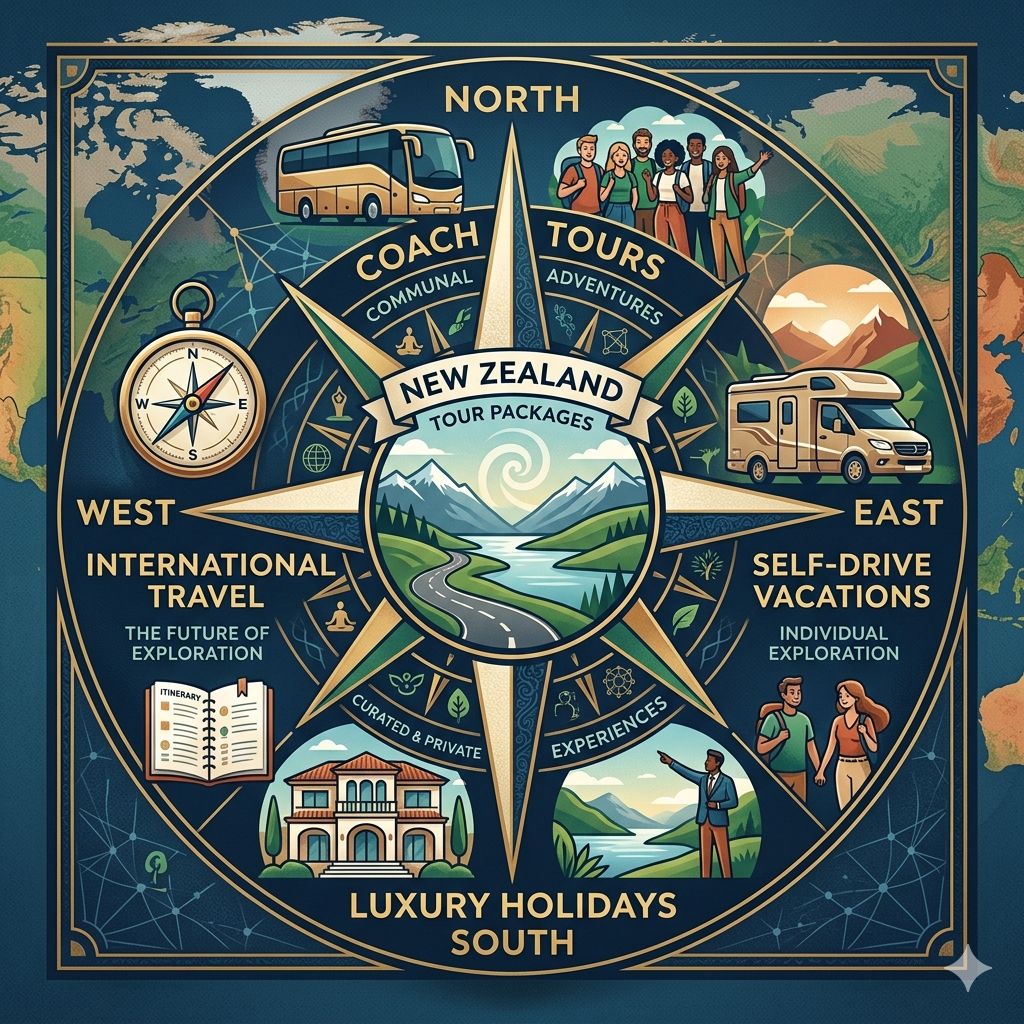
When we look at specific regions that have mastered this blend of personalization and authenticity, New Zealand stands as a premier example. The demand for New Zealand tour packages 2026–2027: coach Tours, self-drive vacations, luxury holidays & private guided experiences has seen a significant uptick. This is because these packages offer a modular approach to travel that fits the modern psyche perfectly.
-
Coach Tours: These cater to the "Travel to Connect" trend, where shared experiences with like-minded individuals create a sense of community.
-
Self-Drive Vacations: These appeal to the desire for autonomy and the "Rail Revival" spirit of slow travel, allowing visitors to dictate their own pace through the Southern Alps or the coastal roads of the North Island.
-
Luxury Holidays & Private Guided Experiences: As Forbes reports on the future of luxury travel, high-end properties and experiences are now focusing on "soulful and spectacular" offerings. These private experiences prioritize deep cultural immersion, such as learning traditional Māori navigation or participating in conservation efforts, rather than just providing opulent accommodation.
New Zealand’s approach reflects a broader global shift toward "Micro-Retirements." Instead of waiting until the end of a career to see the world, people are taking multi-week, ambitious itineraries mid-career. These trips are seen as a "mental health reset," a concept that 41 percent of global travelers now prioritize.
Can Tourism Be Truly Sustainable and Restorative?
As we move through 2026 and into 2027, the "Wellness Beyond the Spa" movement is redefining the restorative power of travel. It is no longer just about a massage or a quiet room; it is about "Travel to Heal." This involves physical challenges combined with restorative indulgence. For instance, there has been a massive surge in interest for "ski & spa" or "golf & spa" combinations, where the exertion of the sport makes the subsequent relaxation feel earned.
Combating Overtourism with Authenticity
The industry is also facing the reality of overtourism with more vigor than ever before. Two-thirds of travelers now actively avoid popular but overcrowded destinations. This has led to the rise of "Non-Viral Destinations." Travelers are seeking out the "hidden seasons" or visiting countries like Mongolia, Nicaragua, and Zimbabwe, where they can explore responsibly and authentically without the pressure of crowds.
The Economic Shift: Willingness to Pay for Purpose
Sustainability is no longer a buzzword; it is a financial driver. Research indicates that three-quarters of travelers consider environmental credentials when choosing their stay. Many are willing to pay a premium, sometimes up to 12 percent more, for hotels that demonstrate strong sustainability practices. This economic shift is forcing the hospitality industry to innovate, ensuring that AI and technology enhance the human experience rather than replace the natural beauty and cultural integrity of the destination.
Conclusion: Are You Ready to Reconnect with the World?
The era of mindless movement is over. International travel in 2026 and 2027 is about meaning, purpose, and connection. Whether you are seeking the communal bond of a group trek, the solitude of a self-drive adventure through the rugged landscapes of Oceania, or a high-tech itinerary curated by AI, the goal remains the same: to return home with a calmer nervous system and a broader perspective.
The world is waiting, not as a checklist of monuments, but as a series of opportunities to heal, express, and connect. It is time to step beyond the familiar and embrace the transformative power of the global journey.
 English
Join our community to interact with posts!