
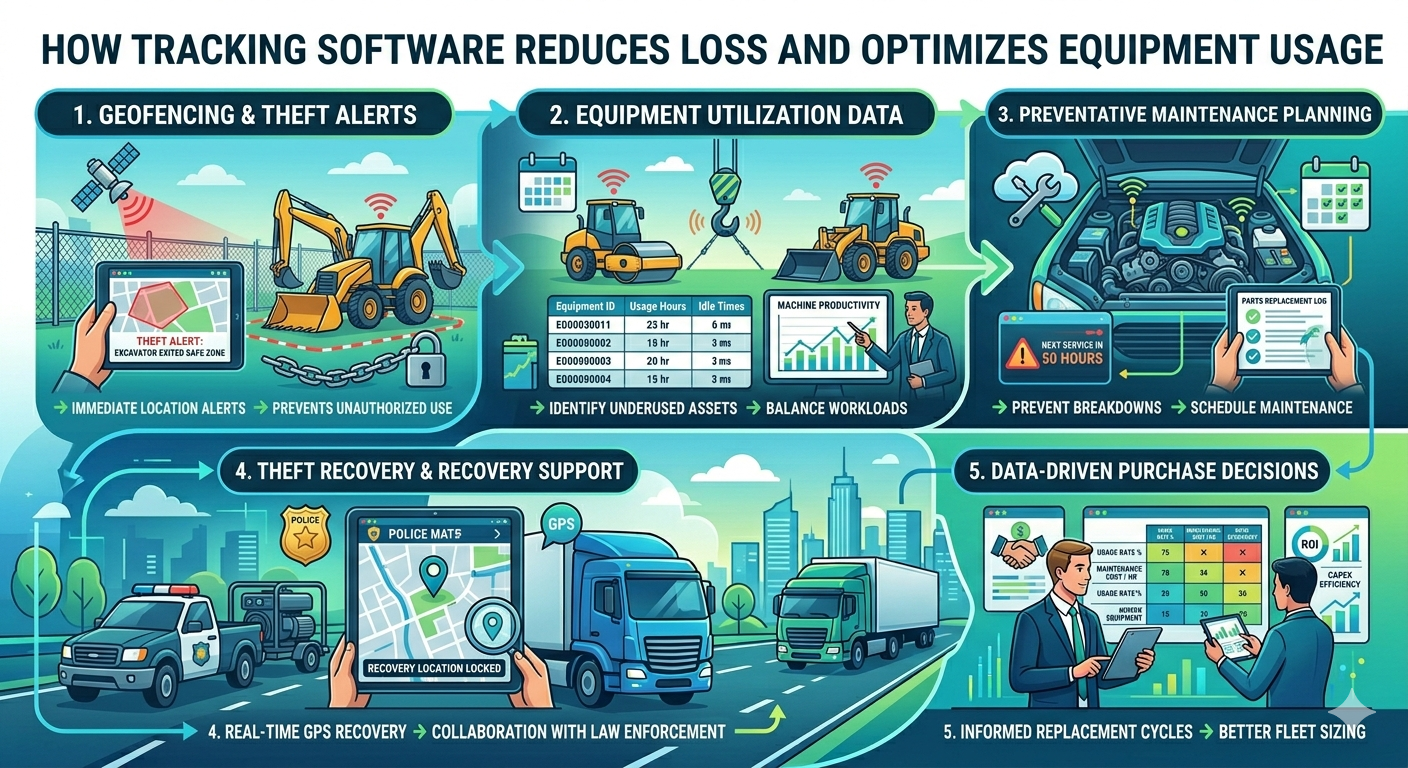
Construction companies face constant pressure to keep assets productive and secure. Equipment loss, theft, and inefficient usage can drive up costs, delay projects, and reduce overall profitability. Construction asset tracking software provides a single platform for monitoring equipment in real time, reducing losses, and maximizing usage across multiple job sites. By integrating tracking data with operational workflows, construction teams gain control over their fleet, improve accountability, and make smarter deployment decisions.
Understanding Asset Loss and Inefficiency
Losses often go unnoticed until they impact project timelines or budgets. Common causes include:
-
Equipment being misplaced or left idle for extended periods
-
Unauthorized use or theft of high-value assets
-
Poor scheduling that leaves some assets underutilized while others sit idle
Tracking software addresses these issues by providing continuous visibility into every asset. With GPS, RFID, or IoT sensors, teams can monitor where equipment is, how it’s being used, and whether it is at the right location for the assigned task.
Creating a Digital Asset Inventory
The first step in reducing losses is building a complete digital inventory of all construction assets. Each piece of equipment, tool, or vehicle is logged with key information:
-
Unique identifier or tag
-
Type, model, and condition
-
Current location and project assignment
-
Usage history and maintenance records
Centralizing this information allows managers to quickly identify missing or misplaced assets and prevents duplication or misallocation across projects.
Real-Time Monitoring for Loss Prevention
Continuous tracking enables supervisors to see assets in real time. Alerts can be set for unauthorized movement, entry into restricted areas, or unusually long idle periods. These alerts allow teams to act immediately:
-
Recover misplaced equipment before it is considered lost
-
Investigate unauthorized usage or potential theft
-
Reallocate underused assets to projects that need them most
By reducing losses, teams protect their investment and maintain operational efficiency.
Optimizing Equipment Usage
Tracking software is not just about preventing loss it is also a tool to maximize productivity. Managers can analyze usage patterns to identify:
-
Assets with low utilization that could be reassigned
-
Equipment bottlenecks where high-demand tools are overused
-
Opportunities for equipment sharing across sites
This data helps in planning and scheduling, ensuring that each asset contributes effectively to project progress rather than sitting idle or being misused.
Integrating with Maintenance Schedules
Equipment downtime due to poor maintenance contributes to both loss and underutilization. Construction asset tracking software can be linked to preventive and predictive maintenance schedules. By monitoring usage in real time, software can trigger service reminders or flag potential mechanical issues before they result in unplanned downtime. This integration ensures assets remain operational, reducing both financial loss and productivity gaps.
Operator Accountability
Human error is another factor in equipment loss and underuse. Tracking software logs operator activity, including location, duration of use, and compliance with operational procedures. Managers can use this data to:
-
Identify patterns of misuse or negligence
-
Provide targeted training to improve efficiency
-
Enforce accountability across all job sites
Operator visibility ensures that assets are handled responsibly, minimizing the risk of loss or inefficient usage.
Data-Driven Decisions for Fleet Management
The analytics features of construction asset tracking software allow managers to make informed decisions:
-
Determine which assets to purchase, retire, or reassign based on actual usage
-
Adjust schedules to match equipment availability with project demands
-
Identify recurring issues that lead to idle time or underutilization
By turning raw tracking data into actionable insights, teams continuously refine workflows and optimize equipment allocation.
Checklist for Reducing Loss and Optimizing Usage
A structured approach helps teams consistently improve asset management:
-
Maintain a digital inventory with real-time tracking enabled
-
Monitor asset movement and set alerts for unusual activity
-
Track utilization metrics for all equipment types
-
Integrate usage data with preventive and predictive maintenance
-
Analyze operator behavior and provide training when needed
-
Reassign or rotate assets based on project priorities and usage patterns
-
Review data regularly to identify bottlenecks and optimize workflows
Following this checklist ensures assets are secure, productive, and effectively deployed across projects.
Conclusion
Construction asset loss and underutilization have a direct impact on project efficiency and costs. Implementing construction asset tracking software allows teams to maintain real-time visibility, enforce accountability and make data-driven decisions that reduce loss and optimize usage.
By tracking equipment location, usage patterns, and operator behavior, construction managers can:
-
Minimize losses due to theft or misplacement
-
Reallocate idle assets to high-demand projects
-
Schedule preventive maintenance efficiently
-
Ensure operators use equipment responsibly
-
Make informed decisions about fleet composition and deployment
Tracking software transforms asset management from a reactive process into a proactive strategy. Construction teams using these tools maintain tighter control over equipment, reduce costs, and ensure that every asset contributes fully to project productivity.
 English
Join our community to interact with posts!