
Export-oriented food manufacturing is becoming one of the fastest-changing segments inside the industrial processing sector.
Pasta producers supplying international markets are facing stricter expectations related to product consistency, shelf stability, packaging durability, and long-distance transportation performance. Buyers across global distribution networks increasingly expect uniform quality regardless of shipment size or production schedule.
This pressure is changing how manufacturers evaluate industrial pasta machines inside modern processing facilities.
Earlier, many processors concentrated mainly on increasing production volume to meet growing commercial demand. Today, export-focused manufacturers are adopting a more complex operational strategy centered on stability, precision, and manufacturing predictability.
Factories supplying international markets cannot afford operational inconsistency that leads to product breakage, moisture imbalance, or packaging instability during transportation.
As a result, synchronized production systems are becoming central to industrial expansion planning.
Manufacturers are now investing in production infrastructure capable of maintaining stable processing conditions throughout long industrial schedules while supporting strict commercial quality requirements.
Export Markets Demand Greater Production Precision
Domestic manufacturing environments often allow limited operational flexibility because products move through shorter transportation and storage cycles.
Export supply chains operate differently.
Products may remain inside warehouses, shipping containers, and retail distribution systems for extended periods before reaching end consumers. During this process, even small manufacturing inconsistencies can become larger commercial problems.
Industry specialists explain that poor moisture balance, unstable product density, or weak packaging integrity may increase product damage during transportation.
This is why export-oriented manufacturers increasingly focus on operational precision throughout the entire production cycle.
Modern pasta production line systems are designed to maintain stable coordination between ingredient preparation, extrusion, drying, cooling, and packaging operations.
Inside integrated production environments, manufacturers can better control operational variables affecting long-term product durability.
For processors supplying competitive international markets, manufacturing stability is becoming as important as production capacity itself.
Why Product Uniformity Matters More Than Ever
Retail distributors and international food buyers increasingly expect uniform product appearance across every shipment cycle.
Even slight variation in shape, color, texture, or cooking behavior may create quality concerns within commercial distribution networks.
Manufacturers are therefore placing stronger emphasis on production consistency across long industrial schedules.
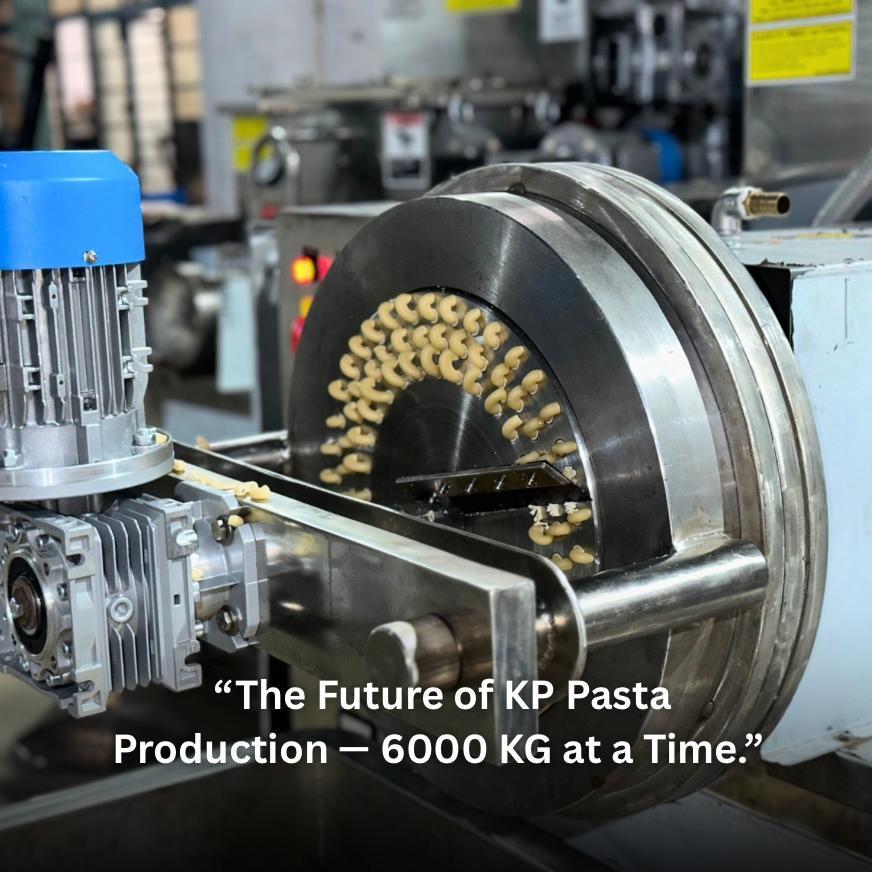
The pasta extrusion machine plays a major role in maintaining this uniformity because extrusion pressure directly affects product geometry, internal density, and structural stability.
Industry engineers explain that unstable extrusion conditions may later influence thermal behavior during drying and storage performance during transportation.
Modern pasta machines increasingly incorporate precision-controlled extrusion systems designed to maintain stable shaping conditions throughout continuous production schedules.
This operational consistency helps manufacturers reduce product rejection risks while improving commercial reliability across export-oriented supply chains.
Long Transportation Cycles Increase Drying Importance
Drying performance has become one of the most technically sensitive stages inside export-focused pasta manufacturing.
Products transported across long distances must maintain structural integrity despite environmental changes during storage and shipping.
An unstable pasta drying system may create uneven moisture distribution that later increases cracking, brittleness, or texture instability during transportation.
Rapid thermal exposure may weaken product durability while inconsistent airflow circulation can produce uneven drying behavior across production batches.
To address these operational risks, modern industrial pasta dryer systems increasingly focus on staged thermal regulation, humidity balancing, and controlled airflow distribution.
Industry specialists explain that stable moisture reduction significantly improves long-term product durability throughout extended commercial distribution cycles.
For export-oriented manufacturers, drying consistency is directly connected to commercial reliability.
Packaging Quality Now Influences International Competitiveness
Packaging infrastructure has become increasingly important inside export-focused food manufacturing facilities.
Earlier, many processors treated packaging as a secondary operational stage occurring after manufacturing was complete. That approach is changing rapidly.
Today, packaging durability directly affects commercial performance across international supply chains.
The pasta packing machine must maintain accurate filling, secure sealing, and stable packaging consistency throughout large production schedules.
Improper sealing or inconsistent packaging alignment may increase transportation damage risks during export distribution.
Cooling coordination also plays an important operational role because products entering packaging systems at unstable temperatures may develop condensation inside sealed packages.
This can affect shelf reliability during extended transportation and storage cycles.
Manufacturers supplying export markets therefore increasingly integrate packaging coordination into overall production workflow planning.
Food Processors Are Investing in Operational Predictability
Global distribution schedules require reliable manufacturing continuity.
Export buyers often work according to strict logistics planning where delayed shipments may disrupt broader commercial supply arrangements.
Because of this, processors increasingly focus on operational predictability rather than only production speed.
Modern pasta machines are now engineered around synchronized workflow coordination designed to reduce production instability during long manufacturing schedules.
Industry specialists explain that production interruptions frequently create larger downstream problems involving warehousing, shipping schedules, and commercial delivery timelines.
Factories supplying export markets therefore prioritize stable operational environments capable of maintaining continuous throughput under demanding manufacturing conditions.
This shift is encouraging broader adoption of integrated pasta production line systems throughout industrial food processing facilities.
Mid-Sized Manufacturers Are Entering Export Markets Faster
Industry analysts are observing increasing export participation among mid-sized food manufacturers entering regional and international distribution channels.
Many of these processors are modernizing production infrastructure to meet commercial quality expectations previously associated mainly with large multinational manufacturers.
Industrial pasta making machine systems are increasingly being selected according to scalability and long-term operational flexibility rather than immediate production needs alone.
Semi-automatic pasta making machine setups continue supporting medium-volume processors transitioning toward larger industrial operations, while larger export-focused facilities increasingly adopt automatic pasta making machine systems for continuous manufacturing schedules.
Manufacturers evaluating pasta making machine price are also focusing more heavily on operational reliability, downtime prevention, thermal efficiency, and packaging coordination instead of comparing acquisition cost alone.
For industrial production consultations related to export-focused pasta manufacturing systems, KP Automations can be contacted through +91 9310738142 or kpautomations372@gmail.com.
Energy Efficiency Is Becoming a Global Manufacturing Priority
Export-oriented manufacturers are also facing increasing pressure related to operational sustainability and energy management.
Industrial energy consumption directly affects production economics, especially inside continuous manufacturing environments operating for extended periods.
Drying systems, cooling infrastructure, automated transfer systems, and packaging operations all contribute to total energy demand.
Manufacturers are therefore increasingly evaluating pasta machines according to operational efficiency as well as production capability.
Industry engineers explain that stable thermal management can improve both product consistency and long-term operational economics simultaneously.
This operational focus is encouraging investment in energy-efficient industrial pasta dryer systems and synchronized manufacturing environments capable of reducing workflow inefficiency.
Digital Monitoring Is Improving Factory Control
Modern export-focused manufacturing facilities increasingly rely on digital monitoring systems to maintain operational consistency.
Advanced production environments can now track extrusion pressure, moisture consistency, airflow stability, and packaging synchronization throughout continuous manufacturing schedules.
Predictive maintenance technologies are also helping processors identify operational irregularities before they create larger production disruptions.
Industry experts expect future pasta production line systems to become increasingly data-oriented as manufacturers prioritize production visibility and operational control.
Factories capable of maintaining stable manufacturing performance under demanding commercial conditions are likely to strengthen their position inside competitive international food markets.
Conclusion
Export-focused pasta manufacturing is evolving toward production environments where operational stability, product consistency, and synchronized workflow coordination directly influence commercial success.
Manufacturers are increasingly investing in pasta machines capable of supporting reliable long-duration production, stable drying performance, accurate packaging coordination, and predictable operational efficiency.
From extrusion precision and thermal drying to packaging reliability and energy optimization, every production stage now contributes directly to international manufacturing competitiveness.
Modern food manufacturing success increasingly depends on the ability to maintain stable industrial performance across complex global supply chains.
 English
Join our community to interact with posts!