
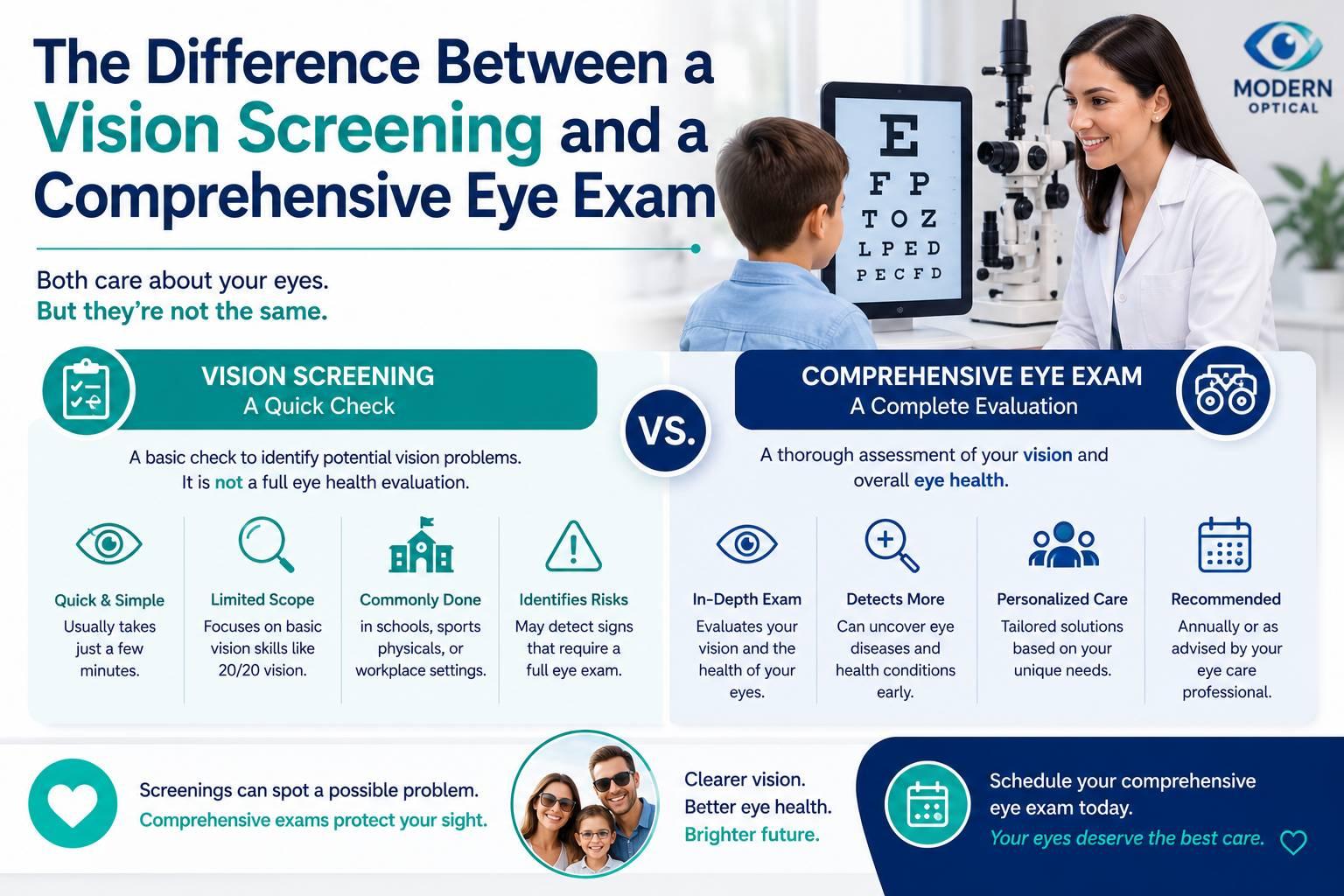
Many people think that their eyes are in perfect shape if they pass a vision screening. But that's actually one of the biggest myths about eye care.
Vision screenings are useful, but they aren’t the same as a full eye exam – and knowing the difference is more important than most people realize.
Many serious eye conditions develop slowly and with no obvious symptoms. You might be able to see the letters on the chart clearly, but there could be a serious eye health problem that you just can't see. That’s why regular eye exams are so important to protecting your long-term vision. Looking for the best eye care coral springs? Choose Modern Optical.
So, what is the difference between a rapid vision screening and a full eye exam?
Let’s go through it.
What is a vision exam?
Vision screening is a simple test to detect obvious vision problems.
You’ll often find these sorts of screenings offered at schools, workplaces, pediatric offices, health fairs and DMVs. These are typically quick, simple tests to see if a person may have trouble seeing clearly at various distances .
What a typical vision screening will check for:
-
Distance sight
-
Visual acuity, basic
-
Reading letters on an eye chart
-
Sometimes just simple alignment or focus problems
If someone has issues during the screening they’re usually advised to make an appointment for a full eye exam with an eye doctor.
And that’s the big thing – screenings are for finding potential problems, not diagnosing them.
What a Vision Screening Does Not Test
This is where alot get confused.
A vision screening is not a comprehensive assessment of your eye health. Not usually looking:
-
Diseases of the eye
-
Eye health
-
Cataracts and Glaucoma
-
Age-related macular degeneration
-
Diabetic retinopathy
-
Prescription detail accuracy
-
Intra Ocular pressure
-
Overall eye function
In other words, you could pass an eye exam and still have an eye condition quietly developing.”
That’s why screenings should not be a substitute for regular comprehensive eye exams.
What to expect at a comprehensive eye exam?
A comprehensive eye exam is so much more than reading the letters off a chart.
Modern Optical provides comprehensive eye examinations to determine your vision and health of your eyes. The aim is not only to give you clearer vision - but to catch possible problems as early as they can be detected.
During a comprehensive exam, your eye doctor might check:
-
Changes in visual acuity and prescription
-
Concentration and eye coordination
-
Eye muscle movements
-
Side vision
-
Intraocular pressure
-
Eyes and Eye Health
-
Status of the optic nerve
-
Signs of eye disease or health problems
Sometimes these tests can even detect signs of other health issues such as diabetes, high blood pressure or autoimmune diseases before other symptoms appear.
That's one reason why eye exams are considered an important part of preventive health care.
The Significance of Early Detection
One of the main reasons full eye exams are so important is that many eye diseases do not have early symptoms.
Glaucoma, diabetic retinopathy, and macular degeneration can develop slowly without any initial noticeable vision loss. When symptoms are noticeable, the damage might be more difficult to undo.
A complete eye exam can detect these problems earlier when treatment or ways to manage them work best.
That early detection can be a huge difference in protecting long-term vision.”
Children Need full Eye Examinations Too
Many parents think school vision screenings are sufficient for their children, but screenings can easily miss certain vision problems that can affect learning and development.
Children may still pass a basic screen but have difficulty with:
-
Trouble focusing
-
Eye coordination problems
-
Issues with depth perception
-
Minor changes to prescriptions
A comprehensive eye exam provides a much more complete picture of a child’s visual health and development.
Eyewear: The Tip of the Iceberg During Comprehensive Exams
Most people only make an appointment for an eye exam when they think they need new glasses. But comprehensive eye care is so much more than just updating a prescription.
Regular exams can help you monitor changes in your eye health over time, catch possible problems early, and ensure that your eyes are working properly overall.
Even those who think they have perfect vision should have regular eye exams.
Key Takeaways
Vision screenings and comprehensive eye exams have very different purposes.
A screening is a quick look for obvious problems with vision. A comprehensive eye exam is a complete evaluation of your vision and the health of your eyes for the long term.
Modern Optical fl comprehensive eye exams ensure patients are ahead of the curve with personalized care, early diagnosis and expert advice on their vision.
Because when it comes to protecting your vision, seeing clearly is only part of the picture.
 English
Join our community to interact with posts!