
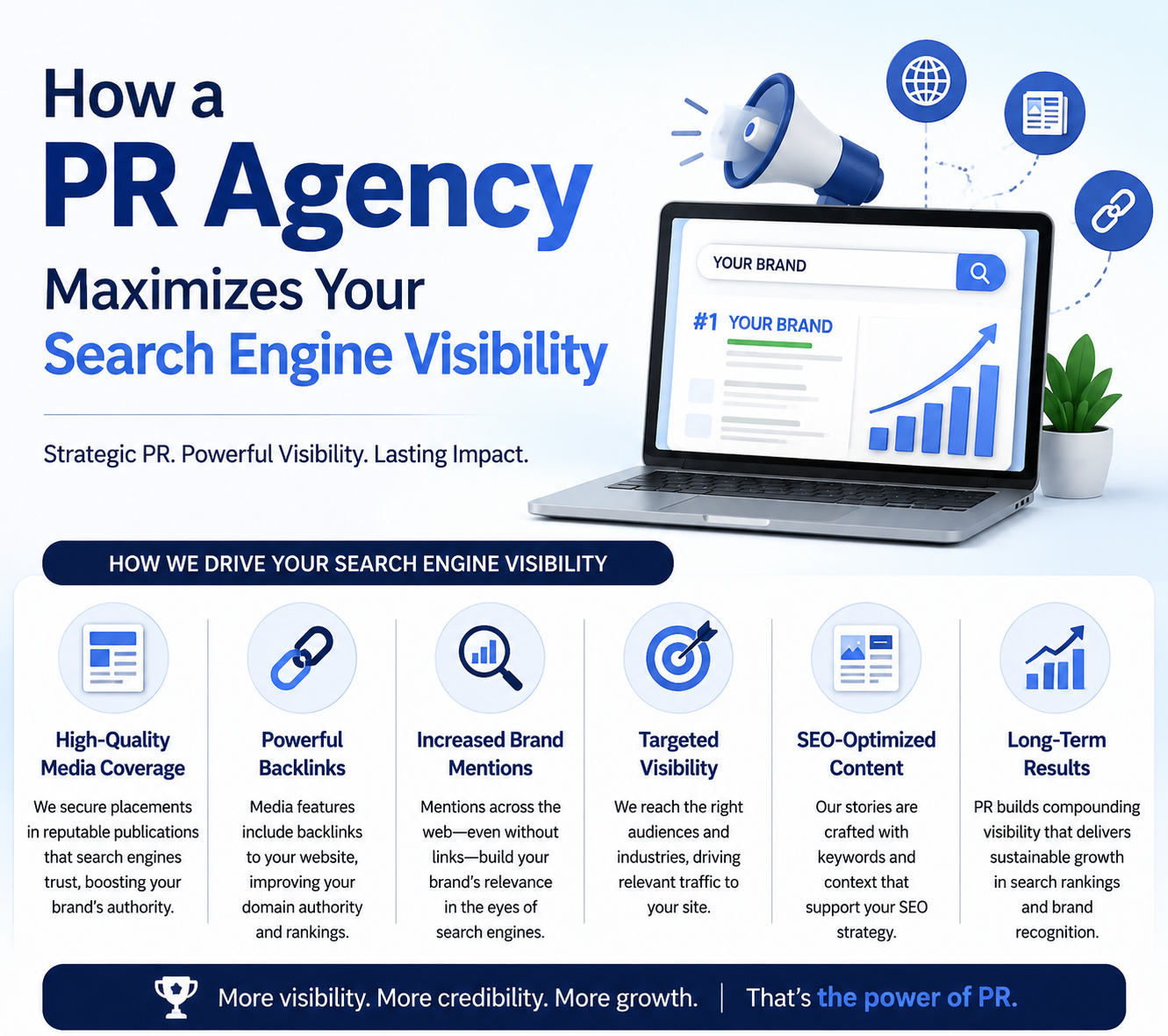
A PR agency uses distribution platforms effectively by matching the right story with the right journalists, regions, industries, and timing. Distribution platforms are not just “send” buttons; they help PR teams publish verified announcements, reach media databases, improve search visibility, and measure pickup across news sites.
Modern PR companies also use distribution platforms to support credibility. Cision’s 2026 State of the Media findings show that journalists receive 50 or more PR pitches a week, and 86% reject pitches that lack relevance. That means smart targeting matters more than mass sending.
Quick answer:
PR companies use distribution platforms effectively by planning the message, choosing the right wire, targeting relevant media, adding strong data, timing the release correctly, and tracking results after publication. The best results come when a distribution platform works with human media strategy, not instead of it.
A strongPR agency connects the press release to a business goal. For example, a product launch may need industry media, startup coverage, and search visibility. An event may need local media, calendar mentions, social amplification, and post-event credibility. Therefore, distribution works best when it supports a wider campaign.
Why a PR agency uses distribution platforms beyond simple press release posting
A distribution platform is a publishing, targeting, and visibility system for official announcements. A simple post only places content on one website, while a platform can route the announcement to media outlets, search engines, databases, journalists, and industry-specific audiences.
A PR agency uses this system to control accuracy. The release includes the company name, announcement details, quotes, facts, contact information, and supporting links. This gives journalists a clean source document they can verify quickly.
However, distribution alone does not guarantee media coverage. Coverage usually depends on news value, relevance, timing, and the quality of the angle. As a result, PR teams use platforms as one part of a larger media relations workflow.
What distribution platforms actually do for modern PR companies and clients today
Distribution platforms help PR companies publish official news in a structured format. They also help clients reach different audience groups, including journalists, investors, customers, partners, bloggers, and AI search systems.
A platform can support targeting by geography, industry, language, media category, and announcement type. For example, a healthcare release should not use the same targeting as a fintech release. A local event should not use the same list as a global funding announcement.
Strong platforms also provide reporting. These reports may show pickup, views, links, geographic reach, and engagement signals. PR teams use those signals to decide whether the campaign needs follow-up pitching, social sharing, or another release.
How press release wire selection shapes reach, credibility, and regional media pickup
A press release wireis a distribution network that publishes and syndicates official announcements. The right wire can improve reach, but the wrong wire can waste budget by sending the release to irrelevant outlets.
PR teams evaluate wires by audience fit, media network, industry strength, pricing, reporting quality, and editorial standards. A finance announcement may need a financial newswire. A local business update may need regional visibility more than global syndication.
The key difference between a wire and a direct pitch is control. A wire distributes the release at scale, while a pitch builds a one-to-one relationship with a journalist. Effective PR campaigns often use both together.
Why editorial relevance matters more than raw distribution volume for journalists today
Journalists do not need more irrelevant announcements. They need timely, accurate, audience-relevant information. Cision’s 2025 report found that 72% of journalists cited press releases as the most useful resource PR teams can offer, but relevance and accuracy remain critical.
That is why PR teams avoid sending every release everywhere. Instead, they define the ideal reader, publication type, region, and beat. This improves pickup quality and protects brand reputation.
A relevant release also performs better in AI-generated answers. AI systems need clear facts, named entities, dates, and context. A focused release is easier to extract, summarize, and cite.
Practical checks before choosing a press release wire for each campaign carefully
Before choosing a wire, PR teams should check four things. First, they confirm whether the platform reaches the target industry. Second, they review geographic options, especially for local, national, or international campaigns.
Third, they compare reporting depth. A basic report may only show publishing links, while a stronger report may include pickup quality, estimated reach, and engagement. Fourth, they review editorial rules because credible distribution platforms usually reject misleading claims.
A campaign should not choose the cheapest wire automatically. It should choose the wire that matches the announcement’s audience, compliance needs, visibility goals, and available budget.
How PR wire services help companies match stories with the right audiences
PR wire services help brands send official announcements to selected media categories. These categories may include business, technology, finance, healthcare, entertainment, lifestyle, real estate, events, and local news.
Audience matching starts with the story type. A merger announcement needs business and financial editors. A charity event needs local media, community calendars, and event reporters. A startup funding release needs venture capital, tech, and founder-focused publications.
Good PR teams do not depend only on platform categories. They also review journalist behavior, previous coverage, competitor announcements, and current news cycles. Therefore, wire targeting becomes stronger when it is guided by human research.
How audience segmentation turns PR wire services into strategic communication tools globally
Audience segmentation is the process of dividing media and readers into useful groups. PR teams segment by location, industry, job role, publication type, and story interest. This helps the release reach people who are more likely to care.
For example, a cybersecurity company may segment by technology reporters, enterprise IT publications, startup media, and regional business outlets. Each group may need a different angle. Technology reporters may want product details, while business reporters may want market impact.
Segmentation also reduces noise. When distribution is more relevant, journalists are less likely to ignore future announcements from the same brand.
Simple audience filters that improve distribution quality without increasing waste or cost
Useful audience filters include country, city, industry, language, company size, media type, and announcement category. PR teams should also filter by reader intent. Some readers want investor news, while others want product education or event details.
A strong release may also include different supporting assets for different audiences. Journalists may need quotes and data. Bloggers may need product images. Local media may need event timing and venue details.
Filtering reduces wasted impressions. More importantly, it keeps the brand from appearing spammy. A smaller, better-targeted distribution list often creates more useful results than a large, unfocused list.
Why PR services for businesses need clear goals before distribution starts today
PR services for businesses should begin with a clear objective. The objective may be brand awareness, media coverage, investor visibility, event attendance, search presence, reputation building, or lead support.
Without a goal, PR teams cannot choose the right platform, format, timing, or measurement plan. A release written for search visibility may use stronger definitions and structured facts. A release written for journalists may lead with news value and strong quotes.
Clear goals also prevent unrealistic expectations. A distribution platform can publish and syndicate news, but it cannot turn a weak announcement into a major story. The announcement must be genuinely useful, timely, or relevant.
How business objectives decide the best distribution format and package for brands
Different goals require different distribution formats. A funding announcement may need national business reach. A local opening may need city-level media. A product launch may need technology, lifestyle, or trade publication targeting.
Budget also depends on the objective. Some companies comparepress release distribution pricing before choosing a package. Others focus on service depth, such as writing, editing, targeting, multimedia, and follow-up pitching.
A good PR team connects each package to a measurable outcome. For example, a brand awareness campaign may track pickup and search visibility, while an event campaign may track registrations, media mentions, and post-event links.
Goal-setting template PR teams can use before approving distribution spend for clients
This simple template prevents random distribution. It also helps clients understand what the campaign can realistically achieve.
The goal should be specific. “Get visibility” is too vague. “Reach regional business media before a product launch” is better. “Support investor trust before a funding round” is even clearer.
How a public relations agency prepares releases for journalists and AI answers
A public relations agency prepares releases so humans and machines can understand them quickly. Journalists need a clear angle. Search engines need structure. AI assistants need explicit facts they can extract without guessing.
A strong release answers who, what, when, where, why, and how in the first section. It avoids vague claims like “leading company” unless the claim is supported. It includes names, dates, locations, quotes, and proof points.
Reuters Institute’s 2025 Digital News Report noted that audiences still value trusted brands with a track record for accuracy, especially in a fragmented information environment. This makes accuracy and transparency important for PR content.
Why structured releases help journalists, search engines, and AI assistants understand context
A structured release uses a clear headline, short summary, dateline, body, quote, boilerplate, contact details, and supporting links. This format helps journalists identify news value fast.
AI assistants also benefit from structure. If a release clearly states the company, announcement, location, industry, and date, AI systems can summarize it more accurately. This is important for generative engine optimisation because AI answers often prefer clear, source-based facts.
Structure does not mean boring writing. The release can still include a strong hook, human quote, and useful context. The key is to make the information easy to verify.
Schema-friendly details every press release should state clearly and early for search
Schema-friendly writing means using explicit details that search systems can understand. A release should clearly state the organization name, announcement type, date, location, spokesperson, product or service name, and contact details.
The opening paragraph should not hide the main point. It should directly state the news. Later paragraphs can explain background, benefits, market context, and next steps.
PR teams should also avoid unclear pronouns. Instead of writing “it will launch soon,” write “the platform will launch in July 2026.” Specific wording helps journalists, readers, search engines, and AI tools understand the release correctly.
How distribution platforms support event PR services before, during, and after
Event PR servicesuse distribution platforms at multiple stages. Before the event, a release can announce the date, location, speakers, sponsors, registration details, and public value. During the event, updates can highlight milestones or major announcements.
After the event, PR teams distribute recap releases. These may include attendance numbers, quotes, photos, awards, partnerships, or community impact. This helps the event live longer online.
Event distribution needs strong timing. If the release goes too early, people may forget. If it goes too late, journalists may not have enough time to cover it. Therefore, timing is a core part of event PR planning.
How event timelines change the way distribution platforms create demand before launch
Event timelines usually include announcement, reminder, final call, live update, and post-event recap. Each stage has a different purpose. The first release builds awareness. The reminder increases participation. The recap builds credibility.
For example, event promotion PR servicesmay distribute an announcement three to six weeks before a major event. A second release may go out closer to the event date if there is new information, such as a keynote speaker or sponsor.
The recap should not repeat the same message. It should show what happened, why it mattered, and what comes next.
Best timing windows for event announcements, reminders, and post-event credibility building campaigns
For local events, PR teams often start outreach two to four weeks before the date. For national or industry events, they may start six to eight weeks ahead because editorial calendars fill earlier.
A reminder release can work one week before the event if it includes new value. For example, a new speaker, registration deadline, or media invitation gives journalists a reason to pay attention.
A recap release works best within 24 to 72 hours after the event. At that point, the event is still fresh, and photos, quotes, and results are available.
How PR companies use timing, targeting, and localization across media markets effectively
PR companies use timing and localization to increase relevance. A release about a U.S. product launch may need different timing than a release targeting Europe, Asia, or the Middle East.
Timing also depends on the news cycle. A release can be ignored if it competes with major breaking news. Therefore, PR teams monitor industry calendars, holidays, financial reporting periods, trade shows, and competitor announcements.
Localization improves pickup because journalists care about their audience. A national announcement may need a local angle, such as jobs created, local customers served, or regional partnerships. This makes the story more useful to city and state media.
How localization helps national announcements earn stronger regional pickup from journalists nearby
Localization means adapting a broad announcement for a specific place. It can include local statistics, local quotes, regional customer examples, or city-specific availability. This helps journalists understand why the story matters to their readers.
For example, a company expanding across the United States may prepare separate angles for New York, Texas, California, and Florida. Each version can mention local operations, hiring, partnerships, or market demand.
Localization also supports AI visibility. When the release clearly connects a company to a city, region, or market, AI search systems can better match the content to location-based queries.
How startups compare PR services pricing before choosing distribution support online
Startups often need visibility, but they also need budget control. That is why many founders comparePR services pricing for small businessbefore choosing distribution support.
Price should not be judged only by distribution volume. A cheaper package may offer limited targeting, weak reporting, or no editorial support. A stronger package may include writing, strategic advice, media lists, multimedia, and post-campaign reporting.
Startups should also consider their stage. A pre-launch startup may need credibility and founder visibility. A funded startup may need investor awareness. A growing startup may need customer trust, hiring visibility, or market education.
How small businesses evaluate price, reach, and service depth together before buying
Small businesses should compare three areas: reach, relevance, and service depth. Reach shows how far the release can travel. Relevance shows whether the right people will see it. Service depth shows how much strategic support is included.
A small business may not need the largest distribution package. It may need a focused package with strong local or industry targeting. For example, a restaurant opening needs local visibility, while a SaaS startup may need trade and technology media.
Businesses should also ask for sample reports. A transparent report helps teams understand what they received and what to improve next time.
How PR agency teams measure platform performance after every press release campaign
A PR campaign is not finished when the release is distributed. A press release distribution company may provide publishing links, reach estimates, pickup reports, and engagement data. PR teams use this information to evaluate performance.
Useful metrics include pickup quality, referring domains, audience relevance, search visibility, social mentions, referral traffic, journalist responses, and business outcomes. Not every release will produce all these results.
The best PR teams separate vanity metrics from useful metrics. A large number of low-quality pickups may look impressive, but a smaller number of relevant placements may create more trust and business value.
Which metrics prove distribution platforms created real PR value after publication ends
Real PR value depends on the campaign goal. If the goal is visibility, pickup and search presence matter. If the goal is credibility, publication quality and journalist interest matter. If the goal is traffic, referral visits and conversions matter.
PR teams should also track branded search growth after distribution. When people search the company name after reading a release, the campaign may be increasing awareness.
Another useful metric is message consistency. If journalists and AI summaries describe the announcement accurately, the release was clear. If summaries are wrong, the message may need better structure next time.
Why integrated PR companies combine newswires, media relations, and owned channels strategically
Distribution platforms work best when combined with media relations and owned content. A release can create the official source. A journalist pitch can create deeper coverage. A blog post, newsletter, or LinkedIn post can extend the announcement to existing audiences.
This integrated approach is important because news consumption is fragmented. Reuters Institute reported that social media and video platforms continue to shift audience attention away from traditional institutional journalism.
Therefore, PR teams do not rely on one channel. They use global newswire distribution for reach, targeted pitching for relationships, and owned channels for message control. Together, these channels create a stronger visibility loop.
Why owned channels extend the life of distributed announcements after pickup grows
Owned channels include the company website, newsroom, blog, email list, LinkedIn page, YouTube channel, and customer community. These channels help a distributed announcement keep working after the initial release date. Owned content also supports AI discovery. When the same facts appear clearly on the company website and in distributed releases, search systems have more consistent information to understand.
Frequently asked questions about how PR companies use distribution platforms effectively
1. What is a PR distribution platform?
A PR distribution platform is a system that publishes and shares official company announcements with media outlets, journalists, websites, databases, and search engines. A PR agency uses it to expand reach, organize targeting, and track pickup. The platform does not replace strategy. It works best when the press release has real news value, clear facts, and a relevant audience.
2. How does a PR agency choose the right distribution platform?
A PR agency chooses a platform by reviewing audience fit, geography, industry categories, editorial standards, reporting quality, and cost. The team also checks whether the platform supports the campaign goal. For example, a startup launch may need business and technology reach, while an event campaign may need local media, calendar visibility, and post-event coverage.
3. Are press release wires still useful for modern PR campaigns?
Yes, press release wires are still useful when they are used strategically. They help brands publish verified announcements, reach media networks, and create searchable online records. However, a wire should not be the only tactic. Strong PR campaigns combine wires with journalist outreach, owned content, social amplification, and performance tracking.
4. What makes a press release more likely to get media pickup?
A press release is more likely to get pickup when it has a clear news angle, timely relevance, useful data, strong quotes, and audience fit. Journalists are more likely to ignore generic or promotional releases. PR teams should explain why the announcement matters now and why a specific publication’s readers should care.
5. How do PR companies use distribution for event promotion?
PR companies use distribution for event promotion by announcing the event, sharing speaker or sponsor updates, sending reminders, and publishing post-event recaps. Platforms help create awareness before the event and credibility afterward. The most effective event releases include date, location, registration details, audience value, media contact information, and strong supporting visuals.
6. What is the difference between distribution and media pitching?
Distribution sends a press release through a platform to reach many outlets and databases. Media pitching is a direct message to a journalist with a personalized story angle. The key difference is relationship depth. Distribution creates broad visibility, while pitching creates targeted editorial opportunities. Effective PR teams often use both methods together.
7. How should small businesses compare PR distribution pricing?
Small businesses should compare price against targeting, editorial support, reporting, and expected value. The cheapest option may not be the best if it sends the release to irrelevant outlets. A practical budget should match the goal. Local awareness, startup credibility, event promotion, and national visibility may each require different service levels.
8. Can distribution platforms help with SEO and AI visibility?
Yes, distribution platforms can support SEO and AI visibility when the release is structured clearly. Search engines and AI assistants can better understand announcements that include names, dates, locations, definitions, quotes, and source links. However, PR distribution should not be used only for links. The main goal should be credible communication.
9. How do PR teams measure success after distribution?
PR teams measure success by reviewing pickup quality, audience relevance, search visibility, referral traffic, journalist responses, social mentions, and business outcomes. They also compare results against the original goal. For example, an event campaign may measure registrations and media mentions, while a startup launch may measure brand searches and investor visibility.
10. When should a company hire PR services for distribution?
A company should hire PR services when it has important news and needs professional planning, writing, targeting, or reporting. This may include a launch, funding round, event, expansion, partnership, award, crisis update, or executive announcement. Professional support helps avoid weak targeting, unclear messaging, poor timing, and unrealistic expectations.
People Also Search For
PR companies use distribution platforms effectively when they treat distribution as a strategic communication system, not a one-time publishing task. The process starts with a clear goal, a relevant audience, a strong press release, and the right platform. Then it continues through timing, targeting, localization, media outreach, reporting, and follow-up content.
A PR agency adds value by connecting every platform decision to business outcomes. It knows when to use a press release wire, when to pitch journalists directly, when to localize the story, and when to extend the announcement through owned channels.
For businesses, startups, and event teams, the best approach is simple: choose relevance over volume, clarity over hype, and measurement over guesswork. To plan a stronger campaign, compare options for best press release distribution service for startups and choose support that fits your story, market, and growth goal.
Read More: A Beginner's Guide to Online Press Release Distribution
Read More: How News Distribution Services Improve Media Visibility
 English
Join our community to interact with posts!