
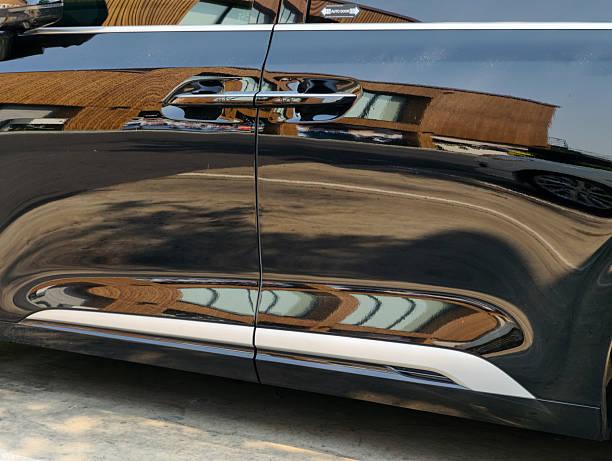
You ever look at your car in direct sunlight and feel like someone took a Brillo pad to the whole thing? Those fine spiderwebs all over the paint. They're not supposed to be there. But they are. And the worst part? You probably put them there yourself. That wash mitt you've been using? The dirty towel you dried with? The automatic car wash you went through because it was raining and you got lazy? All of it adds up. One day your paint looks fine. The next, it's cloudy and full of scratches that catch the light like a bad dream. Regular polishing might hide some of it temporarily. But those deeper swirls and scratches? They need more than a quick once-over. That's where multi stage paint correction comes in. It's not a wax. It's not a glaze that fills things in. It's actually removing a thin layer of clear coat to get down to smooth, undamaged paint underneath. Sounds aggressive because it is. But when it's done right, the results are insane. Like a different car insane.
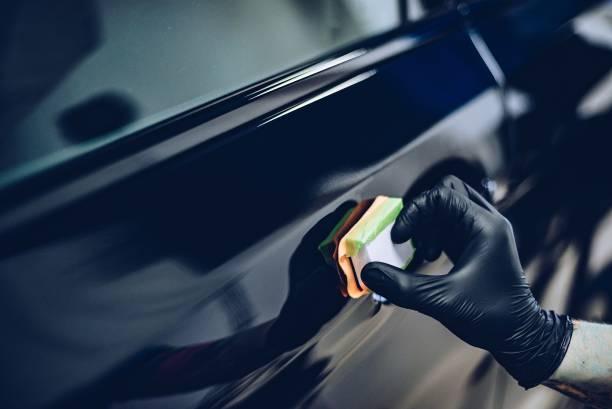
What Multi Stage Actually Means
People throw around the term "paint correction" like it's one thing. It's not. A one-stage correction is basically a heavy polish. It removes light swirls and brings back some gloss. Good for cars that are in decent shape but look a little tired. Two-stage is more aggressive – a compounding step followed by a polishing step. That handles moderate scratches and most swirl marks. Three-stage or multi stage adds additional steps, usually starting with a very aggressive compound for deep scratches, then a medium polish, then a fine polish to refine the finish. Sometimes there's a fourth step with a jeweling polish that maximizes gloss. Each stage removes more clear coat but leaves a smoother, more reflective surface. The trick is knowing how much clear coat you have to work with. Modern cars have thin clear coats – sometimes only 40 to 60 microns thick. You can't just go crazy with a heavy compound. A proper multi stage paint correction starts with measuring paint thickness so you don't burn through. Most people have no idea this is even a thing. They just want the scratches gone. But the scratches are gone because you removed them. And you can only remove so much before you hit the color coat underneath.
The Rotary Versus DA Mistake
Here's where good intentions go wrong. A lot of DIY guys buy a dual action polisher and think they're set. DA polishers are safer – they oscillate and rotate, so they're less likely to burn through paint. But for deep scratches, a DA sometimes isn't aggressive enough. You'll be there for hours making very little progress. Professionals often use a rotary polisher for the first stage of multi stage paint correction. Rotaries spin in one direction only. They generate more heat and cut faster. They also require way more skill. One wrong move, too much pressure, or staying in one spot too long, and you've burned through the clear coat. That's a respray. Thousands of euros. That's why most people shouldn't attempt serious correction themselves. Not because you're stupid. Because the stakes are high and the learning curve is steep. A quality car care Ireland professional will have years of experience on different paint systems. They know which pads and compounds work on which cars. They know when to push harder and when to back off. That knowledge isn't something you get from watching three YouTube videos.
The Decontamination Step Everyone Forgets
You can't correct paint that's still dirty. And I don't mean visibly dirty. I mean the contamination you can't see – iron particles, tar, old wax, silicone buildup from cheap products. Before any multi stage paint correction begins, the car needs a full decontamination. Chemical decon with an iron remover to dissolve metal particles. Tar remover for road grime. Then a clay bar treatment to pull out everything else. If you skip this, you're just grinding contaminants into the paint. That creates more scratches while you're trying to remove them. Makes no sense. I've seen guys go straight to compounding on a car that looked clean. Then they wonder why the finish is hazy and full of new scratches. It's because they were dragging iron particles across the clear coat the whole time. Decontamination adds time and cost. A proper job might take three or four hours before any machine even touches the paint. But that time is non-negotiable. Any detailer who says they can skip it is cutting corners. Find someone else.
How Much Clear Coat Is Too Much to Remove
This is the scary part. Clear coat isn't infinitely thick. On most modern cars, it's between 40 and 60 microns total. That's thinner than a human hair. A heavy compounding step might remove 3 to 5 microns. A full multi stage paint correction could remove 8 to 12 microns total. That's a significant percentage of your clear coat. If you do it once, fine. If you do it every couple years, you'll run out of clear coat eventually. That's why professional correction is usually a one-time thing followed by maintenance – proper washing, good drying techniques, and a ceramic coating or quality sealant to protect the finish. You don't want to keep correcting the same car over and over. You want to correct it once and then stop damaging it. Most people don't realize they're the ones causing the damage. Swirl marks come from bad washing habits, not from normal driving. If you correct the paint and then go back to using a dirty sponge and a chamois leather, you'll have swirls again in six months. That's not the correction failing. That's you failing to change your habits.
The Difference Between Filling and Fixing
Here's a dirty secret of the car care industry. Some products don't fix scratches. They fill them. Glazes, some "polishes," and cheap waxes contain oils and fillers that temporarily hide swirl marks. The scratches are still there. You just can't see them for a few weeks until the fillers wash away. Then the car looks terrible again and you think the product failed. It didn't fail. It was never meant to last. A proper multi stage paint correction doesn't fill anything. It removes the scratches completely. That's why the results last indefinitely as long as you don't introduce new scratches. You can tell the difference by feel. Run your fingernail across a scratch. If your nail catches, it's too deep to correct fully. You might improve it but you won't eliminate it. If your nail glides over smoothly, correction can probably remove it entirely. A good detailer will be honest about this upfront. If they promise to remove every single scratch regardless of depth, they're lying. Some scratches go through the clear coat into the color coat or even the primer. Those aren't going anywhere without a repaint.
Why Car Care Ireland Lags Behind Other Countries
I don't mean this as an insult. But compared to the UK, the US, or Germany, Ireland is about five to ten years behind in terms of paint correction knowledge and availability. There are amazing detailers here. Absolutely. But there aren't enough of them. And many car owners still think a hand wash and a coat of wax is the peak of car care. They've never heard of multi stage paint correction. They don't know what a paint thickness gauge is. They take their new car through an automatic wash with brushes and then wonder why it looks dull after a year. The good news is that things are changing. More specialists are opening up around Dublin, Cork, and Galway. Social media is showing people what's possible. The demand for proper car care Ireland services is growing. But it's still a niche. Most people will never spend a thousand euros on paint correction because they don't see the value. That's fine. Not everyone needs it. But if you're someone who notices every swirl, every scratch, every imperfection? You're the person this service exists for. And you might have to travel or wait longer than you'd like to find someone who does it right.
The Cost of Doing It Wrong Yourself
Let me tell you about a friend of mine. Bought a DA polisher, some compounds, watched a bunch of videos. Spent a whole weekend "correcting" his black BMW. When he was done, the car looked worse than before. Holograms everywhere. Burned edges on the panel lines. A couple spots where the clear coat was completely gone. He took it to a professional who basically said "you've removed too much clear coat, there's nothing I can do except respray." That respray cost him 3000 euros. The polisher and compounds cost another 300. So his DIY correction cost him 3300 euros and a lot of shame. I'm not saying this to scare you. I'm saying that multi stage paint correction looks easy in videos but it's not. Professional detailers spend years learning paint behavior. They know that black paint is different from white. That soft clear coat on Japanese cars needs different pads than hard German clear coat. That a rotary polisher at 1500 RPM with a wool pad will destroy a Hyundai in seconds. If you want to learn, start on a scrap panel from a junkyard. Not on your daily driver. And even then, accept that your first few attempts will look terrible. There's no shortcut for experience.
What to Look For in a Professional
Finding someone who can actually do this work is harder than it should be. Every mobile detailer with a buffer claims they do paint correction. Most of them don't. They do a one-step polish that hides more than it fixes. Ask specific questions. What thickness of clear coat do you aim to leave? How do you measure it? What compounds and pads do you use for my car's paint type? How many stages do you recommend and why? A real pro will have detailed answers. They'll show you before and after photos of similar cars. They'll use a paint thickness gauge in front of you. They'll explain the limitations – what can be fixed and what can't. They'll also talk about aftercare. Because a proper multi stage paint correction is an investment. You don't want to ruin it with a bad wash two weeks later. Good car care Ireland professionals will show you how to maintain the finish – two bucket method, proper drying, which towels to use. If they just take your money and send you on your way, they don't care about the long-term results. Find someone who cares.
The Results Are Worth the Wait
I've seen cars go from looking like they were painted with a broom to looking better than new. The transformation is shocking. Deep reflections. No swirls. Paint that looks liquid instead of dull. That's what multi stage paint correction delivers when it's done right. But it takes time. A full correction on a typical sedan is two to four days of work. Not hours. Days. The detailer might spend eight hours just on compounding. Another six hours on polishing. Another four hours on jeweling and final inspection. Then a ceramic coating application if you're doing that too. That's a lot of labor. That's why the cost is high – usually 800 to 2000 euro depending on car size and paint condition. You're not paying for product. You're paying for skill, time, and the risk of working on your expensive car. When you look at it that way, the price makes sense. What doesn't make sense is paying 200 euro for a "paint correction" that takes three hours and uses a one-step product. That's not correction. That's a glorified wax job with extra steps.
Conclusion
Multi stage paint correction isn't for everyone. If your car is a tool, if you don't notice swirl marks, if you're trading it in next year – save your money. This is for people who care. Who park at the far end of the supermarket lot. Who cringe when someone leans against their door. Who see their car as more than transportation. For those people, correction is a reset button. It removes the damage from years of bad washes, automatic car washes, and general neglect. It reveals the paint the way the factory intended. But it's not magic. It can't fix scratches you can catch with a fingernail. It can't add clear coat back once it's gone. And it won't stay perfect unless you change your habits afterward. Good car care Ireland habits – two buckets, quality microfiber, proper drying, regular protection – those are what keep the correction looking fresh. Think of it as a fresh start. You get one chance to remove that much clear coat. Don't waste it by going back to the old routine. Treat the car right after the correction and it'll look amazing for years. Treat it like you did before and you'll be back in the same boat eighteen months from now. The choice is yours. But at least now you know what's actually possible. That dull, swirled mess on your paint? It doesn't have to stay that way.
 English
Join our community to interact with posts!