
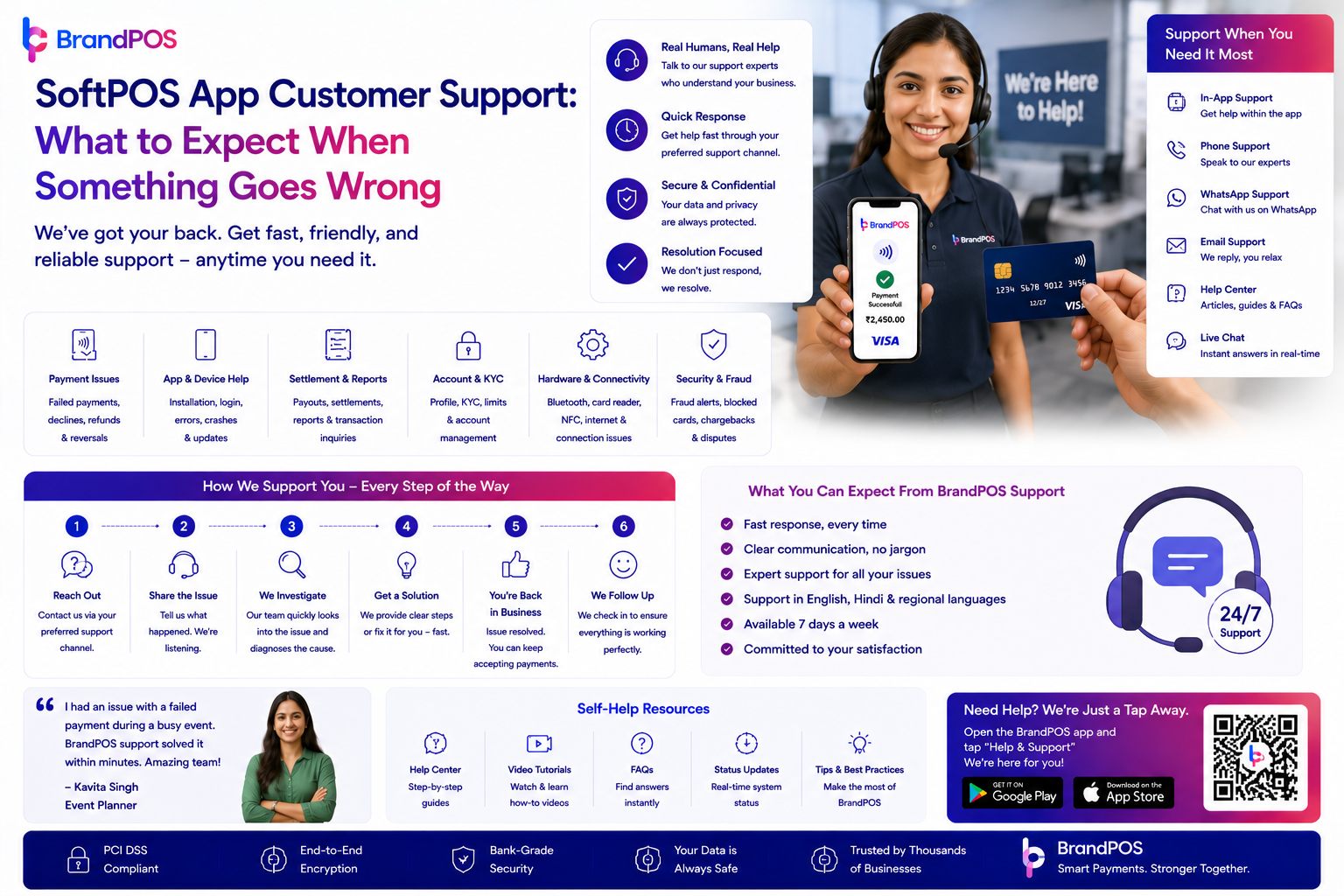
Payment technology is designed to make business easier, but occasional issues can still happen. A reliable SoftPOS provider combines secure payment processing with responsive customer support, helping merchants resolve transaction concerns, troubleshoot problems, and get back to serving customers quickly.
Even the Best Payment Systems Need Support Sometimes
No business owner likes dealing with payment problems.
Whether it's a transaction that appears stuck, a customer questioning a charge, or a temporary technical issue, interruptions can be stressful—especially when customers are standing in front of you waiting for answers.
Fortunately, occasional issues do not automatically mean something is wrong with your business or your payment setup.
Digital payment systems operate across multiple networks, banks, processors, and communication channels. Most transactions complete successfully in seconds, but when something unexpected happens, having access to reliable support becomes important.
That's one reason merchants look beyond features when evaluating SoftPOS solutions.
The quality of customer support can be just as important as the technology itself.
When support teams respond quickly, communicate clearly, and provide transparent guidance, merchants gain confidence that they won't be left handling payment issues alone.
Common Issues Merchants May Encounter
The majority of SoftPOS transactions are completed smoothly.
However, there are situations where assistance may be required.
Some common examples include:
- Payment declines
- Network interruptions
- Transaction timeouts
- Customer charge questions
- Device-related issues
- Settlement inquiries
- Account access concerns
A SoftPOS app typically includes transaction history and status information that helps merchants understand what happened before contacting support.
For example, a customer may believe a payment failed while the system shows it was successfully processed.
Alternatively, a merchant may see a pending status and want confirmation before delivering goods or services.
Having clear transaction visibility often helps resolve questions quickly.
When additional assistance is needed, support teams can review payment records and provide guidance based on the specific situation.
Understanding Transaction Disputes and Payment Questions
One area where support becomes especially valuable is transaction disputes.
Not every dispute involves fraud or a payment system problem.
In many cases, customers simply need clarification about a transaction.
Examples include:
- Not recognizing a transaction description
- Forgetting about a recent purchase
- Questioning a payment amount
- Requesting a receipt copy
- Asking about a refund status
A SoftPOS platform typically creates detailed transaction records that help support teams investigate these situations.
The more information available, the easier it becomes to determine what occurred.
Merchants can often help speed up the process by providing:
- Transaction dates
- Payment amounts
- Receipt references
- Customer information when applicable
Clear documentation benefits everyone involved.
Customers receive accurate information.
Merchants gain confidence in the resolution process.
Support teams can investigate more efficiently.
The goal is always transparency and fairness while protecting both merchant and customer interests.
Troubleshooting Failed Payments Efficiently
A failed transaction doesn't always mean payment processing is unavailable.
Often, the issue may be linked to connectivity, authorization requirements, device settings, or customer payment methods.
A SoftPOS app generally provides status messages that help identify the cause of a failed attempt.
Merchants can often perform a few basic checks before contacting support:
Verify Internet Connectivity
A stable network connection is essential for most real-time payment processing.
Checking Wi-Fi or mobile data can resolve many issues quickly.
Confirm Device Requirements
Security updates, operating system compatibility, and device certification requirements can affect performance.
Review Transaction Status
Pending, declined, and completed transactions require different responses.
Understanding the displayed status helps avoid duplicate payment attempts.
Restart the Application
Temporary software issues can sometimes be resolved through a simple restart.
If the problem persists, support teams can provide additional troubleshooting guidance.
The goal is to identify the root cause efficiently while minimizing disruption to daily operations.
Multiple Support Channels Help Merchants Get Answers Faster
Businesses operate at different times and in different environments.
That's why modern payment providers often offer multiple support options.
A SoftPOS solution may provide assistance through channels such as:
- Email support
- Phone support
- In-app help resources
- Merchant portals
- Knowledge bases
- Live chat services
Different issues require different levels of assistance.
Simple questions may be answered immediately through self-service resources.
More complex transaction investigations may involve specialist support teams.
The availability of multiple communication channels helps merchants choose the approach that best fits their situation.
Why Transparent Issue Resolution Builds Trust
When a payment issue occurs, merchants generally want two things:
A clear explanation.
And a clear path to resolution.
Uncertainty is often more frustrating than the issue itself.
That's why transparent communication matters.
Strong support teams keep merchants informed throughout the process by:
- Explaining what happened
- Providing realistic timelines
- Sharing investigation updates
- Confirming final resolutions
This approach helps reduce anxiety and improves confidence in the payment platform.
For merchants, knowing that support is available can make day-to-day operations feel significantly more secure.
Good Support Is Part of the Product
Payment technology isn't only about processing transactions.
It's also about helping businesses operate confidently.
Modern SoftPOS solutions combine secure payment acceptance with merchant support systems designed to address questions, investigate concerns, and resolve problems efficiently.
When issues arise, responsive support can make the difference between a minor inconvenience and a major disruption.
By providing transparent communication, structured escalation processes, and access to transaction information, payment providers help merchants stay focused on serving customers rather than troubleshooting problems alone.
For businesses that depend on reliable payment acceptance every day, that level of support is just as valuable as the technology itself.
FAQs
1. How quickly are most merchant support requests typically acknowledged?
Response times vary by provider and issue type, but many support teams prioritize payment-related concerns and provide acknowledgment shortly after receiving a request.
2. What information should I have ready before contacting support?
Transaction dates, payment amounts, receipt references, and device details can help support teams investigate more efficiently.
3. When does an issue get escalated to a specialist team?
More complex cases involving transaction investigations, settlement reviews, or dispute handling may be routed to specialized support personnel.
4. Will I receive updates while a payment issue is being investigated?
Most professional support processes include status updates so merchants understand the progress of ongoing investigations.
5. What should I do if a customer reports a problem outside business hours?
Document the transaction details, review available records, and contact the appropriate support channel as soon as it becomes available. Many providers also offer self-service resources for initial guidance.
 English
Join our community to interact with posts!