
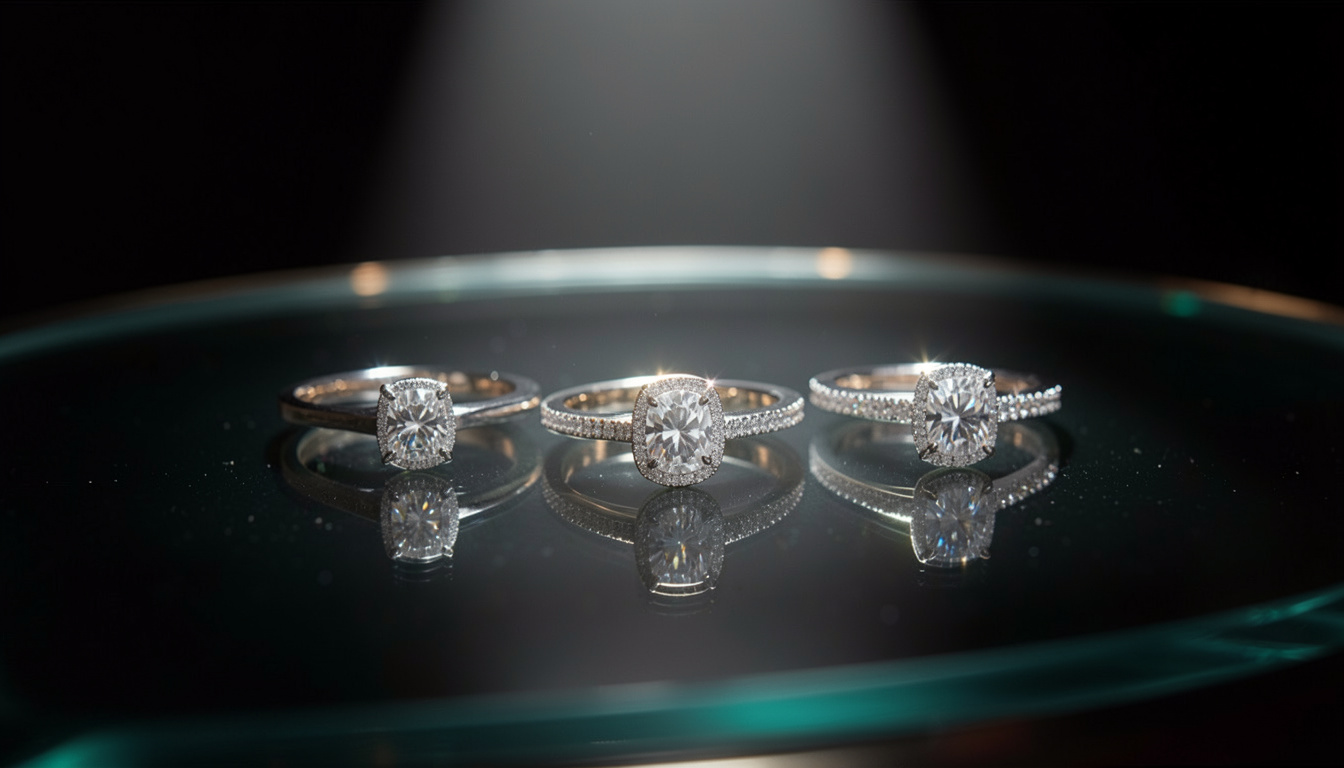
Not every ring needs a story. But some do; and those are usually the ones people keep for decades, the ones that end up in a velvet box passed between generations. Three-stone engagement rings are built around exactly that kind of meaning. Three stones, yes, but more than that, people who understand the symbolism tend to feel it more than explain it.
The Symbolism Behind Three-Stone Engagement Rings
The past, the present, and the future; that is the most widely known reading. Each stone in a trinity engagement ring sits for one of those phases; that is a lot for a piece of jewelry to carry, and that's what makes it unique, too.
That said, the meaning is not fixed. Some couples use the three stones to represent themselves: who they were, who they are now, and who they are becoming together. Others see it as friendship, love, and commitment, all given equal weight.
A few things that draw people to this style beyond the looks:
- The symbolism grows with the relationship: it does not date the way trend-driven styles do
- It works as an engagement ring, an anniversary piece, or a milestone gift; it is not locked into one occasion
- The three-stone format feels intentional. Nothing about it reads as a default choice
- Partners can assign personal meaning to each stone: that kind of specificity matters to a lot of couples
Popular Metal Choices for Three Stone Engagement Rings
The metal does more than hold the stones. For 3-stone diamond engagement rings, the four metals worth knowing are listed below; each one shifts the character of the ring in a different direction.
- 18k White Gold: Bright, clean, and very much in step with current taste. 18k gold three-stone rings in white gold let the diamonds do the talking without competition from the setting.
- 18k Yellow Gold: Warmer, older-feeling in the best sense. This pairing has been used for centuries for a reason. It suits round and oval stones particularly well.
- Platinum: Heavier and harder than gold. It wears better over the years of daily use, and the naturally white color does not need rhodium plating to stay bright.
- Rose Gold: The most distinctive of the four. That warm pink tone sits differently against diamonds; the contrast is subtle but noticeable, and it photographs beautifully.
For day-to-day wear, 18k gold three-stone rings tend to hit the right balance: strong enough to hold stones securely and refined enough to feel like serious jewelry.
Diamond Shapes That Complement Three-Stone Designs
Shape selection matters more in a three-stone setting than in most others. The side stones need to work with the center, not fight it. These combinations tend to resolve that tension well.
- Round center, tapered baguettes on either side are clean geometry, classic without being boring. The contrast between curved and straight keeps it interesting.
- An oval center and pear-shaped side stones have everything flowing in one direction. It elongates the finger, and there is a softness to it that suits people who find sharp cuts a little cold.
- Cushion center, half-moon sides lean towards vintage. The rounded lines give it a warmth that more angular cuts do not have.
- Emerald cut center, trillion sides are graphic and direct. Strong lines, geometric tension. Not for everyone, but genuinely striking when it works.
In diamond three-stone rings, the center stone is typically set slightly higher or sized larger, just enough to establish hierarchy without making the flanking stones feel like afterthoughts.
Conclusion
There are plenty of ring styles with visual appeal. Fewer have this kind of layered meaning behind them. Three-stone engagement rings work because they carry something real, a timeline, a commitment, a quiet acknowledgement that relationships exist across time and not just in a single moment. Whether you are drawn to trinity engagement rings for what they represent or simply because the design is proportioned beautifully, are a style that does not need to be explained.
 English
Join our community to interact with posts!