
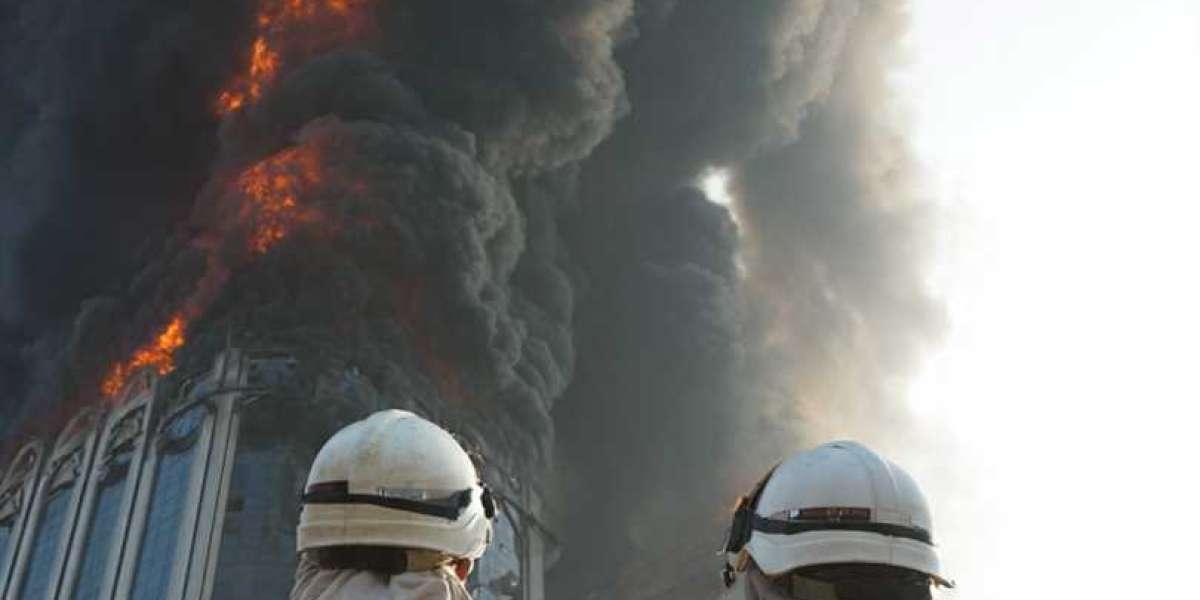
And if, in the event of a fire, a panel on the cladding system fails, what can make the difference between an isolated situation and a disaster? Well, this could come down to whether the facade assessments and inspections had been conducted in accordance with the rules before handing over the property. For all those involved in development and construction projects in both Dubai and Abu Dhabi, this is not just some formality anymore.
Why Facade Fire Risk Became a Regulatory Priority
Fires in facades due to combustible cladding are no longer theoretical problems in the region, as high-profile fires in tower blocks in Dubai have led to stricter regulations concerning facade systems, and the current UAE Fire and Life Safety Code of Practice makes this quite clear. Cladding is considered a life-safety system by itself and not only a design feature.
The code specifies fire tests for cladding systems at both small scale and full scale, depending on building height and occupancy category, making references to American, British, and European testing standards. Deviation from any tested and listed assembly automatically requires an Engineering Judgement from an approved testing laboratory and this requirement is often overlooked.
What Facade Assessments and Inspections Actually Cover
A proper facade assessment is not a single site visit near completion. It usually runs across three stages: design review, material verification, and progressive on-site inspection during installation.
● Design review checks that the proposed cladding system, cavity barriers, and firestopping details match a tested and certified assembly
● Material verification confirms certificates of conformity for panels, insulation, brackets, and sealants
● On-site inspection verifies installation against the approved design at set intervals, typically every 20 percent of progress, with perimeter fire barriers sampled against ASTM E2393
Skipping any stage tends to surface later as a rejection against the uae fire and life safety code of practice, a far more expensive place to find a problem than during construction.
Who Is Allowed to Sign Off on Facade Compliance
The UAE restricts who can review and inspect facade systems. Cladding suppliers, contractors, and installers must be registered and licensed with Civil Defence, and the fire consultant conducting the design review and site inspections must operate as a registered House of Expertise. This structure is deliberate; it keeps the party checking the work independent from the party that designed, supplied, or installed it.
Field inspections must also be carried out by a House of Expertise accredited to ISO 17020, the international standard governing the competence and impartiality of inspection bodies. Without that independence, a Civil Defence submission is unlikely to be accepted, regardless of how well the facade was actually built on site.
Common Mistakes That Delay Handover
Most facade-related delays trace back to a handful of recurring issues. Contractors substitute a panel or sealant mid-project without securing a new Engineering Judgement. Cavity fire barriers get installed but not inspected before the next trade covers them up, making later verification difficult without opening up finished work. Undertaking letters from suppliers and installers, confirming the system will perform as tested, are sometimes submitted late or go missing altogether.
Building owners who bring in an inspector early, rather than at pre-handover, generally avoid these problems, since deviations get caught while still cheap to fix.
Getting Facade Compliance Right the First Time
Facade assessments and inspections protect more than a Civil Defence approval; they protect occupants and property value long after handover. The process works best when treated as a continuous thread through design, procurement, and construction, rather than a single inspection tacked onto the end of a project. Staying aligned with the UAE Fire and Life Safety Code of Practice from the earliest design stage saves both time and money later, and it is a far easier conversation to have before the first panel goes up than after.
If your project is approaching facade design review, bring in an independent, ISO 17020-accredited House of Expertise early rather than waiting for a rejection to force the issue.
Conclusion:
Facade assessments and inspections protect more than a Civil Defence approval; they protect occupants and property value long after handover. The process works best when treated as a continuous thread through design, procurement, and construction, rather than a single inspection tacked onto the end of a project. Staying aligned with the UAE Fire and Life Safety Code of Practice from the earliest design stage saves both time and money later, and it is a far easier conversation to have before the first panel goes up than after.
If your project is approaching facade design review, bring in an independent, ISO 17020-accredited House of Expertise early rather than waiting for a rejection to force the issue.
FAQs
1. Who is responsible for facade fire compliance in the UAE?
The responsibility is jointly borne by the cladding provider, contractor, installer, and fire consultant, who will do the design review and field inspections, all of whom should have registrations with Civil Defence.
2. How often are facade inspections required during construction?
Field inspections are usually needed at least every 20% of installation progress, with additional inspections for the perimeter fire barriers.
3. What happens if a cladding system deviates from its tested design?
Any deviation calls for an Engineering Judgement which should be obtained from a certified testing and certification body before the installation process commences.
4. Does the facade assessment apply only to high-rise buildings?
No. Testing requirements vary depending on the building’s height and occupancy, but facade fire assessments are applicable to different kinds of buildings, with tougher testing requirements for high buildings.
5. Can the same company design and inspect a facade system?
No. The inspecting House of Expertise needs to be independent of the design, supply, and installation firms.
 English
Join our community to interact with posts!