
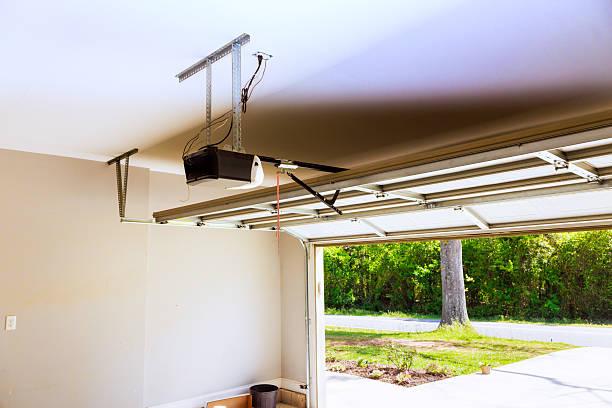
Your garage door stops working, and the first instinct is to grab the phone and call a tech. Totally understandable. But honestly, a lot of service calls turn out to be something embarrassingly simple, like a dead battery or a tripped breaker, and you end up paying a trip fee for something you could've handled in five minutes. If you're dealing with a Residential Garage Door in Pottstown PA that's acting up, run through these five checks first. You might save yourself a real chunk of money, and if the problem turns out to be something bigger, at least you'll know that going in.
1. Check the Power Source First
This sounds obvious. People skip it anyway. Before you assume anything mechanical has failed, walk over to the opener unit mounted on your ceiling and see if the light is on. No light usually means no power. Check whether the unit is still plugged into the outlet, because vibration from normal use can actually work a plug loose over time.
If it's plugged in but still dead, head to your breaker box. Garage circuits trip more often than people expect, especially if something else on the same circuit kicked on at the same time. Reset the breaker, go back and try the door. If it trips again immediately, that's a sign of an electrical issue worth calling someone about. But a lot of the time, one reset is all it takes.
Also worth checking: some openers have a reset button on the unit itself, and some have a GFCI outlet nearby that may have tripped independently. Those little reset buttons on outlets get ignored all the time. Press the reset, try the door again.
2. Look at the Photo-Eye Sensors
The photo-eye sensors are those two small units sitting low on either side of your door, usually about four to six inches off the ground. They shoot an invisible beam across the opening. If anything breaks that beam, the door won't close. That's a safety feature, not a malfunction, but a lot of people don't realize their sensors are the problem.
First, look for anything physically blocking the beam. A kid's bike, a box, a garden hose coiled nearby. Sounds too simple. It happens constantly. Move anything in the path and try the door again.
If the path is clear, check whether the sensors are aligned. Each unit usually has a small indicator light. One should be solid green (the sending side) and one should be solid or blinking amber (the receiving side). If either light is off or blinking erratically, the sensors are probably misaligned. You can gently adjust the receiving sensor by hand until the light goes solid. Dirty lenses are another common culprit, so wipe them off with a dry cloth while you're at it. This fix takes two minutes and solves the problem more often than you'd think.
According to Wikipedia's overview of garage door opener safety systems, the photo-eye sensor requirement became a federal mandate in 1993 after a number of accidents involving children. Knowing how the system works helps you troubleshoot it faster.
3. Test the Remote and Wall Keypad Separately
Dead batteries cause a surprising number of "my opener is broken" calls. Before you suspect the opener itself, pull the batteries out of your remote and replace them. Fresh ones, not the ones from the junk drawer that have been in there since 2019.
Test the remote first. Then test the wall button inside the garage separately. Here's why this matters: if the wall button works but the remote doesn't, you've got a remote issue. If neither works, the problem is almost certainly the opener or the power source, not the remotes. If the remote works but the wall keypad doesn't, the keypad wiring or button itself may be faulty. Isolating which one works helps you describe the problem accurately if you do end up calling for help, and it saves the tech time, which often saves you money.
Also check whether your opener has a "lock" mode activated. Some models have a vacation lock that disables all remotes. There's usually a button on the wall panel for this. Easy to turn on by accident, easy to miss.
4. Inspect the Springs and Cables Visually
This one requires a hands-off approach. Look, don't touch. Garage door springs are under enormous tension, and a broken spring can cause serious injury if you try to adjust or replace it yourself. This is not a DIY job.
What you can safely do is look. Stand back and look at the horizontal cables running along the sides of the door and the torsion spring running above the door horizontally. A broken torsion spring will often have a visible gap in the coil. Frayed or snapped cables will look obviously wrong, hanging loose or kinked. If you see either of these, stop using the door immediately. Running an opener against a broken spring can damage the opener motor and make the repair more expensive.
For Residential Garage Door Services in Pottstown PA, this kind of repair always needs a trained tech with the right tools. Springs are not something to mess around with, full stop. If you spot a break, that's your cue to call.
If you're in the area and need someone reliable, Ollis Entry handles spring and cable repairs along with full door service, so it's worth keeping their name handy if you spot something that's clearly beyond a basic fix.
5. Check the Track Alignment and Listen Closely
A door that grinds, scrapes, or shudders on its way up or down is telling you something. Don't ignore it. Those sounds usually mean the door is rubbing against the track, which can mean the track itself is bent or the door has shifted slightly out of alignment.
Look at the vertical and horizontal tracks on both sides. They should be straight, with no visible bends or gaps where the track meets the wall bracket. Check whether the rollers are sitting properly inside the track or if any have jumped out. A roller that's popped out is sometimes something you can gently guide back in, but if the track is bent, that needs professional work.
An off-track door gets worse fast. Every time the opener tries to run the door through a bent or misaligned section, it puts more stress on the rollers, the opener, and the door panels themselves. Catching it early keeps the repair smaller. If the door looks crooked when it's fully open, or if it stops partway and reverses without an obvious sensor issue, track alignment is worth checking before anything else.
Frequently Asked Questions
Why does my garage door open but not close?
This is almost always a sensor issue. The photo-eye sensors are detecting something in the path of the door, or they're misaligned and the beam isn't connecting properly. Check for obstructions first, then look at the indicator lights on both sensors. A solid light on both usually means they're aligned. Blinking or no light means something's off.
Can I replace garage door springs myself?
Technically yes, but it's genuinely dangerous without the right tools and training. Torsion springs store a huge amount of energy, and they can snap back with enough force to cause serious injury. Most professionals strongly advise against DIY spring replacement. It's one of those jobs where the cost of hiring someone is much lower than the cost of doing it wrong.
How often should I replace the batteries in my garage door remote?
Most remotes run on standard batteries that last one to two years with normal use. If your remote is getting sluggish or you have to stand closer to the door for it to work, replace the batteries. It's a good habit to swap them out every year or so rather than waiting for them to die completely.
What does it mean when my garage door reverses right before hitting the floor?
That usually points to the close-force or close-limit settings on the opener. If the opener thinks it's hit resistance before the door is actually closed, it reverses as a safety measure. It can also be caused by a dirty or slightly misaligned sensor. Check the sensors first. If they're fine, the opener's sensitivity settings may need a small adjustment, which is covered in most opener manuals.
When should I stop troubleshooting and just call someone?
If you've checked the power, the sensors, the batteries, and the track and nothing's obviously wrong, it's time to call. Same goes for anything involving broken springs, snapped cables, or a door that's jumped the track. Those need proper tools and know-how. There's no shame in calling early when it comes to things that can genuinely hurt you. Good Residential Garage Door Services in Pottstown PA will walk you through what they're seeing and why, so you're not just guessing.
 English
Join our community to interact with posts!