
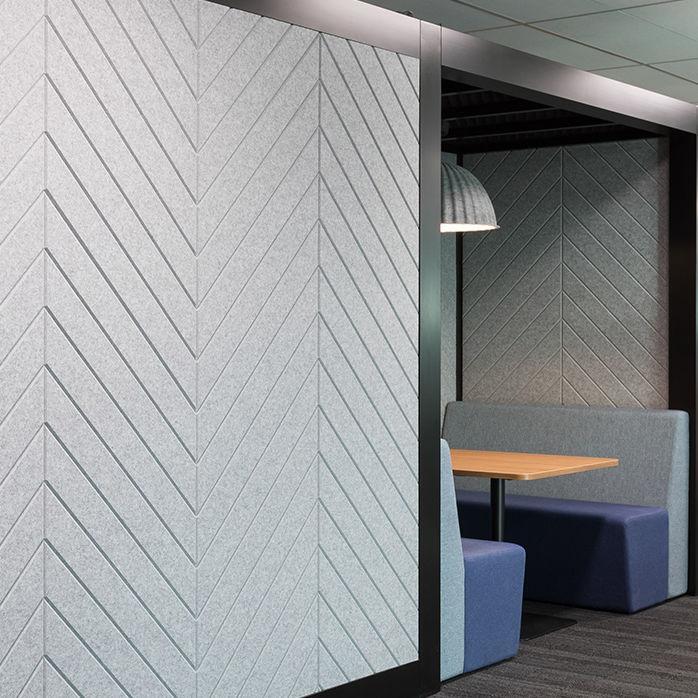
The boardroom had everything it was supposed to have. The right table, the right chairs, the right lighting. A floor-to-ceiling window looking out over the marina. On paper it was finished. In reality it felt like a room that had not quite arrived yet.
The walls were the problem. Four flat, painted surfaces with nothing to anchor the space visually. Every sound in the room — voices, the HVAC, the click of a laptop being opened — reflected back with an edge that made two-hour meetings feel longer than they were. We had treated the aesthetics and ignored the acoustics, and the room was telling us.
A contact in commercial fit-out mentioned shaheenacoustic specifically in the context of groove panels — not flat acoustic tiles, but textured wood-effect panels that work acoustically and look like a deliberate design choice rather than a correction. That distinction mattered to us.
Why flat acoustic panels were not the answer
We had looked at standard fabric-wrapped acoustic panels before the groove panel conversation. They would have solved the sound problem. They would not have solved the visual one.
A boardroom at this level is used for client presentations, senior leadership meetings, and occasional video calls that partners in other offices join. The room communicates something about the organization every time someone walks into it or sees it on a screen. Fabric panels in corporate grey would have made the acoustics better and the room look like a budget meeting room in a business center.
What we needed was something that solved both problems at once. The groove panel concept — channeled timber-effect slats over an acoustic backing — does exactly that. The grooves create shadow lines that give a wall depth and texture. The backing absorbs sound. You get a feature wall that earns its place visually and does acoustic work behind the surface.
The installation process
Shaheen Acoustic’s team visited the boardroom before anything was specified. They measured the wall, noted the existing HVAC position and the window return, and asked about how the room was used — primarily for meetings and presentations, occasionally for video calls where the wall behind the speaker would be in frame.
That last detail shaped the recommendation. For a wall that appears on camera regularly, the groove pattern orientation and the finish tone matter more than they would in a purely functional space. We chose a vertical groove orientation in a warm charcoal finish that complemented the existing furniture without competing with it.
Installation covered the full feature wall — the longest wall of the boardroom, running the full height from floor to ceiling. The panels were cut to precise dimensions on site to work around the wall-mounted screen and the data port positions without any visible joins or gaps.
The installation itself took a day and a half. The boardroom was back in use by the following morning.
What the room is like now
The visual change was immediate. The groove wall gives the room a focal point it did not have. The shadow lines created by the channels read differently as the light moves through the day — softer in the morning, more defined in the afternoon when the sun comes around. It is the kind of detail that reads as considered from the first time someone sits down in the room.
The acoustic change took a meeting or two to fully register, which is probably the right way for it to work. The first thing people noticed was that the room felt different. The second thing, once they were in a conversation, was that they were not working to hear each other across the table.
Specific differences since the install:
• The textured groove panel install absorbed the hard reflection off the longest wall. That was the dominant echo path in the room — voices hitting the flat painted surface and returning across the table. It is gone. Conversation at normal volume is clear end to end without anyone raising their voice.
• Video calls improved without any change to the AV setup. Remote participants stopped asking people to repeat themselves. The room microphone is picking up cleaner sound because there is less reflected noise for it to deal with.
• The room now reads well on camera. The groove wall behind the speaker position gives video call participants a clean, intentional background. Several people have asked where the wall came from. That does not happen with a painted surface.
• Long meetings feel less draining. This is harder to measure but consistent in the feedback. A room with better acoustics reduces the low-level cognitive effort of listening over time. Two-hour sessions in this room now feel like two-hour sessions, not three.
What made the groove panel approach work here
The reason this worked as well as it did was the combination of two things that are not always available from the same supplier: acoustic competence and design flexibility.
The groove pattern, finish tone, orientation, and panel sizing were all specified to the room rather than taken from a standard catalogue option. The acoustic backing specification was matched to the room dimensions and usage. Neither element was treated as secondary to the other.
That is a harder brief to execute than it sounds. Most suppliers do one or the other well. A supplier that treats both as equally non-negotiable is less common.
If you have a boardroom or meeting space in Dubai where the acoustics and the aesthetics are both underdelivering, groove panels are worth understanding properly before you commit to a standard acoustic fix. Their Acoustic Groove Panels in Dubai page covers the finish options, groove configurations, and installation scope — enough detail to know whether the product fits your space before you book a site visit.
 English
Join our community to interact with posts!