
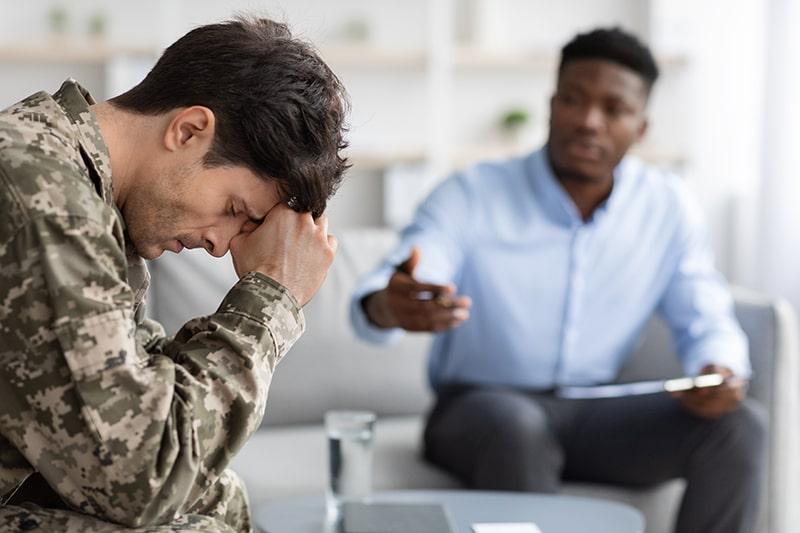
When we think about the psychological aftermath of trauma, we tend to focus on the fear of what might happen next. However, for many individuals living with Post-Traumatic Stress Disorder, the most agonizing symptom is not fear of the future—it is a crushing, inescapable guilt about the past. Survivors frequently torture themselves with the belief that they should have done more, fought harder, or that they simply do not deserve to have survived when others did not.
At Psychiatry Magazine, our clinical mission is to help you untangle the complex web of trauma symptoms. Today, we are exploring the painful reality of survivor's guilt, the concept of moral injury, why your brain subconsciously prefers guilt over helplessness, and how specialized telemental health care can help you finally forgive yourself.
The Illusion of Control: Why the Brain Chooses Guilt
To understand survivor's guilt, we must understand how the human brain processes terror. Trauma, by definition, involves a profound and absolute loss of control. You were placed in a terrifying situation, and you were completely powerless to stop it.
The human brain deeply despises helplessness. To a survival-focused nervous system, the idea that the world is chaotic, random, and completely out of our control is a terrifying concept.
To protect you from this existential terror, the brain often creates an illusion of control after the fact. It begins to rewrite the narrative, convincing you that you did have the power to change the outcome. Your brain tells you, "If only I had taken a different route," or "If only I had fought back sooner, this wouldn't have happened."
By blaming you, the brain successfully avoids the terrifying reality that you were powerless. Guilt, as painful as it is, feels safer to the nervous system than acknowledging total helplessness.
Toxic Shame vs. Moral Injury
In trauma recovery, it is important to distinguish between different types of trauma-induced guilt:
- Survivor's Guilt: The intense remorse of surviving a life-threatening situation (like a car crash, combat, or a natural disaster) when others perished, or escaping an abusive household while leaving siblings behind.
- Toxic Shame: While guilt says, "I did something bad," toxic shame says, "I am something bad." Trauma survivors frequently internalize their abuse, believing that they were targeted because they are fundamentally broken, unlovable, or inherently flawed.
- Moral Injury: This occurs when a person is forced to act (or forced to witness an act) that deeply violates their own core moral compass. It is highly common in military veterans, first responders, and medical professionals who had to make impossible, life-or-death decisions in catastrophic environments.
The Paralyzing Weight of Unhealed Guilt
Living with unhealed survivor's guilt is a form of emotional self-flagellation. Survivors often subconsciously punish themselves by refusing to experience joy. They may sabotage healthy relationships, turn down career advancements, or rely on substance abuse because they deeply believe they do not deserve to be happy or successful.
This toxic shame is also incredibly isolating. Survivors rarely speak about their guilt because they fear that if they admit what they did (or didn't do) during the trauma, others will view them as the monster they believe themselves to be.
Finding Self-Forgiveness With Virtual Counseling
You cannot out-logic survivor's guilt alone. Because the guilt is so deeply tied to your core identity and survival mechanisms, you need a safe, objective, trauma-informed guide to help you dismantle the distorted beliefs.
Engaging in online therapy for trauma and PTSD provides a profoundly safe container for this deeply vulnerable work. Unpacking intense shame can cause a person to feel physically exposed and defensive. Attending therapy from the privacy of your own home allows you to navigate these difficult conversations while anchored in a familiar, secure environment, which naturally lowers the nervous system's defenses.
Therapeutic Modalities for Guilt and Shame
When you participate in a comprehensive virtual PTSD treatment program, licensed clinicians utilize highly targeted frameworks to address complex shame:
- Cognitive Processing Therapy (CPT): The gold standard for treating trauma-related guilt. CPT helps you systematically examine the facts of the traumatic event, allowing you to challenge and dismantle the "hindsight bias" that falsely tells you that you should have known what was going to happen.
- Self-Compassion Focused Therapy: Teaches you how to stop viewing yourself through the lens of a harsh, unforgiving critic. You learn to extend the same empathy and grace to yourself that you would easily offer to a friend in the exact same situation.
- Internal Family Systems (IFS): Helps you safely connect with the specific "part" of you that is carrying the guilt, allowing you to process the pain and gently unburden that part of your psyche.
FAQs About PTSD and Survivor's Guilt
Is it normal to feel guilty even if I was the victim?
Yes. This is incredibly common, especially in cases of assault or childhood abuse. The brain will often falsely take the blame for the abuse as a way to maintain a sense of order and control in a terrifying situation.
How do I stop ruminating on the "what ifs"?
Rumination is the engine that drives survivor's guilt. Therapy helps you practice "cognitive stopping" techniques and mindfulness grounding, training your brain to forcefully disengage from the endless loop of past hypotheticals and return to the physical reality of the present moment.
Will forgiving myself mean I am minimizing what happened?
No. This is a cognitive distortion. Forgiving yourself does not mean the event wasn't horrific, and it doesn't mean you are letting the perpetrator off the hook. It simply means you are refusing to carry a burden of responsibility that never actually belonged to you in the first place.
Conclusion
Survivor's guilt is a heavy, suffocating blanket that keeps you tethered to the worst moment of your life. But your survival was not a crime, and you do not need to spend the rest of your life serving a sentence for it. Through the compassionate, expert guidance of online mental health counseling, you can dismantle the illusion of control. You can release the shame, grant yourself the grace you desperately deserve, and finally embrace the life you survived to live.
 English
Join our community to interact with posts!