
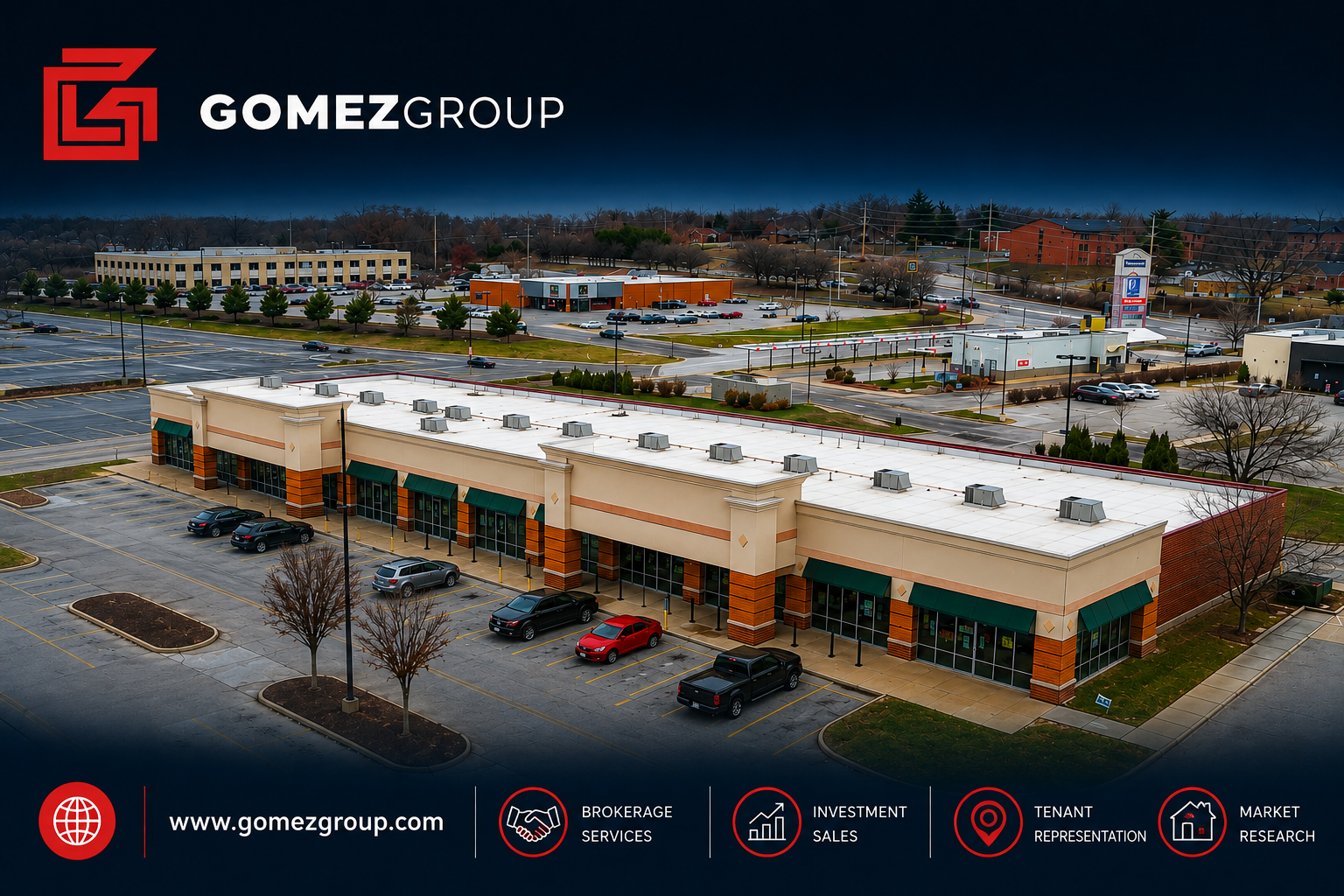
Commercial real estate remains an important part of many long-term investment strategies. But finding the right property is rarely as simple as looking at a listing and comparing prices. Investors have to consider location, tenant quality, lease structure, income potential, market conditions, property condition, and how the asset fits into a broader portfolio.
That is where commercial real estate investment opportunities become more than just listings. The strongest opportunities are those that align the physical property, financial structure, tenant profile, and local market with an investor's goals.
Gomez Group of Cushman & Wakefield focuses on net lease properties and shopping center dispositions nationwide, helping investors and property owners navigate commercial real estate transactions across a broad range of retail and commercial sectors. Its website currently features available properties that include single-tenant assets, multi-tenant retail centers, restaurant properties, healthcare real estate, and other income-producing commercial properties.
What Makes a Commercial Real Estate Opportunity Worth Considering?
Not every property marketed for sale represents the same type of investment. Two buildings in different locations can have very different risk profiles even when their price points look similar.
Experienced investors generally start by asking a few practical questions:
Is the property in a market with durable demand? Who occupies the space? How long does the lease run? Who pays property expenses? Is the current income supported by a strong tenant and reasonable lease terms? What could happen to the property's value if market conditions change?
These questions matter because commercial real estate is ultimately an investment in both a physical asset and an operating income stream.
For that reason, commercial investment property should be evaluated from multiple angles rather than based on a single metric such as price or cap rate.
Why Investors Continue to Look at Net Lease Properties for Sale
One of the most recognizable segments of the commercial investment market is net lease properties for sale.
Under a net lease arrangement, the tenant may be responsible for some or many property-related expenses, depending on the specific lease. In a triple-net structure, for example, the tenant commonly assumes responsibility for taxes, insurance, and maintenance, although the precise obligations must always be confirmed by reviewing the actual lease.
This structure can appeal to investors who want a more predictable ownership experience and less direct involvement in day-to-day property operations.
However, the label "net lease" should never replace proper due diligence. Investors still need to understand the lease, tenant obligations, remaining term, renewal provisions, rent increases, guarantees, and the condition of the property.
In other words, the value of a net lease investment comes from the complete package not simply the lease structure.
Retail Properties Continue to Offer Diverse Investment Options
Retail real estate is a broad category that includes everything from standalone stores to neighborhood shopping centers and larger retail destinations.
Gomez Group's current platform reflects that range. Its available-property inventory includes assets occupied by Starbucks, Dollar General, Oak Street Health, Chipotle, Five Guys, Black Rock Coffee, Total Care ER, healthcare providers, financial institutions, and restaurant operators.
This variety illustrates an important point: Commercial Real Estate Investment Opportunities are not limited to one tenant type or one business model.
Investors may choose retail assets because they want exposure to established consumer locations, diversified tenant mixes, essential services, or long-term leases. Others may prefer single-tenant properties because the ownership structure is easier to understand and manage.
The right choice depends on the investor's objectives, risk tolerance, available capital, and desired level of involvement.
Shopping Centers for Sale Require a Different Investment Approach
Shopping centers for sale can provide investors with a broader tenant mix than single-tenant properties. That diversification can be attractive, but it also creates additional factors to evaluate.
A shopping center investor should pay close attention to:
- Tenant mix and tenant quality
- Current occupancy
- Anchor tenants
- Lease expiration schedules
- Property visibility and accessibility
- Traffic patterns
- Local demographics
- Competition from nearby retail
- Capital expenditure requirements
- Potential for future leasing or redevelopment
Gomez Group specifically identifies shopping centers as a core area of its national commercial real estate platform and discusses retail properties in the context of population growth, job creation, infrastructure, accessibility, and changing consumer behavior.
That market perspective is important because a shopping center's performance depends on more than the building itself. Its surrounding trade area can have a major impact on tenant demand and long-term property value.
Understanding NNN and Triple Net Lease Properties
Investors often search specifically for NNN Properties for Sale because of the potential for reduced landlord responsibilities.
A triple-net lease typically places responsibility for property taxes, insurance, and maintenance on the tenant, subject to the terms of the individual lease. From an investor's perspective, that can create a relatively straightforward income model.
Still, an NNN property is not automatically a low-risk investment.
An investor should review the tenant's financial strength, the remaining lease term, annual rent increases, renewal options, guaranty structure, property condition, and the likelihood of continued demand for the location.
For example, an NNN property leased to a strong operator in a growing trade area may present a very different opportunity from a similar-looking asset with a short remaining lease and weak market fundamentals.
The lesson is simple: the lease matters, but so do the tenant, property, and location.
Examples of Current Investment Opportunities
The Gomez Group property platform provides a useful illustration of the range of assets available in today's commercial marketplace.
Current listings shown on the website include a Starbucks property in Middletown, Ohio; Washington Square, a Dollar General and Oak Street Health anchored retail center in Bellwood, Illinois; a Chipotle property in Celina, Texas; Jennings Shops in Jennings, Missouri; a Five Guys, Black Rock Coffee, and Total Care ER property in Celina; a Department of Veterans Affairs and Class A Medical Center in San Antonio; KeyBank in Layton, Utah; Goodwill in Tucson, Arizona; and an Applebee's property in Rocky Mount, Virginia.
The pricing and cap rates displayed on the site vary substantially, reinforcing why investors should evaluate each asset on its own merits rather than assuming that one property type automatically produces a particular level of return.
These listings also demonstrate how commercial investment portfolios can span multiple industries, locations, and lease structures.
What to Look for in Commercial Real Estate Investment Opportunities
A disciplined investment process can make it easier to separate attractive properties from assets that simply look appealing at first glance.
1. Location Fundamentals
Look beyond the property address. Consider population trends, employment, traffic, accessibility, nearby development, household characteristics, and competitive supply.
2. Tenant Quality
A strong tenant can support the income profile of a property, but investors should still review the financial and operating characteristics relevant to the lease.
3. Lease Structure
Read the lease carefully. Determine who pays taxes, insurance, maintenance, repairs, and other expenses. Review rent increases, renewal options, termination rights, and guarantees.
4. Property Condition
Even a well-leased property can require capital investment. Roofs, parking lots, mechanical systems, signage, and other building components should be considered during due diligence.
5. Financial Metrics
Cap rate is useful, but it should not be viewed in isolation. Investors should also examine purchase price, current income, future rent, operating expenses, financing assumptions, and potential exit value.
6. Portfolio Fit
A good property is not necessarily the right property for every investor. Consider how the acquisition affects diversification, liquidity, income objectives, leverage, and overall risk.
Why Professional Commercial Real Estate Guidance Matters
Commercial transactions can involve substantial capital and complicated negotiations. Investors may need to compare multiple properties, analyze lease documents, evaluate market conditions, and negotiate with sellers and other parties.
That is one reason professional brokerage remains valuable.
Gomez Group describes its platform as serving investors, tenants, and developers across all 50 states, with a focus on retail property investment opportunities and national net lease investments. The firm's website also provides a searchable inventory of available properties and access to closed-property information.
Professional guidance does not eliminate investment risk, but it can help investors ask better questions, understand transaction details, identify relevant comparables, and approach negotiations with stronger market context.
Building a More Thoughtful Commercial Real Estate Strategy
The strongest commercial real estate strategies are rarely based on chasing the newest property or the highest advertised yield.
Instead, successful investing often comes down to consistency: understanding the asset, understanding the lease, understanding the market, and understanding why the property makes sense for the portfolio.
That approach is especially important when comparing commercial properties for sale, retail properties for sale, shopping centers for sale, and net lease properties for sale. Each category can serve a different purpose, and the right opportunity depends on the investor.
Investors also benefit from staying flexible. Market conditions change, consumer behavior changes, and businesses change. A thoughtful investor considers both the current income profile and the property's ability to remain relevant in its market over time.
Final Thoughts
Commercial real estate investing is not simply about finding a property and completing a transaction. It is about understanding how a property generates income, how the tenant relationship works, how the surrounding market supports demand, and how the asset contributes to a larger financial strategy.
Today's commercial real estate investment opportunities span a wide range of property types, from single-tenant net lease assets to multi-tenant shopping centers and specialized healthcare or retail properties. The Gomez Group portfolio reflects that diversity, with available properties across several states and industries.
For investors considering their next acquisition, the most useful starting point is careful research and property-specific due diligence. Reviewing the lease, understanding the market, evaluating the tenant, and considering the property's long-term role within a portfolio can provide a much stronger foundation for an investment decision.
Explore Commercial Real Estate Opportunities with Gomez Group.
Whether you're looking for net lease properties for sale, retail investments, or shopping center opportunities, the right property starts with the right market insight. Gomez Group helps investors and property owners evaluate commercial real estate opportunities with a focus on property fundamentals, tenant quality, lease structures, and long-term investment objectives.
Explore current properties and discover opportunities that may fit your commercial real estate strategy.
Visit: https://gomezgroup.com/properties/
Email: netleaseretail@cushwake.com
 English
Join our community to interact with posts!