
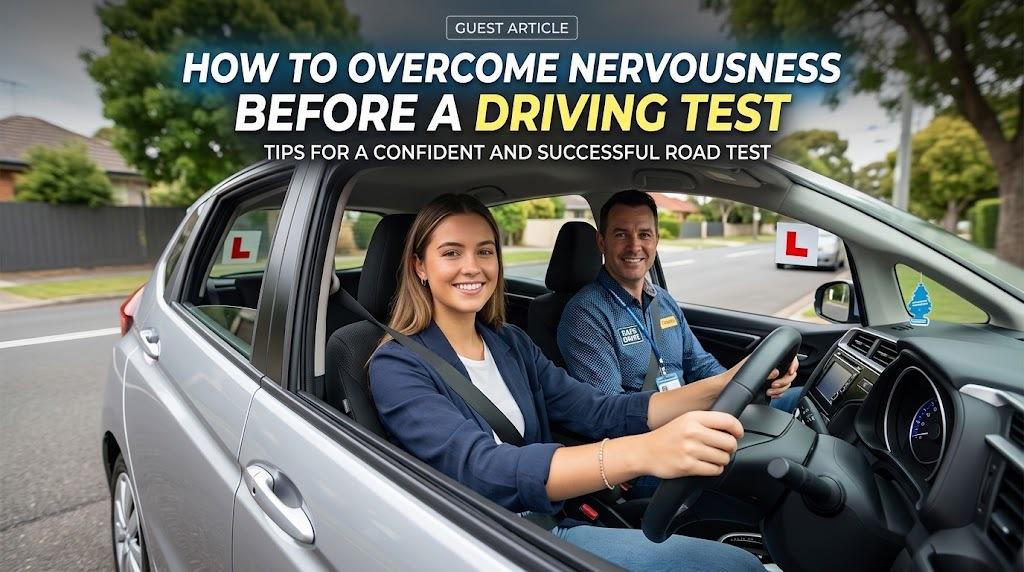
Feeling nervous before a driving test is completely normal. Even people who have spent weeks practicing can suddenly feel their heart beating faster, their palms getting sweaty, or their mind going blank when test day arrives. The pressure of being evaluated can make ordinary driving tasks feel much harder than they usually do. The good news is that nervousness does not mean you are unprepared. With the right preparation and a few practical techniques, you can manage test anxiety and approach your driving test with greater confidence.
One of the best ways to reduce anxiety is to build confidence through consistent practice. Taking professional Driving Lessons Vancouver can help you become more comfortable with common test situations, from lane changes and parking to intersections and defensive driving. More importantly, regular practice helps turn important driving habits into natural actions, so you do not have to consciously think about every small decision when you are behind the wheel.
Why Do People Get Nervous Before a Driving Test?
Understanding where your nervousness comes from can make it easier to control. For many learners, the biggest fear is making a mistake that results in failure. You may worry about forgetting a shoulder check, missing a sign, parking incorrectly, or making a decision too slowly.
Another common source of anxiety is the presence of the examiner. Knowing that someone is watching and evaluating your driving can make you overly aware of every action. You might start second-guessing decisions that you normally make confidently.
There is also the fear of the unknown. If you do not know what to expect during the test, your imagination can make the experience seem more intimidating than it really is.
Remember that the goal of a driving test is not to see whether you can drive perfectly. It is designed to determine whether you can operate a vehicle safely and responsibly. Small imperfections do not automatically mean you are an unsafe driver.
Prepare Well Before Test Day
Good preparation is one of the most effective ways to reduce driving test anxiety. Instead of relying on a last-minute practice session, give yourself enough time to develop consistent habits.
Practice the skills that are commonly evaluated, including:
-
Smooth starts and stops
-
Proper lane changes
-
Mirror and shoulder checks
-
Turning at intersections
-
Parking and reversing
-
Maintaining a safe following distance
-
Obeying traffic signs and signals
-
Controlling your speed
-
Checking blind spots
-
Responding appropriately to pedestrians and cyclists
Do not only practice on quiet roads where everything feels easy. Spend some time driving in different traffic conditions and around areas that require more attention. This can help you become more adaptable and less dependent on predictable situations.
Practice the Areas That Make You Uncomfortable
If parallel parking makes you nervous, practice it repeatedly. If busy intersections cause stress, spend more time navigating them with an experienced driver.
The purpose is not to become perfect overnight. It is to make unfamiliar situations feel familiar enough that you can handle them calmly.
Take a Practice Test
A mock driving test can be extremely helpful because it gives you an idea of what it feels like to drive while someone evaluates you.
Ask your instructor or an experienced driver to conduct a practice session without giving you constant instructions. Follow the same type of routine you expect during the real test.
This can reveal habits you may not notice during ordinary practice. Perhaps you forget to check your mirrors often enough, hesitate during lane changes, or become distracted when approaching intersections.
A practice test gives you the opportunity to correct these issues before the real appointment.
Get Familiar With the Test Area
If possible, practice driving around the area where your test will take place. You do not need to memorize a route, and you should never assume the examiner will follow exactly the same path.
However, becoming familiar with the types of roads, intersections, signs, speed limits, and traffic patterns in the area can make you feel more comfortable.
For example, if you know the area has several busy intersections or complicated turns, you can pay extra attention to those situations during practice.
The goal is familiarity, not memorization.
Avoid Cramming the Night Before
It can be tempting to spend hours practicing the evening before your driving test. However, excessive last-minute practice can sometimes increase stress rather than improve your performance.
Instead, do a short and relaxed review of the skills you already know. If there is one particular maneuver you want to practice, spend some time on it, but avoid turning the evening into an intense training session.
Your brain needs rest too.
Get Enough Sleep
A good night's sleep can make a noticeable difference in your concentration, reaction time, and emotional control. Staying awake late because you are worried about the test may leave you tired and less focused the next morning.
Prepare everything you need in advance, set your alarm, and give yourself enough time to sleep comfortably.
Use Simple Breathing Techniques
When anxiety rises, your breathing can become faster and shallower. This can make you feel even more tense.
Before starting the test, take a few slow breaths. Breathe in gradually, pause briefly, and then breathe out slowly. Repeat this several times.
You can also use controlled breathing while waiting for your test to begin. It is a simple technique, but it can help calm your body and bring your attention back to the present moment.
You do not need to eliminate nervousness completely. The goal is to keep it from controlling your behavior.
Arrive Early
Rushing into your driving test after dealing with traffic, parking problems, or uncertainty about where to go can make anxiety much worse.
Plan to arrive early enough that you have time to settle down. Check the appointment details beforehand and make sure you know where you need to go.
Getting there early gives you a few quiet moments to breathe, organize your thoughts, and mentally prepare.
Just avoid arriving so early that you spend a long time sitting around imagining everything that could go wrong.
Don't Let One Mistake Ruin the Whole Test
This is one of the most important things to remember.
Suppose you make a minor mistake early in the test. You might immediately think, "I've failed." That thought can distract you from everything that happens next.
Instead, acknowledge the mistake and move forward.
If you miss something small, focus on making the next decision safely. Do not spend the next several minutes replaying the previous moment in your head.
One imperfect moment does not necessarily determine the entire result. Staying focused can prevent a small mistake from turning into a much bigger problem.
Listen Carefully to the Examiner
Nervousness can make people rush through instructions or assume they know what the examiner wants them to do.
Listen carefully when instructions are given. If you do not understand something, it is better to ask for clarification than to guess.
You should also avoid trying to impress the examiner. You are not expected to drive aggressively, quickly, or unusually cautiously. Simply demonstrate safe, responsible driving.
Follow the road rules, observe your surroundings, and make decisions deliberately.
Use Positive Self-Talk
The way you talk to yourself can have a surprisingly strong effect on your confidence.
Instead of thinking:
"I always make mistakes."
Try:
"I have practiced this, and I know what to do."
Instead of:
"I'm definitely going to fail."
Try:
"I will focus on one situation at a time."
Positive self-talk does not mean pretending that nothing can go wrong. It means replacing unhelpful thoughts with realistic ones.
You have practiced. You know the rules. You can focus on driving safely.
Don't Compare Yourself With Other Learners
It is easy to become anxious when you hear someone say they passed their test on the first attempt or needed very little practice.
Everyone learns differently.
Some people become comfortable with parking quickly but need more time with busy intersections. Others may feel confident in traffic but struggle with test anxiety.
Your progress should be measured against your own previous experience, not someone else's timeline.
Prepare Your Vehicle
If you are using your own vehicle for the test, make sure it is in proper working condition beforehand.
Check basic items such as:
-
Lights and signals
-
Tires
-
Mirrors
-
Seat belts
-
Windshield condition
-
Brakes
-
Horn
-
Clean and clear windows
Make sure you understand how the vehicle's controls work. You do not want to spend the beginning of the test trying to remember how to operate a feature you rarely use.
A well-prepared vehicle removes one more source of unnecessary stress.
Have a Calm Routine on Test Day
Try to keep your morning as normal and comfortable as possible. Eat something if you normally eat breakfast, drink enough water, and avoid doing anything that makes you feel rushed.
Give yourself enough time to get ready and travel to the testing location.
Most importantly, avoid listening to other nervous learners discuss everything that could go wrong. Their anxiety can easily become your anxiety.
Take a few minutes to focus on yourself and the skills you have practiced.
What If You Don't Pass?
It is understandable to feel disappointed if you do not pass your driving test. However, failing a test does not mean you are a bad driver or that you will never become confident behind the wheel.
Use the result as feedback.
Think about what happened, identify the areas that need improvement, and practice them before trying again. If possible, ask your instructor for specific guidance rather than simply repeating the entire practice routine.
Many capable drivers need more than one attempt. What matters is learning from the experience and continuing to improve.
Final Thoughts
Driving test nervousness is normal, but it does not have to control your performance. Thorough preparation, realistic practice, good sleep, controlled breathing, and a calm mindset can make the experience much easier. Instead of trying to eliminate every nervous feeling, focus on staying attentive and making safe decisions one situation at a time. With consistent practice and the right guidance from Benche Driving School, you can build the skills and confidence needed to approach your driving test with a much calmer mindset.
 English
Join our community to interact with posts!