
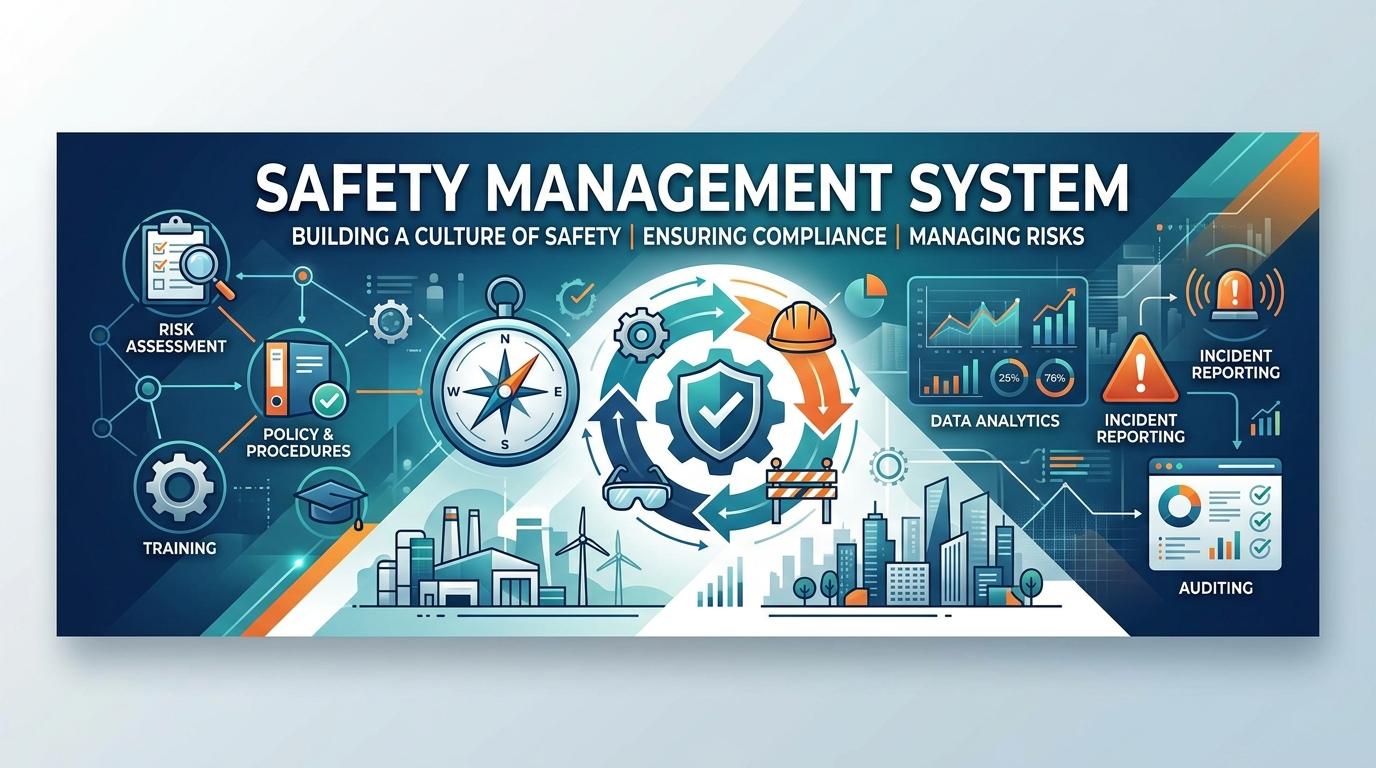
A Safety Management System gives organisations a structured way to manage workplace safety, compliance responsibilities and risk related activities. Safety teams often have to manage inspections, risk assessments, incident reports, audits and corrective actions while also keeping important records organised. When these responsibilities are handled through separate spreadsheets, documents and emails, it can become difficult to know what has been completed and what still needs attention.
A digital approach can make these processes easier to coordinate. A safety management system can help you and your team organise safety information, assign responsibilities, monitor compliance tasks and maintain records in one place. It can also support modern compliance management by helping organisations create consistent processes for identifying risks, documenting findings and following up on corrective actions.
What Is a Safety Management System
A safety management system is a structured framework for managing workplace safety.
It brings together policies, procedures, responsibilities and processes that help an organisation identify hazards and control risks.
A system may include activities such as
- Risk assessments
- Hazard identification
- Workplace inspections
- Incident reporting
- Safety audits
- Corrective actions
- Employee training
- Compliance monitoring
- Safety observations
- Emergency procedures
- Safety documentation
The exact structure depends on the organisation, industry and workplace risks.
A digital system can support these processes by keeping relevant information connected and accessible to authorised users.
Why Compliance Management Matters
Compliance involves more than keeping a collection of documents.
Organisations may need to demonstrate that required inspections have been completed, safety procedures are followed, employees receive appropriate training and identified issues are addressed.
Modern compliance management focuses on maintaining clear processes and records so organisations can monitor their responsibilities more effectively.
A practical compliance process can involve
- Identifying applicable requirements
- Assigning responsibilities
- Creating required procedures
- Completing inspections and assessments
- Recording findings
- Assigning corrective actions
- Monitoring deadlines
- Reviewing completed activities
A digital system can help connect these steps and make outstanding responsibilities easier to identify.
Safety Compliance Software
Safety compliance software can help organisations manage compliance related activities through a central platform.
Instead of storing inspection records, audit findings and compliance documents in different locations, teams can organise them within one system.
Depending on the software, organisations may be able to manage
- Compliance requirements
- Inspection schedules
- Safety audits
- Permits
- Training records
- Corrective actions
- Safety documentation
- Review dates
- Compliance reports
The specific requirements will depend on the organisation's industry and applicable regulations.
Software should support compliance activities rather than replace professional regulatory advice.
Workplace Safety Software
Workplace safety software can help safety professionals manage everyday safety activities.
Employees and supervisors can use digital tools to report hazards, complete inspections and provide safety observations.
For example, an employee might notice a blocked emergency exit. They can report the issue, add relevant details and send it to the responsible person.
The safety team can then monitor the corrective action until the issue has been resolved.
This creates a record that shows what was identified, who was responsible and what action was taken.
Safety Management Software for Risk Control
Safety management software can support the complete risk management process.
Workplace risks can change when organisations introduce new equipment, modify processes, change working areas or assign new responsibilities.
A digital system can help teams maintain risk assessments and review them when conditions change.
Risk information can be organised by
- Workplace
- Department
- Activity
- Equipment
- Hazard
- Risk level
- Responsible person
- Review date
This makes it easier for safety teams to locate relevant assessments and identify those that need review.
Risk Assessment Software
Risk assessment software provides a structured way to record and manage workplace risk assessments.
A typical assessment can include
- Hazard description
- People exposed to the hazard
- Existing controls
- Risk rating
- Additional controls
- Responsible person
- Completion date
- Review schedule
For example, when a new machine is installed, the organisation can create an assessment covering its operation, maintenance and potential hazards.
The assessment can then be reviewed by the appropriate people before the activity begins.
Digital records can also make it easier to update assessments when working conditions change.
Incident Reporting Software
Incidents and near misses can reveal weaknesses in existing safety controls.
Incident reporting software can give employees and supervisors a consistent way to document these events.
A report may contain
- Date and time
- Location
- Incident type
- People involved
- Description
- Immediate actions
- Possible causes
- Supporting images or documents
- Corrective actions
After an incident is reported, the organisation can investigate what happened and determine whether additional controls are needed.
Near miss reporting is also valuable because it can highlight hazards before they result in a serious incident.
Safety Audit Software
Audits provide organisations with an opportunity to review whether their safety processes are working as intended.
Safety audit software can help teams plan audits, use standardised checklists, record findings and track corrective actions.
An audit may examine areas such as
- Safety procedures
- Employee training
- Emergency preparedness
- Equipment condition
- Workplace inspections
- Risk assessments
- Incident records
- Compliance requirements
Once findings are recorded, responsibilities can be assigned to the appropriate people.
This creates a clear connection between an audit finding and the action required to address it.
Workplace Risk Management
Workplace risk management is an ongoing process.
A risk assessment completed several years ago may no longer reflect current workplace conditions. Equipment may have changed, new employees may have joined the organisation or procedures may have been updated.
For this reason, organisations need to review risks regularly.
A safety management system can help teams monitor review dates and identify assessments that require attention.
It can also connect risk information with incidents, inspections and corrective actions.
This can help managers gain a broader view of workplace risks rather than looking at each safety activity separately.
Managing Corrective Actions
Finding a safety issue is only the beginning.
The organisation needs to make sure the issue is addressed.
A safety management system can assign corrective actions to specific employees or departments.
Each action can include
- Description
- Priority
- Responsible person
- Due date
- Required action
- Status
- Supporting evidence
- Verification
Safety managers can then monitor whether actions are completed on time.
For example, an inspection may identify damaged protective equipment. The responsible department can receive an action to replace it, while the safety team can verify completion before closing the record.
Centralised Safety Records
One useful feature of a digital safety system is centralised record keeping.
Safety teams may need to access information about
- Previous incidents
- Risk assessments
- Audit findings
- Inspection results
- Training
- Corrective actions
- Compliance activities
When these records are maintained in separate files, finding specific information can take time.
A central system can provide authorised users with a single location for reviewing relevant safety information.
This can be especially useful for organisations with multiple departments or facilities.
Employee Participation in Safety
Employees are an important part of workplace safety.
They work directly with equipment, processes and workplace environments, so they may notice hazards before managers do.
A safety management system can give employees simple ways to participate in safety activities.
They may be able to
- Report hazards
- Submit near miss reports
- Complete safety observations
- Participate in inspections
- Access safety procedures
- Review assigned actions
When reporting is simple and accessible, employees may be more willing to share information about unsafe conditions.
Compliance Monitoring and Deadlines
Compliance responsibilities often involve dates and recurring activities.
An organisation may need to complete an inspection every month, renew a permit annually or review a particular procedure at scheduled intervals.
Missing a deadline can create unnecessary compliance problems.
A compliance management system can help organisations monitor these activities and identify upcoming or overdue tasks.
This gives safety teams an opportunity to address responsibilities before deadlines are missed.
Using Safety Data for Better Decisions
A safety management system can collect information from different activities.
Over time, this information may reveal patterns.
For example, managers might find that
- Similar incidents occur repeatedly in one department
- Certain hazards appear frequently
- Corrective actions remain open for long periods
- Inspection findings repeat in the same location
- Certain safety activities are regularly overdue
These patterns can help teams decide where additional attention may be required.
The goal should not be to collect data simply for reporting purposes. Safety information should help people make practical decisions and improve workplace controls.
Benefits of a Safety Management System
A suitable system can provide several practical benefits.
Better Record Organisation
Safety and compliance information can be stored in a central digital environment.
Clear Responsibilities
Tasks can be assigned to specific employees or departments.
Easier Compliance Monitoring
Teams can monitor deadlines, reviews and outstanding activities.
Consistent Safety Processes
Standardised forms and workflows can help employees follow similar procedures.
Better Risk Visibility
Managers can review workplace risks and outstanding corrective actions more easily.
Improved Communication
Relevant safety information can be shared with authorised users across the organisation.
Choosing the Right Safety Management System
Every organisation has different requirements, so the selection process should begin with actual workplace needs.
Identify Your Main Risks
Consider the hazards, activities and processes that require regular monitoring.
Review Compliance Requirements
Identify the regulatory and internal requirements that your organisation needs to manage.
Consider Users
Think about how employees, supervisors, safety managers and senior management will use the system.
Check Required Features
Consider whether you need risk assessment, incident reporting, safety audits, inspections, corrective actions and compliance tracking.
Evaluate Ease of Use
Employees should be able to report information without unnecessary complexity.
Review Reporting Capabilities
Reports should provide useful information that supports safety decisions and compliance monitoring.
Final Thoughts on Safety Management System
A safety management system can help organisations create a more organised approach to workplace safety and compliance. By connecting risk assessments, inspections, incident reports, audits and corrective actions, it can give safety teams better visibility into their responsibilities.
Safety compliance software and safety management software can also reduce the need to depend on disconnected spreadsheets and paper records. Employees can report hazards and incidents, supervisors can manage assigned tasks and safety professionals can monitor outstanding actions from a central platform.
However, technology is only one part of effective safety management. Organisations still need clear procedures, trained employees, competent safety professionals and appropriate risk controls.
When people, processes and technology work together, a safety management system can support modern compliance management, improve workplace risk management and help organisations maintain clearer, more consistent safety records.
 English
Join our community to interact with posts!