
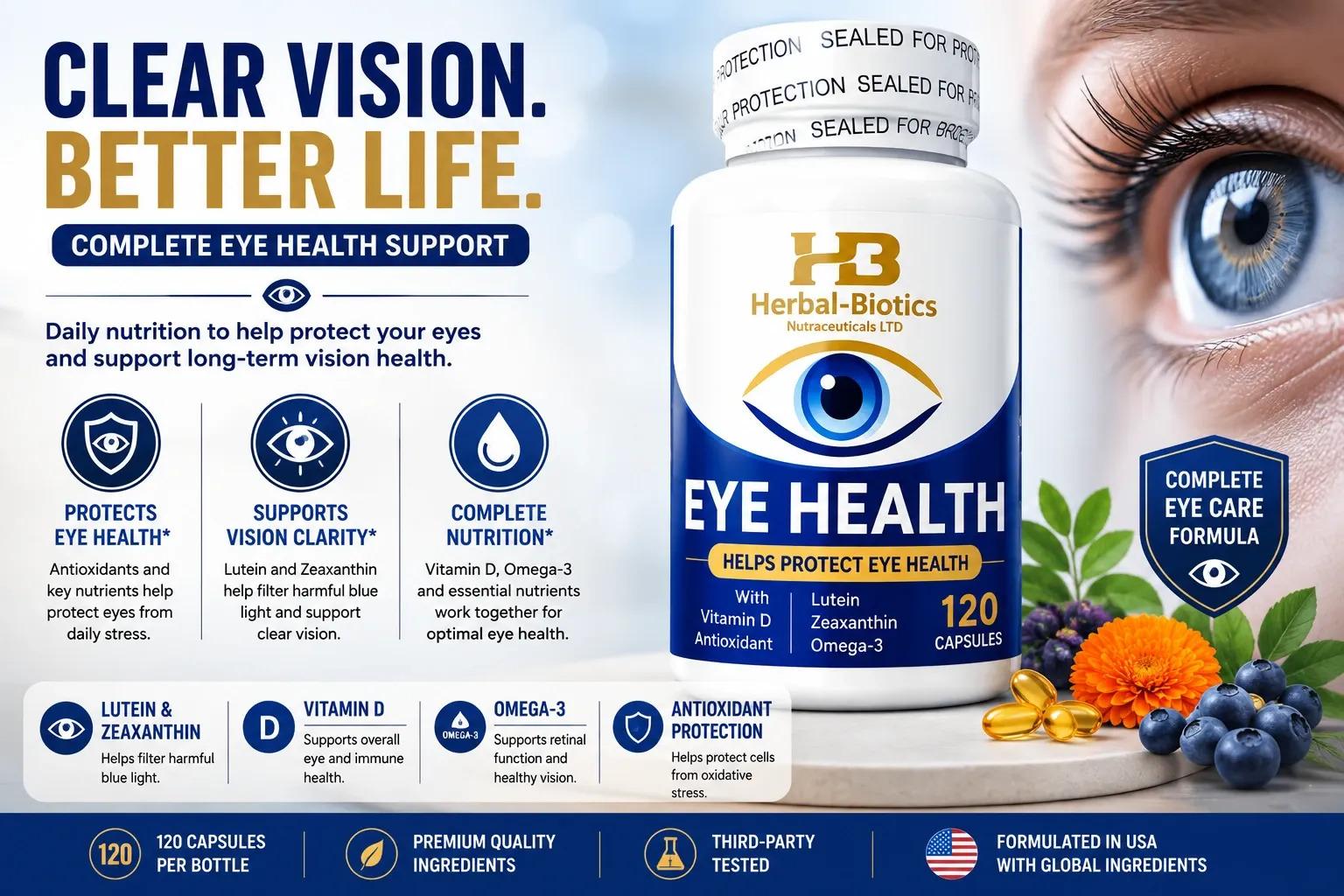
An Eye Health Care Supplement is generally an oral nutritional product designed to provide vitamins, minerals, carotenoids, antioxidants, or other nutrients associated with normal eye function and eye nutrition.
People use an Eye Health Care Supplement for different reasons, including filling nutritional gaps, supporting healthy eyes as they age, and providing nutrients such as vitamin A, zinc, lutein, and zeaxanthin.
The practical point, however, is that an eye supplement is not automatically a medicine for an eye problem. A supplement may support normal eye function when the body gets the nutrients it needs, but it should not be assumed to restore lost vision, remove the need for glasses, cure glaucoma, dissolve cataracts, or replace professional eye care.
For people researching a Milk Thistle Liver Detox Supplement in Nigeria, the real question is not simply whether supplements are good for the eyes. It is what a particular product contains, what evidence exists for those ingredients, who might reasonably benefit, and when an eye examination is more appropriate. This guide looks at those questions in practical terms.
What Is an Eye Health Care Supplement?
An Eye Health Care Supplement is usually a dietary supplement formulated around nutrients that have a role in normal vision or that are being studied for their relationship with eye health. Depending on the product, it may contain vitamins such as A, C, and E, minerals such as zinc, carotenoids such as lutein and zeaxanthin, omega-3 fatty acids, or botanical ingredients.
The important word is "supplement." It is intended to supplement nutritional intake rather than diagnose or treat an eye disease. Two products sold as eye vitamins in Nigeria can therefore be quite different. One may contain a broad mixture of vitamins and minerals, while another may concentrate on carotenoids or ingredients associated with a particular area of eye nutrition.
There is no single formula that makes a product suitable for every person. The ingredients and their amounts matter, and so does the reason someone is considering taking the product.
What Does an Eye Supplement Contain?
Common formulations include nutrients involved in normal vision, antioxidant compounds, and nutrients found in tissues of the eye. Lutein and zeaxanthin are particularly common in products marketed for macular health because these carotenoids are naturally present in the macula, a specialised area of the retina involved in detailed central vision.
Some products also contain vitamin A, vitamin C, vitamin E, zinc, copper, omega-3 fatty acids, or botanical extracts such as bilberry. Their presence on a label does not mean that the product can prevent or treat every eye condition associated with those nutrients.
How Is It Different From Medicine?
Medicine is generally used for a specific medical purpose, such as treating an infection, controlling eye pressure, reducing inflammation, or managing another diagnosed condition. An oral eye care supplement has a different role. It provides nutrients rather than directly treating an identified disease.
That distinction matters. Someone with glaucoma, for example, should not stop prescribed treatment and substitute an eye care supplement because both are described as supporting eye health.
What Is an Eye Health Care Supplement Used For?
The simplest answer is that an eye health supplement is used to provide nutritional support for normal eye function and overall eye health. Depending on the formulation and the individual's nutritional situation, it may provide nutrients involved in normal vision, antioxidant protection, or maintenance of tissues involved in sight.
Some people take supplements because their diet does not consistently provide enough of particular nutrients. Others become interested in eye vitamins and minerals as they get older or after discussing nutrition with a healthcare professional. In some situations, specific nutrient combinations have also been studied for particular eye diseases, but those findings cannot automatically be applied to every supplement sold on the market.
This is where marketing language can become confusing. "Supports eye health" does not mean "restores eyesight." A supplement may contribute to adequate nutrition without making an individual's vision sharper.
Supporting Normal Vision
Normal vision depends on a functioning visual system, and adequate nutrition is part of that picture. Vitamin A, for example, has an established role in normal vision. Other nutrients contribute to the normal functioning and protection of cells and tissues.
This does not mean taking extra vitamins gives a person better-than-normal eyesight. If someone already gets sufficient nutrients, taking more does not necessarily produce a noticeable improvement in vision.
Supporting Overall Eye Health
General eye nutrition is about giving the body the nutrients it needs rather than trying to fix one particular eye problem. An eye care supplement may be considered as one part of that approach, alongside a nutritious diet and appropriate eye care.
Providing Important Eye Nutrients
Supplementation can be relevant when dietary intake is inadequate or when a healthcare professional has identified a particular nutritional need. Nutritional deficiencies can have real consequences, but that does not mean everyone with tired or blurred eyes has a vitamin deficiency.
Supporting Macular and Retinal Health
The retina is the light-sensitive tissue at the back of the eye, while the macula is the central area responsible for detailed vision. Lutein and zeaxanthin are concentrated in the macula, and nutrients such as zinc and antioxidant vitamins appear in some formulations designed around retinal and macular nutrition.
The evidence is strongest for certain specific formulations and circumstances, not for the general claim that any supplement will protect everyone's retina.
Supporting Eye Health as You Age
Age naturally changes the risks associated with eye health. Conditions such as cataracts, glaucoma, and age-related macular degeneration become more relevant with increasing age. Nutritional support may be worth discussing, particularly when diet is poor or a person has a specific medical or nutritional need.
But being older does not automatically mean a person needs an eye supplement.
What Ingredients Are Commonly Found in Eye Health Supplements?
The ingredient panel is more useful than the front of the bottle. Terms such as "advanced vision support" or "complete eye formula" sound impressive, but they do not tell you how much of each nutrient is actually present.
Vitamin A
Vitamin A is essential for normal vision. The body uses vitamin A in processes involved in seeing, particularly under low-light conditions. Severe deficiency can cause serious problems with vision and eye health.
That does not mean taking large quantities of vitamin A will improve already normal vision. High intake of preformed vitamin A can be harmful, so more is not automatically better.
Vitamin C
Vitamin C is an antioxidant, meaning it helps protect cells from oxidative damage. It is found in many fruits and vegetables and is included in some eye-health formulations because oxidative processes are relevant to tissues throughout the body, including the eye.
Its presence in a supplement should be viewed as nutritional support, not proof that the product prevents cataracts or another eye disease.
Vitamin E
Vitamin E is another antioxidant nutrient commonly found in eye vitamins and broader antioxidant formulations. It helps protect cells from oxidative damage and can be obtained from foods such as nuts, seeds, and certain vegetable oils.
As with other nutrients, supplementation should be considered in context. A higher dose is not necessarily more beneficial.
Zinc
Zinc is an essential mineral involved in many biological processes, including normal eye function. It is included in some formulations focused on retinal and macular health.
Zinc can also interact with other nutrients when consumed in excessive amounts, which is one reason to pay attention to the total amount being taken from all supplements.
Lutein
Lutein is a carotenoid found naturally in foods and concentrated in the macula. It is often included in supplements intended to support macular health.
Lutein is also available through foods, particularly dark green leafy vegetables. Research into lutein has produced useful evidence in certain contexts, but it should not be treated as a universal treatment for poor eyesight.
Zeaxanthin
Zeaxanthin is another carotenoid found in the macula and is frequently paired with lutein. Together, these nutrients are commonly associated with macular nutrition.
Their presence in an eye supplement does not mean that the product has been proven to prevent every form of vision loss. The specific formulation and the health situation being addressed matter.
Omega-3 Fatty Acids
Omega-3 fatty acids, particularly those found in fish, are included in some eye health products. They have roles throughout the body and have been investigated in relation to several aspects of eye health.
Evidence for specific eye conditions is mixed, so it is better to regard omega-3 as one component of nutritional support rather than assume that an omega-3 supplement will solve dry eye or another condition.
Bilberry and Other Botanical Ingredients
Some eye supplements contain bilberry, ginkgo, saffron, or other botanical ingredients. The evidence for these products can vary considerably according to the ingredient, dose, formulation, and health condition being studied.
"Natural" is not the same as "proven" or "risk-free." Botanical products can have biological effects and may interact with medicines, so they deserve the same sensible scrutiny as vitamins and minerals.
Who May Consider Taking an Eye Health Supplement?
Adults whose diets are consistently limited may consider nutritional supplementation, particularly when they are unable to obtain enough nutrients from food. Older adults may also discuss eye nutrition with a healthcare professional because certain age-related eye conditions become more common over time.
People with specific nutritional needs may have another reason to consider supplementation. The key is identifying the nutritional need rather than assuming that every vision concern is caused by a lack of vitamins.
Someone who wears glasses does not automatically need an eye supplement. Glasses correct refractive errors, such as myopia or short-sightedness, while supplements provide nutrients. Similarly, spending long hours on a computer may cause temporary eye discomfort, but that alone does not establish a need for an eye vitamin.
The same applies to ordinary eye fatigue. A person may benefit more from practical changes to screen habits, sleep, lighting, or an eye examination than from buying a bottle of supplements.
Can an Eye Health Supplement Improve Eyesight?
This is probably the most common misunderstanding. An eye health supplement may support normal visual function nutritionally, but that is different from making someone's prescription vision sharper.
Nearsightedness, or myopia, occurs when the eye focuses distant images incorrectly. Farsightedness, astigmatism, and presbyopia involve other changes in how the eye focuses light. Vitamins do not replace the optical correction provided by properly prescribed glasses or contact lenses.
If someone's vision has become blurry, the cause needs to be established rather than assumed to be a nutritional problem. Blurred vision can result from refractive error, dry eye, cataract, diabetic eye disease, glaucoma, retinal problems, or other conditions.
So, if a product claims that taking it will "restore perfect eyesight" or eliminate the need for glasses, that should immediately make you more cautious. A legitimate nutritional supplement should not be presented as a shortcut around an eye examination.
Can Eye Health Supplements Treat Eye Diseases?
Ordinary eye supplements should not automatically be regarded as treatments for eye disease. The evidence differs substantially between conditions and between formulations.
Cataracts
A cataract is a clouding of the eye's natural lens. Nutritional research may explore relationships between diet, antioxidants, and cataract risk, but this does not mean a typical eye supplement can dissolve or reverse an established cataract.
When a cataract significantly affects vision, professional assessment is the appropriate next step.
Glaucoma
Glaucoma involves damage to the optic nerve and can lead to permanent vision loss. It requires proper diagnosis and monitoring.
An ordinary eye care supplement should never be used as a substitute for prescribed glaucoma treatment or monitoring of eye pressure and optic nerve health.
Age-Related Macular Degeneration
Age-related macular degeneration, or AMD, is one area where specific nutritional formulations have meaningful clinical evidence. The AREDS and AREDS2 studies evaluated particular combinations of nutrients in people with specific stages and forms of AMD.
That evidence should not be stretched into the claim that every product containing lutein, zeaxanthin, zinc, or antioxidants provides the same benefit. AREDS2, for example, is a specific formulation studied for a specific clinical purpose. Someone with AMD should discuss whether an evidence-based formulation is appropriate rather than simply buying a general eye vitamin.
Diabetic Eye Disease
Diabetes can damage blood vessels in the retina, potentially leading to diabetic retinopathy and other vision problems. Nutritional supplements do not replace blood sugar management, medical care, or recommended retinal examinations.
A person with diabetes should take changes in vision seriously even if they are already using an eye supplement.
Dry Eye
Dry eye can have many causes, including tear-film problems, environmental factors, medications, ageing, and other health conditions. Some nutrients, including omega-3 fatty acids, have been studied in connection with dry-eye symptoms, but results are not uniform.
If dry eye is persistent, an eye professional can help identify the cause and recommend appropriate treatment. A supplement should not become an excuse to ignore ongoing symptoms.
Eye Health Supplement vs Eye Drops: What Is the Difference?
An oral supplement works through nutrition. Eye drops are applied directly to the eye and can have very different purposes, ranging from lubrication for dry-eye symptoms to medicines prescribed for specific conditions.
That distinction is practical. A lubricating eye drop and an oral vitamin supplement are not interchangeable products, even if both are marketed around "eye care."
Some prescription eye drops are essential for controlling conditions such as glaucoma. Stopping them because someone has started taking an eye supplement can be dangerous. Always treat prescribed eye drops as part of the medical treatment plan unless the prescribing professional tells you otherwise.
Are Eye Health Supplements Safe?
Many vitamins and minerals are safe when used appropriately, but safety depends on the ingredient, amount, duration of use, and the person's circumstances. Following the product's recommended serving is a sensible starting point.
One common mistake is combining several products without checking their labels. A multivitamin, an eye supplement, and another nutritional product may all contain vitamin A, zinc, vitamin E, or other overlapping nutrients. Adding them together can produce a much higher intake than expected.
Existing medical conditions and medicines also matter. Certain nutrients and botanical ingredients can interact with medicines or may not be suitable for everyone. Older adults and people taking several prescription medicines should be particularly careful about adding supplements without checking first.
Natural ingredients are not automatically harmless. At the same time, there is no reason to be frightened of supplements simply because interactions are possible. The practical approach is to know what you are taking, avoid unnecessary duplication, and ask a pharmacist, doctor, or eye-care professional when there is a relevant medical concern.
How to Choose an Eye Health Supplement in Nigeria
Buying an eye supplement in Nigeria requires the same basic judgment used when buying any health product. Start with the label, not the promise on the front of the package.
Check the Full Ingredient List
Look for the actual ingredients and the amount of each nutrient per serving. A long ingredient list is not automatically better. What matters is whether the formulation makes sense for the purpose you have in mind.
Look at the Amount of Each Nutrient
Two eye vitamins in Nigeria may contain very different quantities of the same nutrient. Check the serving size and compare the amounts rather than judging a product by the number of ingredients alone.
This is particularly relevant for nutrients that can become problematic when consumed in excessive amounts.
Check the Manufacturer and Product Labelling
Look for clear manufacturer information, an intact package, ingredient details, serving instructions, batch information, expiry information, and other labelling expected of a legitimate health product.
Be cautious when important information is missing or difficult to verify.
Buy From Reliable Pharmacies or Established Retailers
Where possible, purchase health products from reputable pharmacies or established retailers rather than questionable online sellers offering unusually dramatic claims.
In Nigeria, the availability of products through an online marketplace does not by itself tell you whether a particular listing is trustworthy. Pay attention to the actual manufacturer, packaging, labelling, and seller information.
Avoid Products Making Unrealistic Claims
Promises such as "cures glaucoma," "removes cataracts," "restores perfect eyesight," or "eliminates glasses permanently" should raise a red flag.
Eye health is complicated. A genuine nutritional product can have a useful role without making miracle claims.
Consider Professional Advice
If you already have an eye condition, take regular medication, are pregnant, have a significant nutritional concern, or are considering a high-dose formulation, professional advice is worthwhile.
A pharmacist can help review ingredients and possible interactions, while an optometrist or ophthalmologist can assess whether your symptoms require an eye examination or medical treatment.
How Should You Take an Eye Health Supplement?
There is no universal dosage for eye health supplements because products differ substantially in their ingredients and concentrations. Follow the serving instructions on the specific product rather than copying the dosage from another supplement.
Pay attention to whether the label recommends taking the product with food and whether the serving is one capsule, several capsules, or another amount. Do not assume that taking more will produce faster or better results.
It is also worth checking other supplements you take. If several products contain the same vitamins or minerals, ask a pharmacist or healthcare professional whether combining them makes sense.
If the supplement is being considered because of an existing eye disease rather than general nutritional support, professional guidance becomes even more useful.
Can Food Provide the Nutrients Your Eyes Need?
For most people, food should be the foundation of eye nutrition. A varied diet can provide many nutrients associated with healthy eyes without requiring a specialised supplement.
Dark leafy vegetables such as spinach and other greens provide carotenoids including lutein. Eggs can provide lutein and zeaxanthin along with other nutrients. Fish provides omega-3 fatty acids, while nuts and seeds provide vitamin E and other nutrients.
Colourful fruits and vegetables can contribute vitamin C and other antioxidant compounds. Orange and yellow foods can provide carotenoids, while a generally varied diet helps reduce the chance of relying heavily on one nutritional source.
This does not mean that eating vegetables can cure glaucoma or reverse cataracts. Food supports the body's nutritional needs, but established eye diseases still require appropriate diagnosis and treatment.
For someone considering an eye care supplement because their diet is inconsistent, improving everyday food choices may be just as relevant as choosing a supplement. In some circumstances, both can have a place.
What Else Can You Do to Protect Your Eye Health?
Regular eye examinations are one of the most useful forms of eye care because some important conditions can develop without obvious symptoms in their early stages. The appropriate examination schedule depends on age, risk factors, medical history, and existing eye conditions.
Protecting your eyes from excessive ultraviolet exposure is also sensible. Wearing appropriate sunglasses and using practical UV protection outdoors can reduce unnecessary exposure to ultraviolet radiation.
For people who spend long periods looking at screens, take regular breaks, blink normally, adjust screen position and lighting, and pay attention to persistent discomfort rather than simply assuming it is a vitamin problem.
Avoiding smoking, eating a balanced diet, getting adequate sleep, and managing health conditions such as diabetes and high blood pressure with appropriate medical care can also contribute to long-term eye health.
Most importantly, pay attention to changes in vision. A supplement cannot compensate for ignoring a symptom that needs examination.
When Should You See an Eye Doctor?
Some eye symptoms deserve professional attention rather than self-treatment with supplements. Sudden loss of vision or a sudden major change in vision should be treated as urgent.
Eye pain, flashes of light, a sudden increase in floaters, persistent blurred vision, significant redness or swelling, double vision, or another unusual change in how you see should also prompt appropriate professional assessment.
People with diabetes, known glaucoma, AMD, significant cataracts, or other diagnosed eye conditions may need regular monitoring even when they feel that their vision has not changed.
The practical rule is simple: if something about your vision has changed in a way that is new, sudden, persistent, or concerning, do not wait for an eye supplement to fix it. Supplements are nutritional products. They are not a substitute for finding out what is actually happening inside the eye.
Conclusion
An Eye Health Care Supplement is best understood as a nutritional support product, not a magic solution for vision problems. It may provide nutrients involved in normal vision and eye function, including vitamin A, vitamin C, vitamin E, zinc, lutein, and zeaxanthin. For some people, particularly those with inadequate dietary intake or specific clinical nutritional needs, that support can be useful. But the value of a supplement depends heavily on its actual formulation and the reason it is being taken.
The biggest practical mistake is confusing nutritional support with medical treatment. A supplement does not replace glasses for a refractive error, prescribed eye drops for glaucoma, treatment for significant cataracts, retinal monitoring for diabetes, or an examination when vision suddenly changes. Even evidence-based formulations such as those studied in AREDS and AREDS2 apply to particular clinical circumstances rather than to every product sold as an eye vitamin.
For readers in Nigeria, the sensible approach is to look closely at ingredients and dosages, buy from reliable pharmacies or established retailers, and be sceptical of miracle claims. Build eye nutrition around a varied diet, maintain sensible eye-care habits, have appropriate eye examinations, and seek professional care when symptoms are persistent, unusual, or sudden. A good supplement can have a place in a sensible eye-health plan, but it should support proper care, not stand in for it.
 English
Join our community to interact with posts!