
A military command bunker undergoes its annual safety inspection after a pressure simulation exercise. The reinforced walls, blast-resistant doors, and emergency power systems pass every test. However, engineers discover that one ventilation component fails to respond within the required milliseconds—the blast valves protecting the HVAC network. Although the valve still appears functional, internal wear has reduced its ability to withstand an explosion. In high-risk facilities, recognising the early signs of blast valve failure can prevent costly damage and help protect both people and critical infrastructure.
What are Blast Valves?
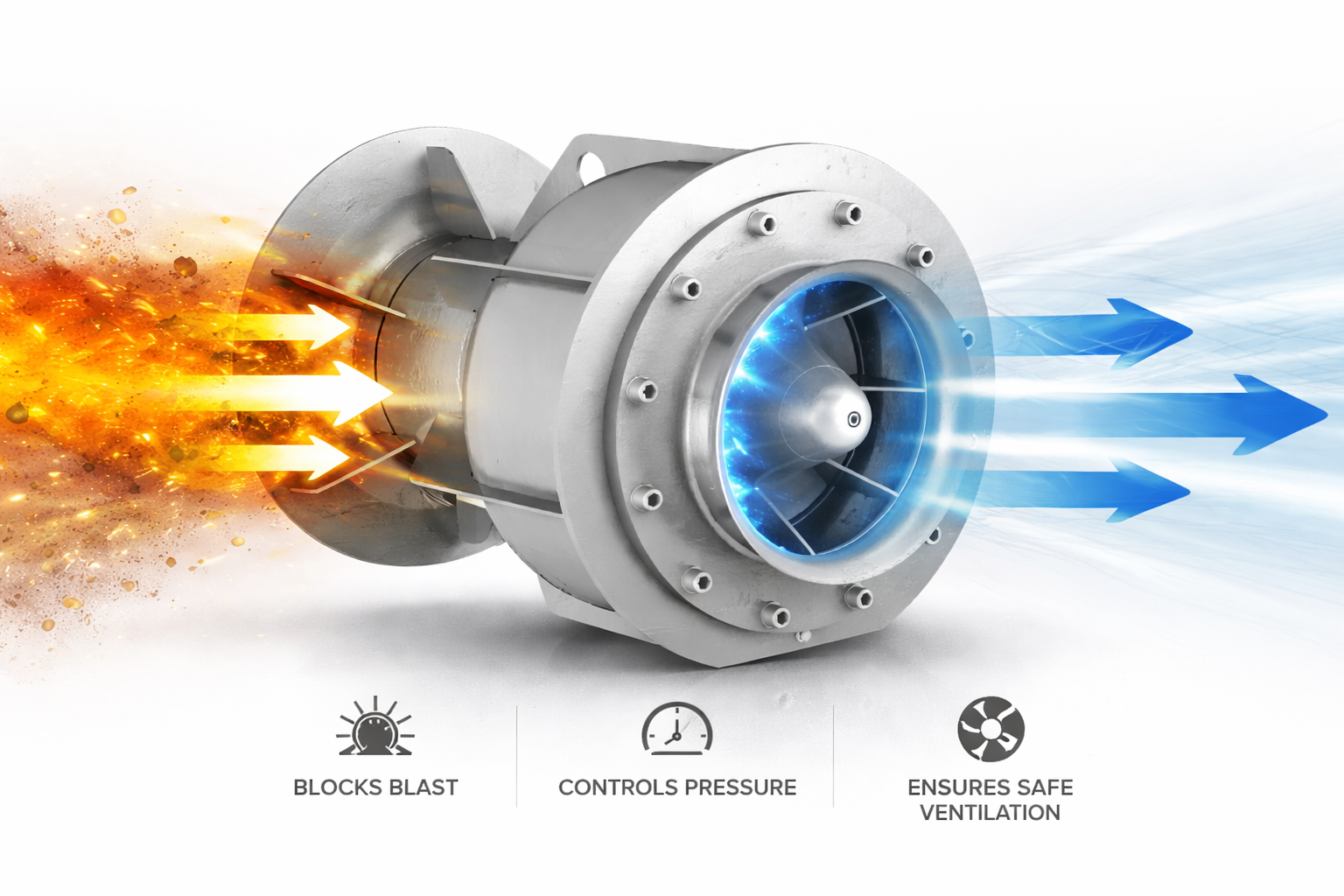
Blast valves are specialised safety devices installed in ventilation systems to protect buildings from the damaging effects of explosion-generated pressure waves. Positioned within air intake and exhaust ducts, they automatically isolate the ventilation network when a sudden overpressure event occurs.
Unlike ordinary ventilation dampers, blast valves are designed to survive extreme shock loads while allowing unrestricted airflow during normal operation. They are widely used in military facilities, underground shelters, industrial plants, and critical infrastructure where explosion protection is essential.
A properly designed Blast valve for bunker plays a vital role in preserving structural integrity and maintaining a safe internal environment during emergencies.
How Blast Valves Work Under Explosion Pressure
A Blast valve HVAC system operates continuously during normal building ventilation. Air passes freely through the valve without restricting airflow or affecting system performance.
When an explosion creates a rapid pressure wave, the valve instantly detects the overpressure and automatically closes. This prevents the shockwave from travelling through the ductwork into protected spaces.
Once safe pressure conditions return, the valve reopens and restores normal airflow. This rapid response protects occupants, sensitive equipment, and HVAC infrastructure from severe blast damage.
Signs Your HVAC Blast Valve Needs Replacement
Although blast valves are built for long service life, continuous operation and environmental exposure can gradually reduce their performance.
1. Visible Corrosion or Surface Damage
Rust, pitting, or corrosion weakens structural components and sealing surfaces. Facilities located in humid, coastal, or chemical environments should inspect valves more frequently.
2. Delayed Mechanical Response
A blast valve should react immediately to sudden pressure changes. If testing reveals sluggish movement or sticking mechanisms, replacement may be safer than repeated repairs.
3. Damaged Sealing Components
Worn seals can allow pressure leakage during an explosion, reducing the valve's protective capability. Even small sealing defects can compromise overall system performance.
4. Air Leakage During Normal Operation
Unexpected airflow loss, unusual pressure fluctuations, or reduced HVAC efficiency may indicate internal wear or mechanical failure within the valve assembly.
5. Excessive Mechanical Wear
Repeated opening and closing cycles gradually wear springs, hinges, bearings, and locking mechanisms. Once wear exceeds manufacturer tolerances, replacement becomes the safest option.
6. Failure During Routine Testing
Regular inspection and pressure testing are essential. Any valve that fails operational testing should be thoroughly evaluated and replaced if performance no longer meets design requirements.
Key Features of High-Quality Blast Valves
Modern blast valves combine robust construction with precision engineering to provide reliable protection in demanding environments.
Important features include:
- High pressure resistance
- Heavy-duty structural strength
- Corrosion-resistant materials
- Long operational durability
- High sealing efficiency
- Smooth airflow management
- Reliable automatic closure
- Consistent safety performance under extreme pressure
These characteristics help ensure dependable operation throughout the service life of the ventilation system.
Where Blast Valves are Used
Blast valves are installed wherever explosion protection and pressure management are critical.
Typical applications include:
- Military bunkers and shelters
- Defence command centres
- Ammunition storage facilities
- Industrial manufacturing plants
- Chemical processing facilities
- Petrochemical complexes
- Nuclear and thermal power plants
- Hazardous industrial environments
- Underground infrastructure
- Secure Blast valve HVAC systems
A Blast valve for bunker is particularly important because ventilation openings are often the most vulnerable points in blast-resistant structures.
Although some people confuse blast valves with a Blast Gate or Blast damper, they serve different purposes. A blast gate primarily controls airflow in dust collection systems, while a blast damper regulates ventilation under normal operating conditions. Blast valves are engineered specifically for explosion protection and shockwave isolation.
Factors Affecting Blast Valve Price in India
The Blast valve price depends on much more than valve size alone. Engineering requirements and performance specifications have the greatest influence on overall cost.
Common pricing factors include:
- Material quality
- Pressure rating
- Valve size and airflow capacity
- Structural design complexity
- Custom engineering requirements
- Manufacturing precision
- Installation environment
- Compliance with defence or industrial standards
- Product testing and certification
- Protective coatings and corrosion resistance
Selecting the lowest-priced option without considering technical performance can increase long-term maintenance costs and reduce facility safety.
How to Choose Blast Valve Manufacturers in India
Choosing an experienced manufacturer is essential for reliable long-term performance.
Before purchasing, buyers should evaluate:
- Industry experience
- Engineering expertise
- Pressure testing procedures
- Compliance with recognised standards
- Manufacturing quality control
- Custom design capability
- Installation guidance
- Technical documentation
- Spare parts availability
- Long-term after-sales support
Engineers seeking more information about industrial blast protection solutions can refer to:
Educational resources like these help buyers better understand engineering considerations before selecting a blast protection system.
Common Mistakes to Avoid
Many blast protection projects encounter preventable problems during equipment selection.
Avoid these common mistakes:
- Choosing products based only on Blast valve price
- Ignoring required pressure ratings
- Installing valves incompatible with existing HVAC systems
- Confusing a Blast Gate or standard Blast damper with an explosion-rated blast valve
- Skipping scheduled maintenance and testing
- Using incorrect valve specifications for high-risk environments
- Failing to verify certification and performance data
- Overlooking long-term maintenance requirements
Careful planning ensures reliable protection throughout the operational life of the facility.
Understanding the Term "Blast Valve Hot Air Balloon"
The phrase Blast valve hot air balloon refers to a venting mechanism used in hot air balloons to release heated air during descent and landing. Although it shares similar terminology, it has no relation to industrial blast-resistant HVAC valves or explosion protection systems. The two technologies serve completely different engineering functions.
Conclusion
Blast valves are critical components of protective HVAC systems used in defence facilities, industrial plants, power stations, and secure infrastructure. While these valves are designed for exceptional durability, signs such as corrosion, seal failure, delayed response, air leakage, or failed performance tests should never be ignored.
Replacing a worn blast valve before failure occurs is a proactive investment in safety, operational continuity, and infrastructure protection. By selecting the correct specification, working with experienced manufacturers, and maintaining a regular inspection programme, organisations can ensure their ventilation systems remain ready to perform when every second counts. In environments where explosion safety is non-negotiable, a reliable blast valve remains one of the most important safeguards within the entire protective ventilation system.
 English
Join our community to interact with posts!