
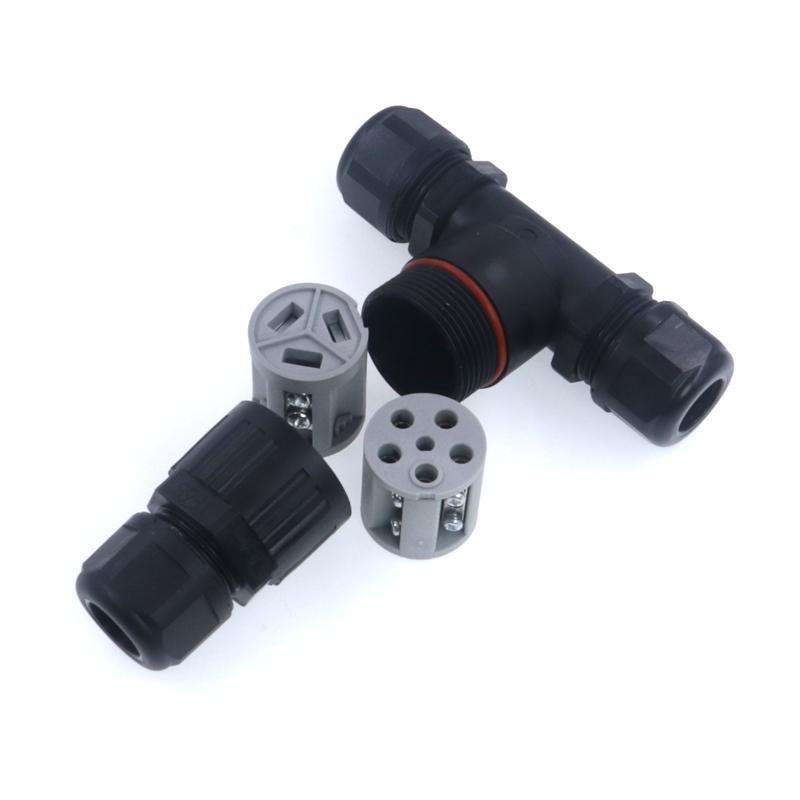
The rapid development of marine technology has created a growing demand for smaller and more efficient underwater equipment. Modern ROVs, AUVs, oceanographic instruments, sensor modules, and inspection systems often need to accommodate sophisticated electronics within very limited spaces. In such applications, electrical connectors must provide dependable connectivity without adding unnecessary bulk to the overall design. HYSF Subsea develops specialized subsea connection solutions for engineers who need practical electrical interfaces for demanding marine environments. Its Ultra-Compact Watertight Connectors connector family is designed around space-conscious equipment architectures, offering different configurations for miniature underwater systems where connector dimensions and installation requirements are important design considerations.
Why Compact Connectivity Matters Underwater
The physical size of an electrical connector can influence the design of an entire underwater device. When an enclosure has limited internal space, a conventional connector may occupy room that could otherwise be used for batteries, sensors, control electronics, or communication components.
A compact connection system allows engineers to make more efficient use of available space. This is particularly relevant to miniature ROVs and AUVs, where weight and dimensions are carefully controlled. Smaller connection hardware can also provide additional flexibility when positioning components and routing cables inside a compact housing.
HYSF Subsea's ultra-compact range is intended for applications where reducing the footprint of the electrical interface can contribute to a more efficient overall equipment design.
A Range Designed for Different Pin Requirements
Underwater equipment can have very different electrical architectures. A small sensor may require only a few contacts, whereas a sophisticated monitoring module may need numerous circuits for power, control, data, and instrumentation.
Rather than relying on a single connector configuration, HYSF Subsea offers different ultra-compact series covering various pin-count requirements. The family includes options ranging from lower-count configurations to higher-density connectors with as many as 28 contacts.
This variety enables equipment manufacturers to select a connection arrangement according to the actual requirements of their system. The connector can then be integrated into the equipment while maintaining a focus on space efficiency.
Compact Construction for Restricted Installation Areas
Installation space is often one of the most difficult engineering constraints in miniature subsea equipment. Connectors must fit within the available housing while leaving sufficient clearance for cables and neighboring components.
The compact architecture of these connectors can help reduce the mechanical footprint of the electrical interface. This can be beneficial when several components need to be positioned close together or when the enclosure has a highly integrated internal layout.
A smaller mounting arrangement can also provide greater freedom for equipment manufacturers when developing custom housings. Instead of designing an enclosure around oversized connection hardware, designers can consider a connector that better fits the dimensions of the intended system.
Electrical Contact Reliability
A compact design is only useful when it can also provide dependable electrical performance. Underwater equipment often depends on stable connections for sensors, cameras, control systems, and communication components.
HYSF Subsea uses gold-plated copper contacts within its connector designs to support reliable electrical contact. Gold-plated contacts can provide a suitable interface for applications where consistent electrical performance is important.
When selecting a connector, engineers should consider the complete electrical requirements of the application, including voltage, current, number of circuits, cable type, and equipment architecture. The exact specifications of the selected model should always be checked before integration.
Protection Against Underwater Conditions
Electrical connection systems used underwater must be designed with environmental exposure in mind. Pressure, moisture, temperature changes, and marine conditions can all influence the performance and service life of connection hardware.
HYSF Subsea's subsea connector solutions incorporate molded construction and sealing features appropriate to their respective product families. These characteristics are intended to help protect electrical interfaces during underwater deployment.
For demanding applications, engineers should evaluate the connector according to the expected operating depth, pressure, temperature, and deployment conditions. A connector's environmental rating should be considered alongside the specifications of the cable, equipment housing, and other components in the complete system.
Understanding Dry-Mate Operation
An important characteristic of the ultra-compact family is that specific configurations are designed for dry mating. This means the connector should be assembled and properly secured in a dry environment before the equipment is deployed underwater.
This design approach can be suitable for equipment where the connection remains assembled throughout deployment. It can also be useful for compact devices that are prepared and tested on the surface before being placed into the water.
Understanding the mating method is essential when selecting an underwater connector. A compact connector should not automatically be assumed to support underwater mating. Engineers should review the specifications of the exact series and ensure that its mating characteristics match the intended operating procedure.
Applications in Miniature ROVs and AUVs
ROVs and AUVs depend on multiple electrical and electronic components to perform navigation, inspection, sensing, imaging, and communication functions. As vehicle platforms become smaller, efficient use of internal space becomes increasingly important.
Compact connectors can help manufacturers integrate electrical interfaces without unnecessarily increasing the dimensions of the vehicle. They may be used for sensor assemblies, underwater cameras, lighting systems, telemetry components, and other equipment incorporated into miniature platforms.
For autonomous vehicles in particular, an efficient connector arrangement can contribute to better internal organization and more practical cable management.
Use in Underwater Sensor Networks
Oceanographic research and environmental monitoring increasingly rely on networks of sensors distributed throughout underwater environments. These systems may collect information for scientific research, marine observation, infrastructure monitoring, and other applications.
Sensor modules are often designed with compact housings, making connector dimensions an important consideration. A space-efficient electrical interface can simplify the integration of multiple sensors into a relatively small system.
HYSF Subsea's different core configurations provide options for engineers developing compact instrumentation where multiple electrical circuits need to be accommodated within restricted spaces.
Underwater Cameras and Monitoring Equipment
Imaging equipment is another area where compact connection solutions can be useful. Underwater cameras are deployed on ROVs, inspection platforms, research systems, and specialized marine equipment.
A connector that occupies less space can make it easier to position cameras and associated electronics within compact assemblies. It can also help with cable routing around equipment where physical clearance is limited.
The same principle applies to miniature lighting systems and other electronic accessories that operate alongside underwater imaging equipment.
Material and Mechanical Considerations
Connector construction should be evaluated according to the mechanical and environmental requirements of the application. HYSF Subsea offers different material and construction options across its product families, giving engineers flexibility when designing subsea equipment.
Depending on the particular configuration, factors such as corrosion resistance, mechanical strength, mounting requirements, and installation environment may influence the appropriate material selection.
The connector should also be matched carefully with the mounting arrangement of the equipment. Thread dimensions, available clearance, cable orientation, and receptacle configuration are all important considerations during system design.
Benefits for Equipment Manufacturers
For manufacturers developing compact marine products, connection hardware can have a significant impact on the overall design. A smaller connector can help preserve valuable enclosure space and provide more flexibility for component placement.
This can be particularly beneficial when developing specialized equipment in which every part must fit within a predetermined mechanical envelope. Compact connectivity can also support modular designs by providing organized interfaces between different equipment sections.
However, compact dimensions should always be considered together with electrical ratings and environmental requirements. The smallest available connector is not necessarily the best choice if it does not meet the application's performance requirements.
Explore HYSF Subsea Solutions – https://hysfsubsea.com/
Selecting the Right Compact Subsea Connector
Before choosing a connector, engineers should evaluate several factors. The number of required contacts is an obvious starting point, but current capacity, voltage requirements, mounting dimensions, cable configuration, operating temperature, pressure rating, and mating method are equally important.
The available space should be measured carefully to ensure that the receptacle and cable assembly can be installed without interfering with other components. Designers should also consider whether the connection will remain assembled during deployment or require repeated mating and disconnection.
Reviewing the specifications of the exact HYSF Subsea configuration can help ensure that the selected connector is appropriate for the intended application.
Supporting the Next Generation of Underwater Technology
The subsea industry is moving toward increasingly compact and sophisticated equipment. From miniature autonomous vehicles to distributed sensor systems and advanced inspection devices, manufacturers need technologies that allow more functionality to fit into smaller platforms.
HYSF Subsea's ultra-compact connector solutions address one part of this challenge by providing space-efficient electrical interfaces for underwater equipment. Their different configurations allow engineers to consider connector solutions based on the number of required contacts and the available installation space.
With careful selection and correct installation, compact connection technology can contribute to cleaner equipment layouts, better cable management, and more efficient subsea system designs. As marine engineering continues to prioritize miniaturization and integration, reliable space-saving connectors will remain an important component of modern underwater equipment.
 English
Join our community to interact with posts!