
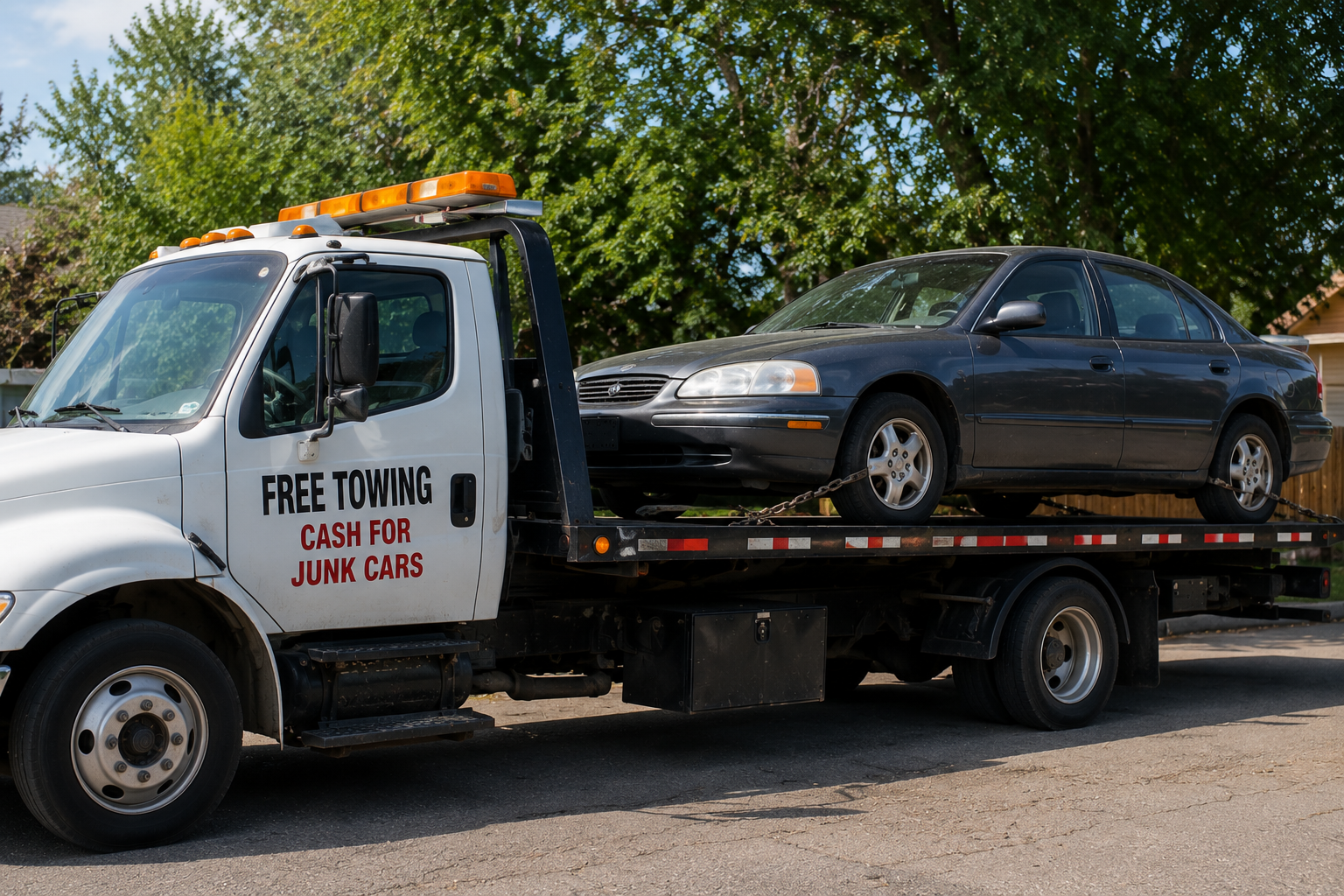
A rusty car can look like it has reached the end of the road. Peeling paint, corrosion around the body, rusty panels, and years of exposure can make an old vehicle seem almost worthless.
But rust does not automatically mean your car has no value.
Even a heavily weathered vehicle may still contain usable components, recyclable metal, or parts that buyers can recover. The key is understanding what contributes to its value before accepting the first offer you receive.
If you have a rusty car sitting in your driveway, garage, or parking space in Calgary, don't assume that spending money on repairs is your only option. Here's what can still make a rusty vehicle valuable and how to make a smarter selling decision.
Why Does a Rusty Car Still Have Value?
When a car is sold for scrap or salvage, its value isn't determined by appearance alone.
A buyer may consider the vehicle as a combination of:
· Reusable mechanical components
· Body and interior parts
· Recyclable metals
· Vehicle-specific components
· Wheels and tires
· Electrical systems
· Engine and transmission
· Catalytic converter and other components
· Overall vehicle completeness
This means a car with significant exterior corrosion may still have valuable components underneath.
For example, a rusty vehicle could have a functioning transmission, relatively good interior, usable wheels, or sought-after replacement parts.
The important question isn't simply “How rusty is my car?”
It's “What value is still left in the vehicle?”
Calgary Weather Can Take a Toll on Older Vehicles
Calgary vehicles can experience a variety of weather conditions throughout the year, including cold temperatures, snow, moisture, and road conditions that can contribute to wear.
Over time, repeated exposure can affect a vehicle's exterior and underbody.
Rust may appear around:
· Wheel arches
· Door edges
· Fenders
· Rocker panels
· Trunk areas
· Hood edges
· Undercarriage components
However, surface rust and severe structural corrosion are not the same thing.
A vehicle with limited surface corrosion may retain considerably more usable value than one with extensive structural deterioration.
That distinction is important when discussing your car with a buyer.
Surface Rust vs. Serious Corrosion
Not all rust should be treated equally.
Surface rust generally affects the outer layer of metal. It can make a vehicle look rough without necessarily meaning that every component is damaged.
Deep corrosion can be much more serious. Extensive rust may weaken structural areas, damage mounting points, or affect important components underneath the vehicle.
If you aren't sure how severe the corrosion is, don't exaggerate or minimize it when requesting an offer.
Instead, take clear photographs of the affected areas and provide them to the buyer.
Honest information helps the buyer estimate the vehicle more accurately and reduces the chance of disagreements later.
The Engine Can Still Add Value
A rusty exterior doesn't automatically mean the engine is worthless.
If the engine still starts or contains usable components, that can contribute to the vehicle's overall value.
Even when the engine doesn't run, some components may still be recoverable depending on their condition.
Before assuming that rust has destroyed everything, consider the vehicle as a complete package.
Tell the buyer:
· Whether the engine starts
· Whether the car can move
· Whether it has been sitting unused
· Whether there are known mechanical problems
· Whether major engine components are missing
These details can help produce a more realistic quote.
The Transmission May Be Valuable Too
The transmission is another component that can influence the value of an older vehicle.
A car might have severe body rust while still containing a transmission that could potentially be useful for another vehicle.
That's one reason you shouldn't judge the entire vehicle's worth by its exterior appearance.
If you know that the transmission works, mention it when requesting a quote.
If you don't know its condition, simply say so.
You don't need to become a mechanic to sell a rusty car. Accurate information is more useful than guessing.
Make, Model, and Year Matter
A rusty economy car and a rusty vehicle with strong demand for replacement parts may not receive the same offer.
Make, model, year, drivetrain, engine configuration, and parts availability can all influence how a buyer views the vehicle.
Some older vehicles have components that are harder to find, making their parts potentially more useful even when the body isn't in great condition.
This is why you shouldn't decide your car's value solely by looking at similar rusty vehicles online.
Two cars that appear equally damaged may have very different underlying value.
Don't Forget the Interior
When people think about scrap cars, they often focus on the body and engine.
But the interior can also contain useful components.
Depending on the vehicle, buyers may consider:
· Seats
· Dashboard components
· Door panels
· Electronics
· Instrument clusters
· Steering components
· Entertainment systems
· Interior trim
A rusty exterior doesn't necessarily mean the entire interior is unusable.
If the cabin is in reasonably good condition, take photos and mention it when requesting your quote.
Wheels, Tires, and Other Components Can Matter
Your car's wheels and other intact components may also contribute to its overall value.
If the vehicle has relatively good wheels, usable tires, intact lights, mirrors, glass, or other components, don't assume they have no importance simply because the body is rusty.
However, avoid removing parts before asking for a complete-vehicle quote.
Taking components off the car could reduce the value of the remaining vehicle or make transportation more difficult.
It's often smarter to find out what the complete car is worth first.
Should You Repair the Rust Before Selling?
This is one of the biggest questions rusty-car owners face.
If you're selling the vehicle as a scrap or junk car, spending a large amount on cosmetic repairs may not make financial sense.
Imagine spending $2,000 on bodywork, paint, or rust repair and then discovering that the vehicle's value only increases by a fraction of that amount.
Before spending money, calculate:
Expected increase in vehicle value − repair cost = potential financial benefit
If the result doesn't justify the expense, selling the car in its current condition may be more practical.
Minor cleaning can help present the vehicle better, but major repairs should be evaluated carefully.
How to Get a Better Offer for a Rusty Car
You don't necessarily need to repair the vehicle to improve your selling position.
Instead:
1. Clean Out the Vehicle
Remove garbage, personal belongings, and unnecessary items.
2. Take Clear Photos
Photograph the exterior, interior, engine area, wheels, and obvious rust.
3. Be Honest About the Condition
Mention major corrosion, mechanical problems, missing parts, and whether the vehicle runs.
4. Provide Complete Information
Include the make, model, year, mileage, location, and other details the buyer requests.
5. Get Multiple Quotes
One buyer's valuation isn't necessarily the market's final answer.
Comparing several offers can help you recognize whether a quote is unusually low.
Does Towing Affect the Value of Your Offer?
Absolutely.
Suppose one buyer offers $900 but charges $150 for towing.
Another buyer offers $850 and includes vehicle removal.
The first offer appears higher, but your actual payout could be:
$900 − $150 = $750
The second offer leaves you with $850.
That's why you should compare the final amount you receive, not just the initial quote.
Ask every buyer whether towing or pickup is included before making your decision.
Be Careful With Extremely High Offers
A surprisingly high quote can be tempting, especially when you believe your rusty car is nearly worthless.
But don't accept an offer simply because it is the biggest number.
Ask whether the price is based on the information and photos you provided.
Also confirm what could cause the amount to change when the vehicle is collected.
A transparent buyer should be willing to explain the terms rather than relying on pressure or vague promises.
Is a Rusty Car Worth Selling?
In many cases, yes.
The question is not whether the car looks good. The question is whether there is enough remaining value in its parts, materials, and components to make selling worthwhile.
If your vehicle is no longer practical to repair, has been sitting unused, or is becoming increasingly difficult to maintain, getting a quote can help you make a decision based on its current value rather than its appearance.
You may be surprised by what a buyer sees in a vehicle that looks like nothing more than an old rusty car.
Quick Rusty-Car Selling Checklist
Before requesting your final offer, check:
☐ Make, model, and year
☐ Current mileage
☐ Running or non-running condition
☐ Areas affected by rust
☐ Engine condition
☐ Transmission condition
☐ Missing components
☐ Interior condition
☐ Wheel and tire condition
☐ Vehicle location
☐ Availability of keys
☐ Ownership documents
☐ Towing or removal costs
Having these details ready makes the quoting process faster and more accurate.
Final Thoughts
A rusty car may look like it has little left to offer, but appearance is only one part of its value.
Usable mechanical components, replacement parts, recyclable metal, wheels, electronics, and other intact components can all contribute to what a buyer is willing to pay.
Instead of spending thousands on repairs without knowing whether you'll recover the cost, find out what your vehicle is worth in its current condition.
Take clear photos, describe the rust honestly, compare multiple offers, and ask whether removal is included.
Most importantly, don't confuse a rusty car with a worthless car.
The smartest approach is to evaluate what remains—not simply what has deteriorated—and choose the option that provides a fair payout with clear terms and a straightforward removal process.
 English
Join our community to interact with posts!