
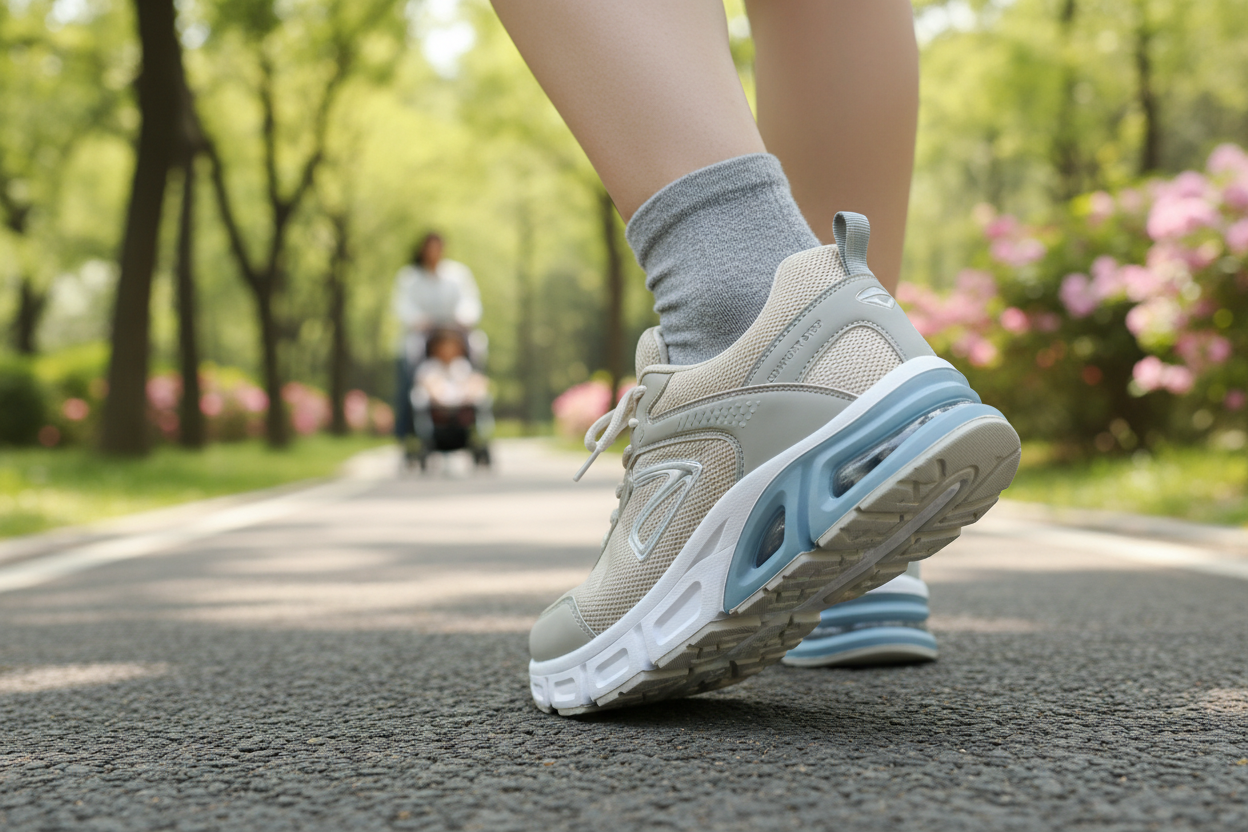
Not all arch support is created equal, and that is exactly why so many people buy a shoe labeled with arch support and still end up with sore feet by the afternoon. Before we walk through how to choose correctly, take a look at our arch support shoes collection, where every pair is built around real arch structure rather than a marketing label slapped onto a standard sole.
step one, understand your arch type
Feet generally fall into three categories, flat, neutral, or high arched. You can get a rough idea at home by wetting your foot and stepping onto a piece of paper or dark tile. A full footprint usually means a flatter arch, a footprint with almost no middle section usually means a higher arch, and something in between is a neutral arch. Flatter arches typically need more structured support, while higher arches often benefit from extra cushioning to absorb impact.
step two, check where the support actually sits
A shoe can say arch support on the box and still place that support in the wrong spot for your foot. Press your thumb into the arch area of the insole. If it collapses flat under light pressure, it is decorative rather than functional. Real arch support should hold its shape and gently push back against your foot's natural curve, guiding your foot into a more stable position rather than letting it roll inward.
step three, think about your daily activity
Someone standing at a retail counter for eight hours needs different support than someone walking three miles a day. If you are on hard flooring for long stretches, prioritize shock absorption alongside arch support. If you are walking longer distances, prioritize stability and a snug, secure heel so your foot does not shift inside the shoe with every stride. For guidance on flat feet specifically, our post on how to select shoes for flat feet covers this in more depth.
step four, test the flex point
Hold the shoe at both ends and try to bend it. A supportive shoe should bend at the ball of the foot, where your foot naturally flexes when you walk, not in the middle of the arch. If the whole shoe folds like a book, the structure underneath is too soft to actually support your arch through a full stride.
step five, don't ignore the signs your current shoes are failing you
Recurring arch soreness, heel pain that worsens through the day, or a dull ache that runs up into your shins can all point to inadequate arch support. Some of these patterns overlap with plantar fasciitis, and our foot exercises for balance and stability post pairs well with proper footwear if you are working on strengthening alongside better support.
step six, prioritize fit over looks, then find looks you actually like
A shoe with excellent arch support that pinches your toes or slips at the heel will not get worn consistently, and support only helps if you actually wear the shoe. Thankfully arch support shoes for women have come a long way from bulky, clinical looking designs, there are options now that look like everyday sneakers or flats while still doing the structural work underneath.
Getting arch support right is less about finding the most expensive shoe and more about matching the right structure to your specific arch and daily routine. Once you know what you are actually looking for, it becomes much easier to filter out shoes that only look supportive from the ones that genuinely are.
Ready to find the right fit for your arch type. Browse our arch support shoes and filter by the features that matter most for your day, whether that's shock absorption, stability, or all day comfort.
 English
Join our community to interact with posts!