
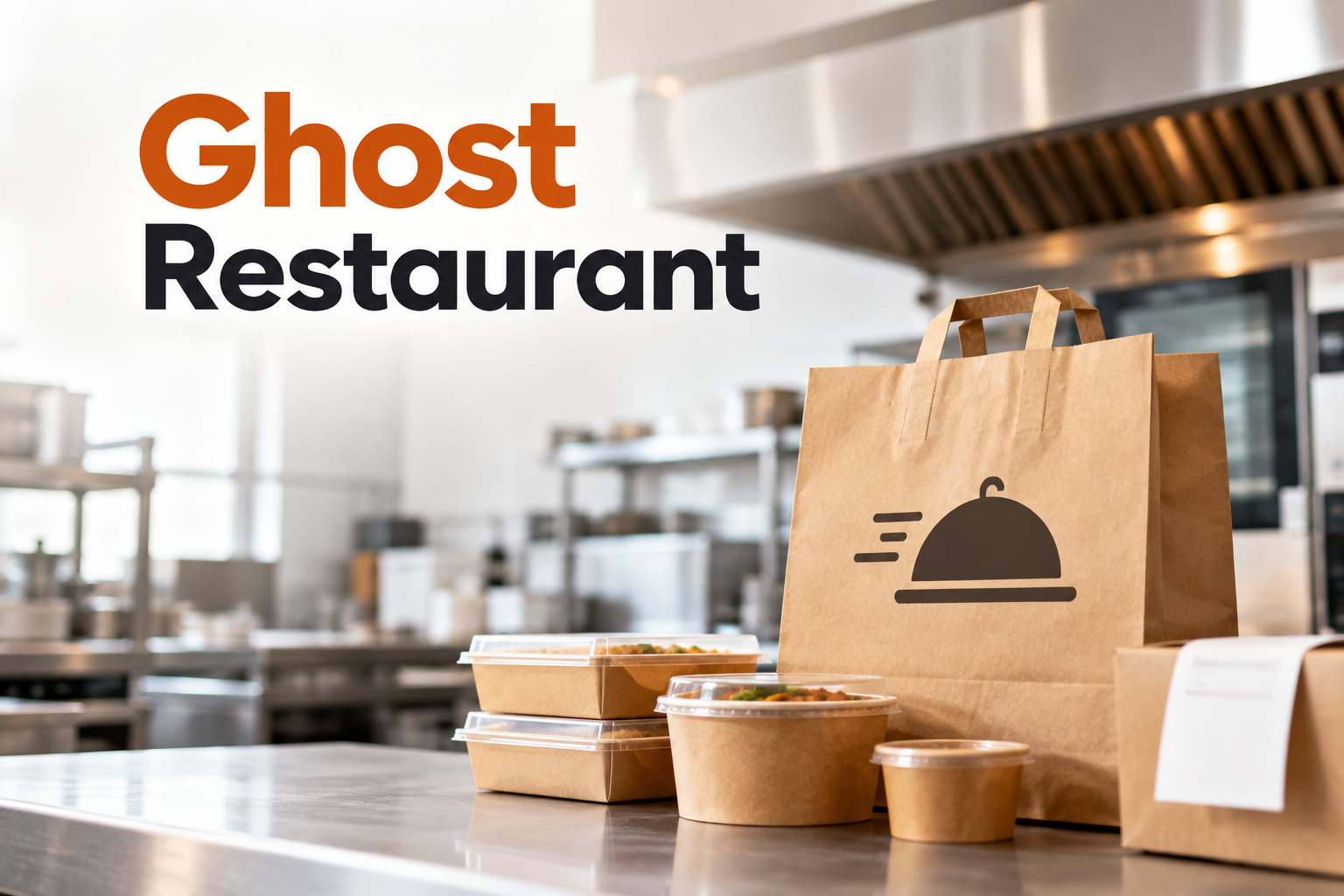
If you are researching whats a ghost kitchen, you are likely trying to answer a practical question about a restaurant, food-service business, or hospitality operation. The useful way to approach this topic is to move beyond a short definition and look at how the issue affects real decisions. Restaurant operators work with connected variables: customer demand, pricing, labor, food costs, location, competition, technology, and cash flow. Changing one of these variables can affect several others, so a good analysis should consider the full picture.
This guide explains whats a ghost kitchen in straightforward terms and shows how an operator can apply the idea when planning, evaluating, or improving a restaurant. The goal is not to rely on a single statistic or generic rule. Instead, the focus is on measurable assumptions, local evidence, operational realities, and repeatable decision-making.
Learn more about whats a ghost kitchen to explore the topic in greater detail.
What the term means
A ghost kitchen is generally a food-production operation designed primarily for delivery or pickup rather than a traditional dine-in experience. The kitchen may operate without a conventional dining room, public-facing storefront, or large front-of-house team. The important
point is that the phrase describes an operating format, not a single business model. A company can run one virtual restaurant, several brands from one kitchen, a commissary-style facility, or a delivery-focused concept within an existing restaurant kitchen.
How the model works
The basic workflow is straightforward: a customer discovers a menu through a digital channel, places an order, the kitchen prepares it, and the order is handed to a courier
or prepared for pickup. Because the customer experience is heavily digital, menu photography, descriptions, pricing, ratings, packaging, delivery time, and order accuracy can have an outsized effect on repeat business.
Ghost kitchen vs. virtual restaurant
These terms are related but not identical. A virtual restaurant is usually a brand or menu concept that exists primarily through delivery channels. A
ghost kitchen is the physical operating environment used to prepare food without a conventional dine-in setup. One kitchen can therefore support multiple virtual restaurant brands.
Why operators consider the model
The format can allow operators to concentrate resources on production, packaging, technology, and delivery instead of a large dining room. It may also make it easier to test a new menu concept before
committing to a full-service location. Those potential advantages have to be balanced against delivery commissions, customer acquisition costs, packaging expenses, marketplace competition, and the challenge of building a recognizable brand without a prominent storefront.
Costs to examine
A useful analysis should include kitchen rent or shared-kitchen fees, labor, ingredients, packaging, technology, marketplace commissions, delivery-related expenses, insurance, utilities, marketing, and
waste. A concept that looks inexpensive at the kitchen level can still have difficult economics if contribution margin per order is weak.
Customer experience
Delivery removes many physical signals that help a traditional restaurant communicate quality. Packaging becomes part of the product, food must travel well,
and the menu needs to remain appealing after a delay. Operators should test travel time, temperature, texture, presentation, and portion size before scaling.
Technology and data
Digital ordering creates useful information about menu performance, order times, repeat customers, promotions, and geographic demand. That information can support decisions about staffing,
menu engineering, promotions, and delivery zones. The goal is not simply to collect data, but to connect each metric to an operational decision.
Common challenges
Common challenges include high competition on delivery marketplaces, dependence on third-party platforms, inconsistent delivery experiences, weak differentiation, packaging failures,
and limited brand visibility. Operators should identify these risks in the business plan rather than treating delivery demand as guaranteed.
How to evaluate an opportunity
Before launching, estimate realistic order volume, average order value, food and labor costs, platform fees, packaging, fixed overhead, and marketing spend. Model conservative, expected, and
strong demand scenarios. Then test the concept in a limited area and measure repeat orders, contribution margin, preparation time, cancellations, ratings, and customer acquisition cost.
The role of market research
A location and concept decision should be based on evidence about local demand, competition, delivery coverage, household characteristics, and the types of
cuisine already available. A restaurant research platform can make this work more structured by helping an operator examine markets before committing capital.
A practical way to use information about whats a ghost kitchen is to create a simple decision worksheet. Start with the question you need to answer, list the evidence available, identify the assumptions that could change the result, and decide what additional information would reduce uncertainty. For example, if the issue affects site selection, compare multiple locations using the same criteria. If it affects profitability, calculate the relevant costs using actual operating assumptions. If it affects menu performance, connect sales data with recipe and labor information. This prevents a broad topic from becoming an abstract research exercise.
It is also important to separate facts from assumptions. Historical data can describe what happened in a particular market or period, but it does not automatically predict what will happen at a new restaurant. Industry benchmarks can be useful reference points, but local rent, wages, competition, customer mix, menu pricing, and operating model can produce very different economics. Whenever possible, replace generic assumptions with evidence from the actual trade area and the proposed operation.
Another useful practice is scenario planning. Build a conservative case, an expected case, and a stronger case. Change the variables that matter most, such as transactions, average check, labor hours, food prices, occupancy costs, or marketing spend. The purpose is not to predict the future precisely. It is to understand how much room the business has when conditions are different from the original plan.
Finally, review the analysis after launch or after a major business change. Restaurant markets evolve. Competitors open and close, customer behavior changes, costs move, and operating teams learn from experience. A document that was accurate at opening can become outdated later. Regular reviews make the information useful instead of leaving it as a one-time planning exercise.
For a deeper resource on whats a ghost kitchen, visit the linked guide and then explore Restaurant Site Finder for additional restaurant research tools and information.
A final consideration is implementation. Assign responsibility for each action, set a review date, and record the metric that will indicate whether the change worked. This creates a feedback loop between research and operations. In a restaurant environment, small improvements in purchasing, scheduling, menu design, service speed, or local marketing can compound over time when they are measured consistently. The same principle applies when evaluating a new concept or location: make the assumptions visible, test the most uncertain ones first, and avoid committing significant capital until the evidence supports the plan.
A final consideration is implementation. Assign responsibility for each action, set a review date, and record the metric that will indicate whether the change worked. This creates a feedback loop between research and operations. In a restaurant environment, small improvements in purchasing, scheduling, menu design, service speed, or local marketing can compound over time when they are measured consistently. The same principle applies when evaluating a new concept or location: make the assumptions visible, test the most uncertain ones first, and avoid committing significant capital until the evidence supports the plan.
A final consideration is implementation. Assign responsibility for each action, set a review date, and record the metric that will indicate whether the change worked. This creates a feedback loop between research and operations. In a restaurant environment, small improvements in purchasing, scheduling, menu design, service speed, or local marketing can compound over time when they are measured consistently. The same principle applies when evaluating a new concept or location: make the assumptions visible, test the most uncertain ones first, and avoid committing significant capital until the evidence supports the plan.
 English
Join our community to interact with posts!