
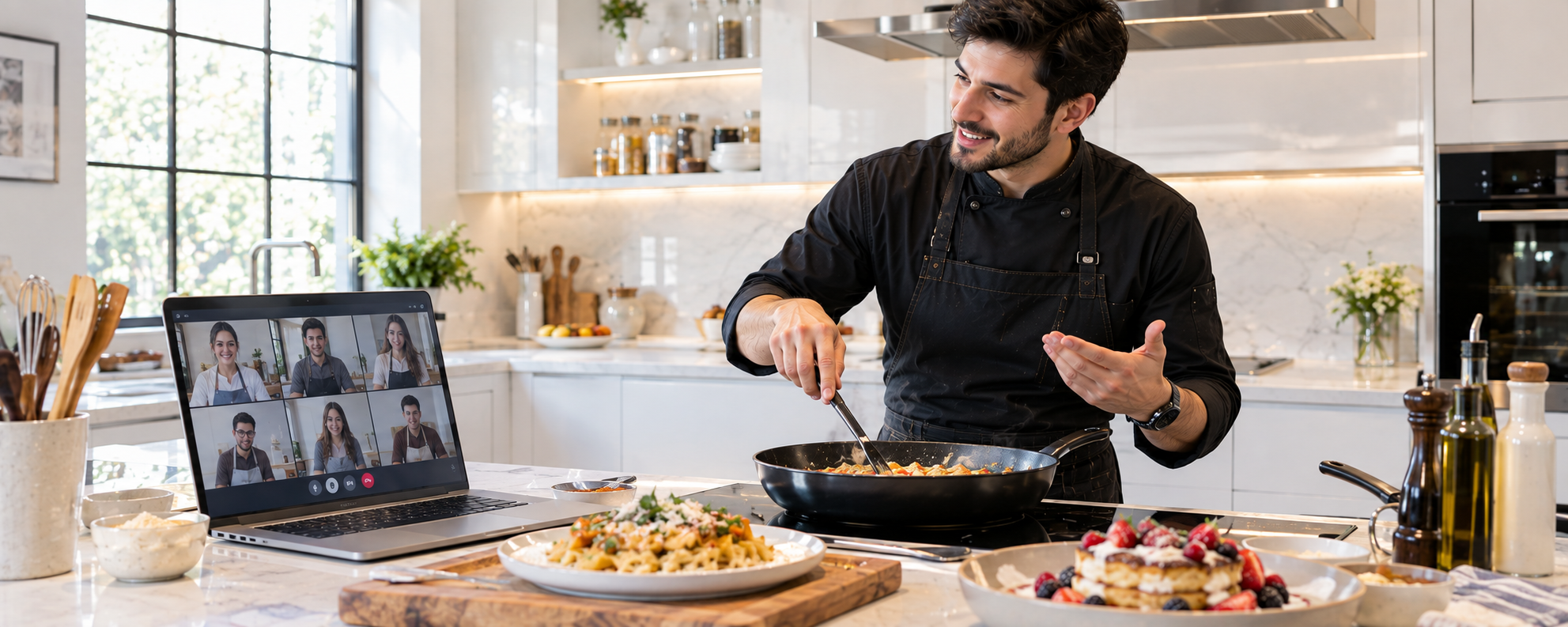
Online cooking education has changed the way people approach culinary learning. A student no longer needs to be physically present in a classroom to watch demonstrations, ask questions, or practice techniques. However, a successful virtual lesson requires more than a video call.
Cooking is highly visual and physical, so the way information is presented matters. Camera position, sound, lighting, ingredients, equipment, and timing all influence how well the learner can follow along. A good online cooking experience is designed around these practical realities.
The Home Kitchen Becomes the Classroom
In a virtual lesson, learners work in their own kitchens. That has a major benefit: the skills are practiced in the same environment where they will later be used.
Instead of learning on unfamiliar commercial equipment, students can understand how techniques work on their own stovetop, cookware, and utensils. This can make the lesson more immediately practical.
Preparing the Equipment
A simple setup is usually enough. The important thing is clear visibility.
A learner may need:
- A stable cooking surface
- Basic cookware appropriate to the recipe
- A device positioned where the demonstration is visible
- Enough counter space for ingredients
- Reliable internet access
The goal is not to build a professional filming studio. It is to make the cooking process easy to see and hear.
Why Camera Position Matters
A camera placed too far away makes knife work difficult to observe. A camera placed directly behind the learner may create awkward viewing angles.
A better setup keeps the main work area visible while allowing the learner to move naturally.
Demonstrating Close Up Techniques
Some steps require detail. Knife handling, dough texture, sauces, and plating benefit from close views.
An online instructor needs to anticipate these moments and adjust the camera or explain what the learner should look for.
Managing Sound and Timing
Cooking can be noisy. Fans, boiling pans, chopping boards, and kitchen appliances can all interfere with audio.
Clear instructions become easier when the learner knows when to pause, when to continue, and when to check in.
Where Cooking classes online Can Be Especially Useful
Online classes offer convenience for people who cannot easily attend an in-person lesson. Cooking classes online they can be useful for learners who prefer practicing in familiar surroundings or need a more flexible approach to education.
Another advantage is immediate application. You learn a technique and use your own equipment at the same time.
That can reveal practical questions that might not appear in a traditional classroom.
Ingredient Organization Is Even More Important Online
Because the instructor cannot physically reach across the counter, preparation matters more. Measure ingredients in advance when appropriate and group them in the order they will be used. This reduces interruptions and allows the learner to stay focused. It also provides more time for interaction during the lesson.
Feedback Works Differently Virtually
In a physical classroom, an instructor can step beside a student and quickly correct a movement. Online, the learner must make the relevant action visible on camera. That means students should not hesitate to move the camera when necessary.
Good feedback can still be highly practical when the learner communicates clearly about what they are doing and what result they are seeing.
Learn to Describe What You See
Virtual cooking encourages a useful skill: explaining what is happening. Instead of saying, “It does not look right,” try to describe whether the sauce is too thick, the vegetables are still firm, or the color is darker than expected. This makes it easier for the instructor to diagnose the problem.
Repeatable Learning at Home
Online instruction can also encourage repetition. Once the class ends, the learner can recreate the dish in the same kitchen using the same tools.
That creates a natural practice cycle:
- Learn the technique.
- Cook it with guidance.
- Repeat it independently.
- Compare the result.
- Adjust the method.
Repetition is where many culinary skills become reliable.
Making the Online Experience More Comfortable
Cooking while watching a screen can be awkward at first. It helps to plan the work surface before the lesson begins.
Keep hot pans away from electronics and make sure cables cannot interfere with movement. Simple organization can make the session feel much more natural.
How to Get Long Term Value From Digital Lessons
Do not treat the online class as a one time performance. Keep useful notes and record the techniques that were difficult.
You can also take photographs of your finished food and compare future attempts. Tracking progress makes it easier to identify which skills need further practice.
Conclusion
Virtual cooking instruction can be highly practical when the lesson is designed around clear visibility, organized preparation, effective communication, and hands-on practice.
The technology itself is only part of the experience. What matters most is whether the learner can understand the technique, perform it safely, receive useful feedback, and repeat it later.
When those elements come together, an online kitchen can become a surprisingly effective place to build real cooking skills.
 English
Join our community to interact with posts!