
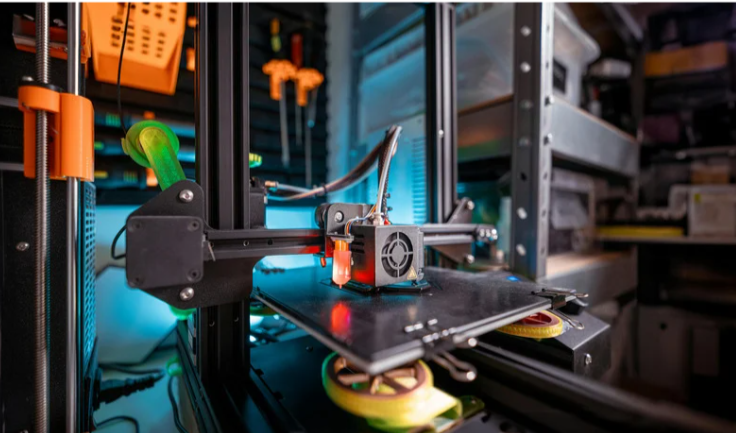
A few years ago, 3D printing sounded like something that belonged in a factory or a university lab. Today, a student can print a working prototype in a hostel room, a hobbyist can paint their own miniatures and a small business can produce custom parts from a desk. The technology has become friendly. That is the good news.
The slightly less good news is that choosing your first machine can feel confusing. There are different technologies, dozens of brands, big differences in price and a lot of jargon. This guide cuts through it in plain language, so you can work out what you actually need before you spend anything.
What Is a 3D Printer, Really?
If you are thinking about buying your first 3D printer, the simplest way to understand it is this: it builds an object layer by layer from a digital design. You create or download a 3D model, a piece of software called a slicer cuts it into thin layers, and the printer follows those instructions to build the object from the bottom up.
That layer-by-layer approach is why 3D printing can make shapes that are hard or impossible to produce with traditional methods, such as hollow structures, interlocking parts and organic curves.
The Two Technologies Most Beginners Meet
There are several types of 3D printing, but nearly everything aimed at homes, schools and small businesses falls into two groups.
FDM (filament) printers. These melt plastic filament and lay it down in thin lines. They are the most common and usually the easiest to start with. They are great for functional parts, prototypes, tools, organisers, models and larger objects.
Resin printers. These use liquid photosensitive resin that hardens when exposed to UV light. They create extremely fine detail with smooth surfaces, which is why they are popular for miniatures, jewellery models, dental-style models and display pieces.
Understanding the Resin 3D Printer
A resin 3D printer works quite differently from a filament machine. A build plate lowers into a vat of liquid resin, a light source cures one thin layer at a time, and the plate rises slowly as the object grows.
The results can be stunning. Fine details, sharp edges and smooth surfaces come straight off the printer, often needing far less sanding than filament prints.
But there is a trade-off, and it is worth being honest about it. Resin printing is messier and needs more care:
-
Gloves and eye protection are essential, because uncured resin should not touch your skin.
-
Ventilation matters, since resin has a strong smell.
-
Prints need washing in a suitable cleaning liquid, usually isopropyl alcohol or a water-washable alternative, depending on the resin.
-
Prints need curing under UV light to reach full strength.
-
Waste has to be handled properly. Leftover resin and cleaning liquid should be cured and disposed of responsibly, not poured down a drain.
If you enjoy detail and are happy to follow a process, resin can be very rewarding. If you want the least fuss, filament is usually the gentler start.
FDM or Resin: A Quick Comparison
| FDM (filament) | Resin | |
| Best for | Functional parts, prototypes, larger objects | Fine detail, miniatures, jewellery models |
| Surface finish | Visible layer lines | Very smooth |
| Ease of use | Generally simpler | More steps and safety care |
| Mess level | Low | Higher |
| Running costs | Usually lower | Resin, washing liquid and gloves add up |
| Build size | Often larger | Often smaller |
Neither is better. They solve different problems. Many serious makers end up owning one of each.
What Affects 3D Printer Cost?
When you start comparing machines, you will notice that the 3D printer cost varies enormously. A few factors explain most of the difference.
Technology. Filament and resin machines sit in different price bands, and industrial systems cost far more than either.
Build volume. A larger print bed means bigger objects and a higher price.
Speed and automation. Features like automatic bed levelling, fast motion systems and automatic calibration cost more but save time and frustration.
Multi-colour and multi-material systems. Printers that can switch between colours or materials automatically add complexity and price.
Enclosure. A closed chamber helps with temperature-sensitive materials and can reduce noise, but adds to the cost.
Screen quality and resolution (for resin). Higher resolution gives finer detail and usually a higher price.
Software and ecosystem. Good slicers, mobile apps, cameras and remote monitoring improve convenience.
Brand and support. Established brands with reliable service and spare parts tend to cost more, and they often save money in the long run.
Making Sense of 3D Printer Price in India
If you search for the 3D printer price in india, you will find a very wide spread, from entry-level machines to professional systems that cost many times more. Prices also change with offers, exchange rates, import duty, GST and stock availability, so a number you saw last month may not match today’s.
A useful way to think about it is in broad bands rather than exact figures:
-
Entry level: Simple, affordable machines for learning and hobby projects. They often need more tuning and patience.
-
Mid range: Better build quality, more automation and more reliable results. This is where many serious beginners and small businesses land.
-
Premium: Fast, polished machines with advanced features, enclosed chambers and multi-colour options.
-
Professional and industrial: Large format, specialised materials and higher precision for business use.
Always check the current price on the product page or ask a seller directly. And remember that the sticker price is only part of the story.
The Costs Nobody Mentions
Beginners often budget for the machine and forget the extras. Plan for:
-
Filament or resin, which is a recurring cost
-
Spare nozzles, build plates or FEP film, depending on the printer
-
Tools such as cutters, scrapers, sandpaper and tweezers
-
Washing and curing equipment if you choose resin
-
Safety gear like gloves, masks and eye protection
-
A sturdy table and a well-ventilated space
-
Power backup, if your supply is unreliable
-
Time to learn, which is the cost most people underestimate
What Can You Actually Make?
The possibilities are wider than most people expect.
-
Prototypes and engineering parts for college projects and product design
-
Spare parts and repairs, such as brackets, clips, knobs and covers
-
Household organisers and custom holders
-
Miniatures, figurines and game pieces
-
Cosplay props and costumes
-
Architectural and educational models
-
Gifts and personalised items
-
Small-batch products for sale
If you can picture it and model it, there is a good chance you can print it.
How to Choose: Five Honest Questions
-
What will I print most? Functional parts point to filament. Fine detail points to resin.
-
How much patience do I have for tinkering? Some printers work almost out of the box, while others reward people who enjoy tuning.
-
Where will it live? Resin needs ventilation. Filament machines can be noisy.
-
What is my full budget? Include materials and accessories, not just the machine.
-
Who will help if something goes wrong? Local support can save a lot of time and stress.
Your First Few Weeks
-
Start with small test prints before attempting anything large.
-
Follow the manufacturer’s recommended settings at first.
-
Keep filament dry and resin sealed away from light.
-
Keep the print bed clean, because many failures start there.
-
Join a community. Other users solve problems quickly.
-
Do not leave a new printer running unattended for long hours until you trust it.
-
Be patient. Failed prints are part of learning, not a sign you chose wrong.
Common Beginner Mistakes
-
Buying on price alone and ignoring support
-
Choosing resin without planning for ventilation and cleaning
-
Forgetting the cost of materials
-
Skipping bed levelling and cleaning
-
Printing large objects before mastering small ones
-
Ignoring safety guidance
Final Thoughts
There is no single best 3D printer, only the best one for what you want to make. Decide whether detail or function matters more, set a realistic total budget and choose a supplier who will answer questions before and after you buy.
When you are ready to compare models, browse the full 3D printer range at Hydrotech 3D Chennai and ask the team to help you match a machine to your plans.
FAQs
1. What is the difference between a resin printer and a filament printer? Filament printers melt plastic and build objects in lines, while resin printers cure liquid resin with UV light for very fine detail.
2. Is a resin printer good for beginners? It can be, if you are comfortable with gloves, ventilation and washing and curing steps. Many beginners find filament printers simpler.
3. How much does a 3D printer cost in India? It varies widely by technology, brand and features. Check current prices on the product pages, as they change with offers and stock.
4. Do I need technical skills to start 3D printing? Basic computer skills and some patience are enough. Many modern printers are very beginner-friendly.
5. What are the ongoing costs of 3D printing? Mainly filament or resin, plus spare parts, tools and, for resin, washing and curing supplies.
6. Is 3D printing safe at home? Generally yes, with sensible precautions. Use ventilation, keep resin off skin and avoid leaving a new printer unattended.
7. How long does a print take? From under an hour for small objects to many hours or even days for large ones, depending on size, detail and printer speed.
8. Can I use a 3D printer for business? Yes. Many small businesses print prototypes, custom parts and small-batch products, though you should choose a printer suited to the materials and volume you need.
 English
Join our community to interact with posts!