

Gravel and aggregate are essential materials for many construction projects, including driveway preparation, drainage installation, roadwork, and building foundations. Managing their delivery and movement efficiently helps contractors maintain an organized worksite and keep projects progressing according to schedule.
Estimate Material Requirements Accurately
Before arranging a delivery, determine the quantity of aggregate required for the planned work. Consider the dimensions of the area, the intended depth, and the type of material being used.
Accurate estimates help reduce unnecessary deliveries and limit leftover material that may take up valuable storage space. For larger projects, coordinate estimates with the site supervisor or relevant construction professional.
Also consider whether the material will be delivered in one shipment or several smaller loads based on site access and storage capacity.
Prepare the Delivery Area
A suitable unloading area is essential for safe and efficient material handling. Choose a location with firm, stable ground and enough space for the delivery vehicle to maneuver.
Check for overhead power lines, nearby structures, soft ground, slopes, and pedestrian movement. Keep access routes clear so that incoming deliveries do not interfere with other construction activities.
If the site has restricted access, plan the vehicle route before the material arrives.
Select Appropriate Hauling Equipment
Some projects require aggregate to be transported from a supplier to the construction site, while others involve moving material between different areas of the same property.
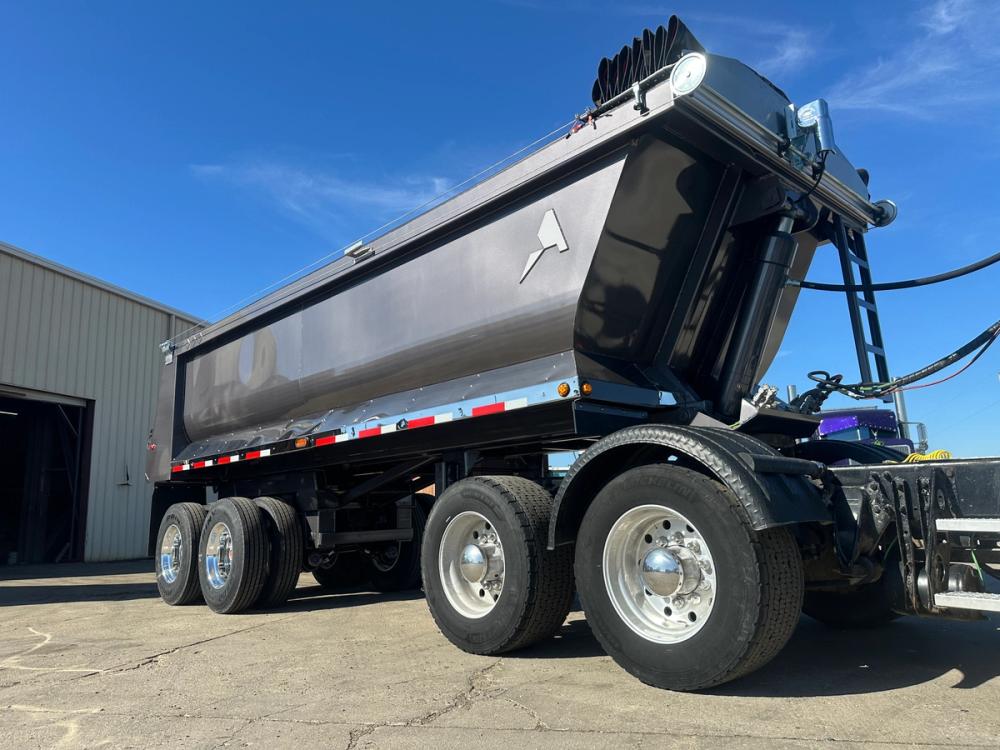
For contractors managing repeated material movements, dump trailers for gravel hauling may be worth considering. Evaluate the trailer's rated payload, bed dimensions, construction, and compatibility with the towing vehicle.
Gravel and crushed stone can be heavy, so calculate load weight carefully rather than relying on the trailer's apparent remaining space. Ensure that the towing vehicle, hitch, tires, axles, and brakes are all rated for the intended combination.
Organize Material Placement
Once aggregate reaches the site, place it where it will be needed without blocking access or creating hazards. Separate different aggregate grades when they are intended for different applications.
Use suitable barriers or clearly designated storage areas where necessary to prevent materials from spreading into walkways, drainage channels, or active work zones.
Plan material placement around the construction sequence. Keeping frequently used supplies accessible can reduce unnecessary handling and help equipment operators work more efficiently.
Reduce Waste and Unnecessary Handling
Moving aggregate multiple times increases labor requirements and can disrupt other site activities. Where practical, coordinate deliveries so materials arrive close to their intended storage or application area.
Protect stored aggregate from contamination with mud, organic matter, or other unwanted materials. Manage runoff and stockpile placement according to site conditions and applicable environmental requirements.
Track quantities delivered and used to help improve estimates for future projects.
Follow Safe Loading and Unloading Procedures
Before moving aggregate, check that the load is suitable for the equipment and remains within all rated limits. Distribute material according to the manufacturer's guidance and secure it as required for transport.
When dumping, use a firm, level surface and confirm that there are no overhead obstructions. Keep workers clear of the trailer and follow the manufacturer's operating procedures.
Never attempt to free stuck material by standing beneath a raised bed or placing yourself in a hazardous position. Use the approved safety support whenever work beneath a raised bed is required.
Maintain Equipment During Busy Projects
Repeated hauling can place stress on tires, brakes, suspension, structural components, and hydraulic equipment. Conduct routine inspections and follow the manufacturer's recommended service schedule.
Look for visible leaks, damaged hoses, unusual tire wear, cracks, or loose connections. Address serious defects before continuing operations, and maintain records of repairs and inspections.
Proper maintenance can help contractors identify problems early and manage equipment availability more effectively.
Coordinate Deliveries With the Construction Schedule
Aggregate deliveries should support the project's work sequence. Communicate expected arrival times with site supervisors, equipment operators, and suppliers to reduce waiting and congestion.
Review delivery quantities and site conditions regularly, adjusting the plan when project requirements change.
Build a More Efficient Aggregate Handling Process
Successful aggregate management depends on accurate estimates, prepared unloading areas, suitable equipment, and consistent safety practices. By coordinating deliveries and reducing unnecessary material movement, contractors can maintain a more organized worksite and use resources more effectively.
A practical hauling plan helps support construction productivity while protecting workers, equipment, and materials.
 English
Join our community to interact with posts!