
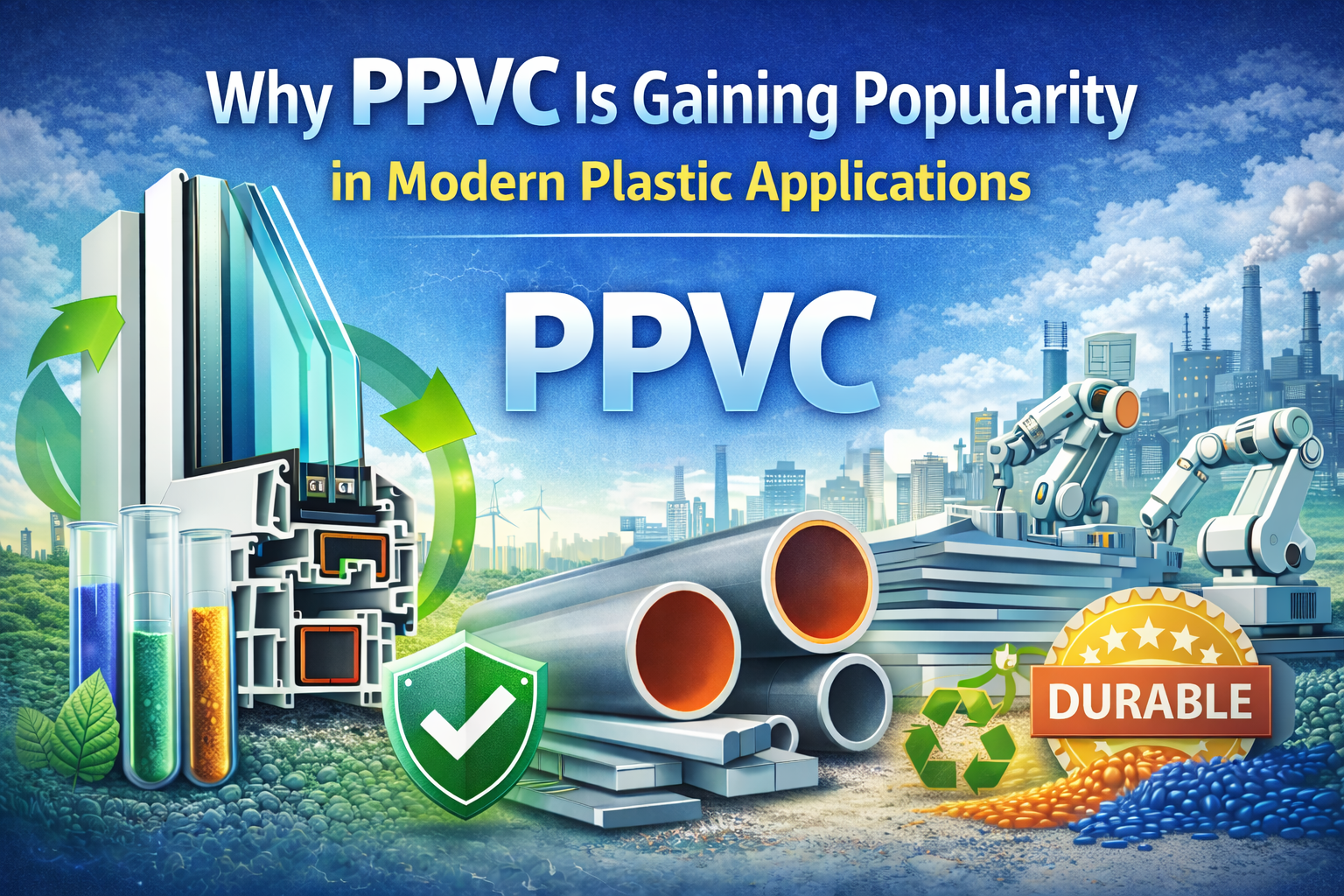
The plastics industry is constantly adapting to meet the demand for stronger, more durable, and cost-effective materials. In recent years, PPVC has emerged as a preferred choice across many modern plastic applications. Manufacturers are increasingly turning to PPVC as it offers better performance, easier processing, and longer service life compared to traditional plastic materials.
This blog explains why PPVC is gaining popularity and how it is shaping the future of plastic manufacturing.
1. Balanced Strength and Flexibility
One of the main reasons PPVC is becoming popular is its balanced combination of strength and flexibility. Many conventional plastics are either too rigid or too flexible, limiting their use in demanding applications.
PPVC provides:
-
Better impact resistance
-
Reduced cracking and breakage
-
Improved structural stability
This makes PPVC suitable for products that require durability without sacrificing flexibility.
2. Improved Processing Efficiency
Manufacturers prefer materials that are easy to process and deliver consistent results. PPVC performs exceptionally well during mixing, extrusion, and molding.
With proper processing, PPVC offers:
-
Uniform material dispersion
-
Smooth surface finish
-
Reduced material wastage
This efficiency helps manufacturers lower production costs while maintaining high product quality.
3. Enhanced Thermal Stability
PPVC offers better thermal stability compared to many traditional plastics. It can withstand higher processing temperatures without deforming or degrading.
This advantage allows:
-
Better control during manufacturing
-
Fewer defects
-
Improved product consistency
Thermal stability is especially important for industrial and construction-related plastic applications.
4. High Resistance to Chemicals and Moisture
Modern plastic applications often require materials that can handle harsh environments. PPVC shows excellent resistance to chemicals, moisture, and humidity.
Because of this, PPVC is widely used in:
-
Industrial components
-
Construction materials
-
Applications exposed to chemicals or water
Its resistance helps extend product life and reduce maintenance needs.
5. Longer Product Life and Durability
Durability is a key factor driving the adoption of PPVC. Products made from PPVC maintain their strength, appearance, and performance over time.
Compared to traditional plastics, PPVC:
-
Resists aging and weathering
-
Handles UV exposure better
-
Maintains dimensional stability
This makes PPVC a reliable long-term solution for manufacturers and end users.
6. Cost-Effective Performance
While premium plastic materials can be expensive, PPVC delivers high performance at a reasonable cost. Its long service life and reduced maintenance make it a cost-effective choice.
Manufacturers benefit from:
-
Lower replacement costs
-
Reduced production losses
-
Better return on investment
This balance between performance and cost is a major reason for PPVC’s growing demand.
7. Compatibility with Sustainable Manufacturing
Sustainability is becoming a priority in plastic production. PPVC supports recycling and can be processed with recycled content while maintaining acceptable quality levels.
This allows manufacturers to:
-
Reduce material waste
-
Meet environmental regulations
-
Support eco-friendly production practices
PPVC fits well into modern sustainability goals.
8. Wide Range of Modern Applications
The versatility of PPVC makes it suitable for many modern applications, including:
-
Plastic profiles and panels
-
Industrial and utility components
-
Construction and infrastructure products
Its adaptability helps manufacturers use PPVC across multiple product lines.
Conclusion
PPVC is gaining popularity in modern plastic applications because it offers the right mix of strength, durability, processing efficiency, and cost-effectiveness. Its ability to perform well in demanding conditions while supporting sustainable manufacturing makes it a smart choice for today’s plastic industry.
 English
Join our community to interact with posts!