
Digital applications today operate in a global environment where users come from different countries and interact with multiple currencies every day. From online stores to fintech platforms, developers often need access to reliable financial data. This is where a free currency api becomes useful, allowing applications to fetch real-time currency information and simplify international transactions.
At the same time, understanding global money symbols is equally important. Currency symbols help users quickly recognize the type of money being used in a transaction. When developers combine accurate currency data with proper symbol formatting, they create applications that feel intuitive and trustworthy for users around the world.
This article explains how global money symbols work, why they matter for developers, and how currency APIs help modern applications manage international financial data efficiently.
What Are Global Money Symbols?
Money symbols are short graphical representations used to identify different currencies. They appear next to numbers to indicate the monetary value of a transaction or financial record.
For example:
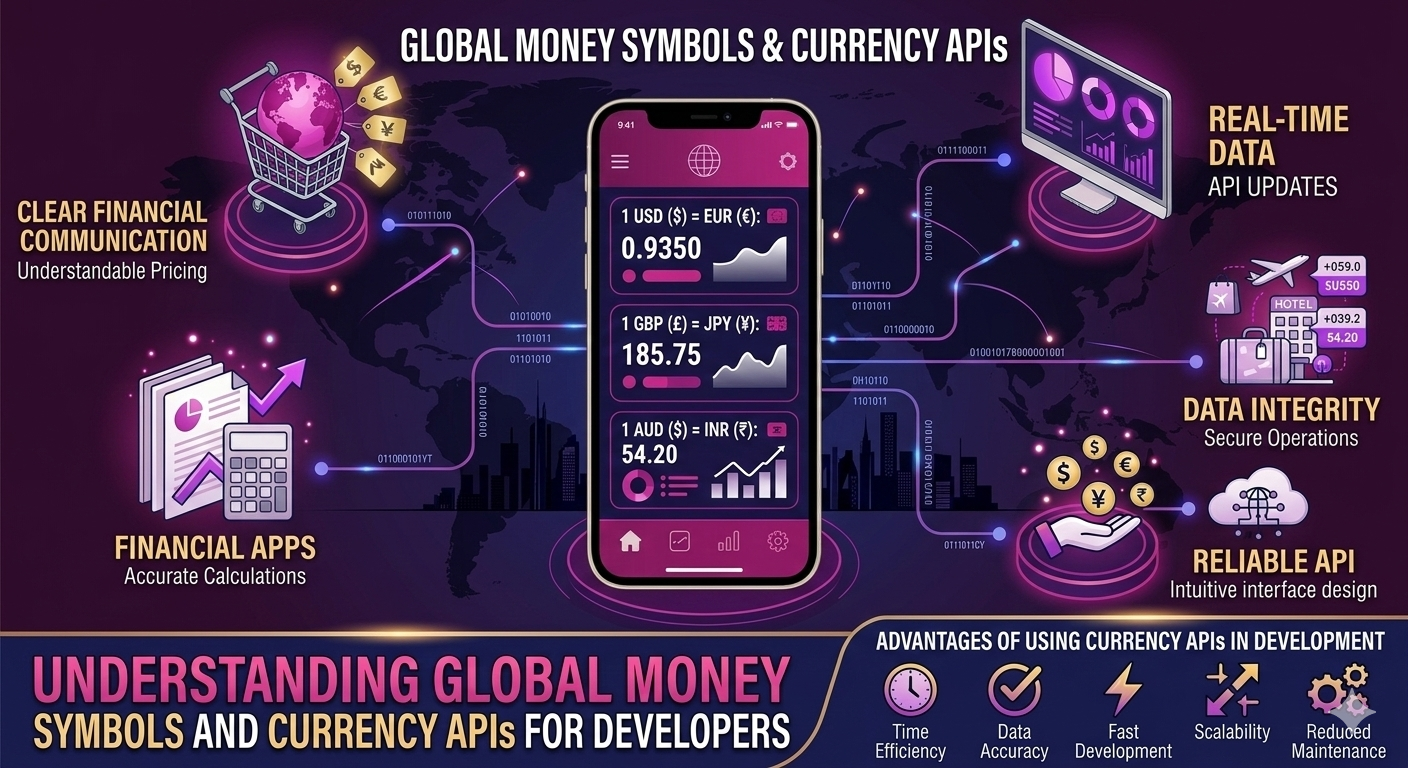
- $ represents the US Dollar
- € represents the Euro
- £ represents the British Pound
- ¥ represents the Japanese Yen
- ₹ represents the Indian Rupee
These symbols are widely recognized and help users instantly understand the currency being displayed. Instead of writing the full currency name, applications use symbols to keep financial data simple and readable.
Many currencies share similar symbols, which is why developers often combine the symbol with a currency code such as USD, EUR, or GBP. This helps avoid confusion when displaying international financial information.
Why Currency Symbols Matter in Applications
Currency symbols are more than just visual elements. They improve usability and help users interact with financial information quickly.
When implemented correctly, they provide several advantages.
Clear Financial Communication
Users can instantly recognize the currency being used in a price or transaction.
Better User Experience
Displaying familiar symbols makes pricing easier to understand, especially for international customers.
Reduced Transaction Confusion
When multiple currencies are involved, symbols help users avoid mistakes during payments or financial analysis.
Professional Interface Design
Applications that display currency symbols correctly appear more polished and trustworthy.
For developers building global platforms, handling currency symbols correctly is an essential part of creating a smooth financial experience.
Challenges Developers Face With Global Currencies
Handling global currencies inside an application can be more complex than it initially appears. Developers must consider multiple factors when dealing with international financial data.
Some common challenges include:
- Managing hundreds of global currencies
- Handling currency symbol formatting for different regions
- Updating exchange rates regularly
- Supporting multiple currency conversions
- Ensuring financial calculations remain accurate
Manual solutions often lead to outdated exchange rates or inconsistent data. This is why many development teams rely on APIs to automate currency data management.
What Is a Currency API?
A currency API is a web-based service that provides exchange rate data and currency information to applications through simple requests.
Developers connect their software to the API and retrieve currency data whenever needed. This removes the need to manually collect financial data from multiple sources.
A typical API request includes:
- Base currency (for example USD)
- Target currency (for example EUR)
- Conversion amount
The API then returns the exchange rate and other relevant data in a structured format such as JSON. Developers can use this information to display prices, perform conversions, or analyze financial information.
Because the data is updated automatically, applications can always present accurate currency values to users.
How Currency APIs Work
Currency APIs collect exchange rate data from trusted financial sources and deliver it to applications through secure endpoints.
The process generally follows these steps:
- The application sends a request to the API server.
- The request includes parameters such as currency codes.
- The API processes the request and retrieves the latest exchange rate data.
- The server returns the information in a machine-readable format.
- The application displays the result to the user or uses it in financial calculations.
This system allows developers to integrate global currency functionality without building complex financial infrastructure.
Key Features Developers Should Look for in a Currency API
Not all APIs provide the same level of performance or reliability. Developers should consider several important features when selecting a solution.
Real-Time Exchange Rate Updates
Currency values change frequently in global markets. Real-time updates ensure accurate conversions.
Wide Currency Coverage
A good API should support major global currencies as well as regional ones.
Historical Exchange Rate Data
Historical data helps applications analyze market trends and perform financial reporting.
Fast API Response Times
Speed is important for maintaining smooth application performance.
Developer-Friendly Documentation
Clear documentation and code examples make integration easier for development teams.
Common Use Cases for Currency APIs
Currency APIs are widely used across many digital industries. Any platform dealing with international payments or financial data can benefit from integrating them.
eCommerce Platforms
Online stores selling products internationally need accurate currency conversions so customers can see prices in their local currency.
Fintech Applications
Financial platforms use exchange rate data to calculate balances, convert investments, and analyze global markets.
SaaS Platforms
Subscription-based services often charge users from different countries and must display pricing in multiple currencies.
Travel and Booking Platforms
Travel websites display hotel prices, flights, and travel packages in various currencies for international users.
Financial Dashboards
Businesses tracking global revenue or expenses rely on currency APIs to convert financial data in real time.
Best Practices for Handling Currency Symbols in Applications
Developers should follow a few important practices when displaying currency symbols and exchange rate data.
Use Standard Currency Codes
Always pair currency symbols with standard ISO currency codes such as USD or EUR when possible.
Format Values Based on Region
Different countries display currency values differently. Localization improves clarity.
Avoid Hardcoding Exchange Rates
Exchange rates should always be retrieved dynamically from a reliable API.
Ensure Consistent Formatting
Currency symbols should appear consistently throughout the application interface.
Validate Currency Data
Applications should verify that currency data received from APIs is correct before using it in financial calculations.
These practices help maintain reliable financial data and prevent user confusion.
Advantages of Using Currency APIs in Development
Integrating currency APIs offers several important benefits for development teams.
Time Efficiency
Developers do not need to build complex systems to collect and update exchange rate data.
Improved Data Accuracy
Automated updates ensure that financial calculations remain reliable.
Faster Application Development
APIs allow developers to add currency conversion features quickly.
Scalability
As applications grow and attract global users, APIs can handle increasing volumes of requests.
Reduced Maintenance
Currency APIs eliminate the need for manual updates or constant data monitoring.
Because of these advantages, currency APIs have become a core component of modern financial applications.
The Future of Currency Data Integration
The demand for global financial data continues to grow as businesses expand internationally. Developers building modern platforms must ensure their applications support multiple currencies and provide accurate financial information.
Advances in cloud infrastructure, data processing, and API technology are making currency data services more reliable and accessible. These improvements allow development teams to integrate powerful financial features with minimal effort.
Applications that combine accurate exchange rates with proper money symbol formatting create better user experiences and support seamless international transactions.
For developers building fintech tools, global marketplaces, or financial dashboards, integrating a reliable currency trading api helps ensure that currency data remains accurate, scalable, and ready for global use.
FAQs
1. What is the difference between a currency symbol and a currency code?
A currency symbol is a visual sign used to represent a currency, such as $ or €. A currency code is a three-letter standard identifier like USD or EUR used in financial systems and APIs.
2. Why do developers use currency APIs in applications?
Developers use currency APIs to automatically retrieve exchange rate data, perform currency conversions, and ensure applications display accurate financial information for global users.
3. Can a currency API support multiple currencies at once?
Yes. Most modern APIs support dozens or even hundreds of global currencies, allowing applications to convert values between many different currency pairs in real time.
Recommended Resources:-
How to expose APIs to LLMs without breaking security
OpenAI Function Calling: How to Connect LLMs to The Best Free APIs (2025)
 English
Join our community to interact with posts!