
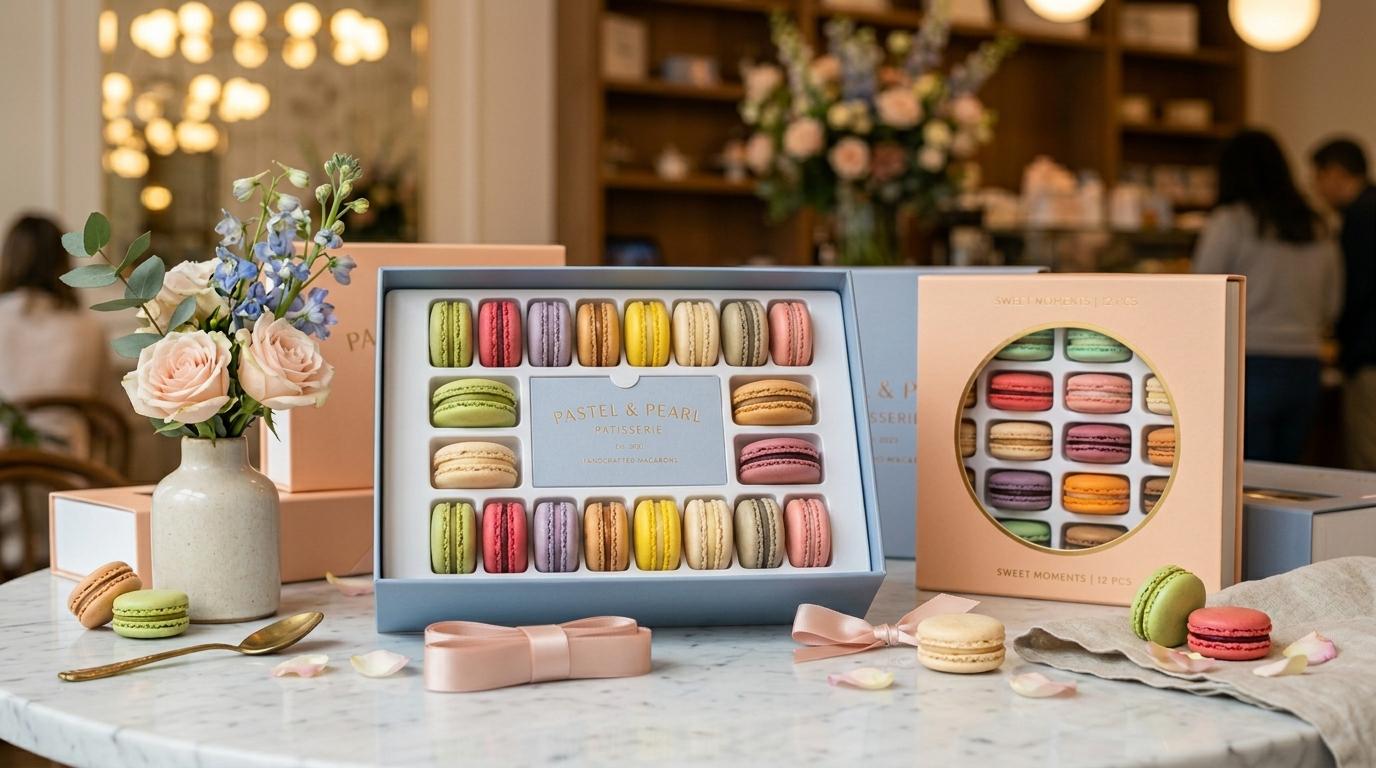
Macarons are one of the most delicate and premium desserts in the bakery world. These colorful French treats are known for their smooth shells, shiny surface, airy texture, and soft filling. However, making perfect macarons is not easy; it requires precision, correct ingredients, and a deep understanding of baking science. Even small mistakes in mixing, temperature, or humidity can completely change the final result.
In this blog, we will explore the key ingredients used in macarons and the science behind achieving that perfect smooth top, “feet” formation, and balanced texture that makes macarons so special.
Custom Macaron Boxes are specially designed packaging solutions that protect delicate macarons while enhancing their visual presentation. Since macarons are soft, fragile, and sensitive to moisture, they require strong yet elegant packaging that keeps them fresh and prevents damage during handling or delivery. These boxes are usually made from food-safe cardboard or rigid materials with inserts that hold each macaron in place, preventing movement and breakage.
What Are Macarons?
Macarons are light, sandwich-style cookies made from almond flour, egg whites, and sugar. They are filled with buttercream, ganache, or jam in the middle. Unlike regular cookies, macarons depend heavily on chemical reactions between ingredients rather than simple baking techniques.
The texture of a perfect macaron includes:
- A smooth, shiny outer shell
- A slightly crisp surface
- A soft, chewy inside
- A characteristic “foot” at the bottom
Achieving this balance requires precision in both ingredients and technique.
Key Ingredients in Macarons
Macarons are made using a few simple ingredients, but each one plays a very important scientific role.
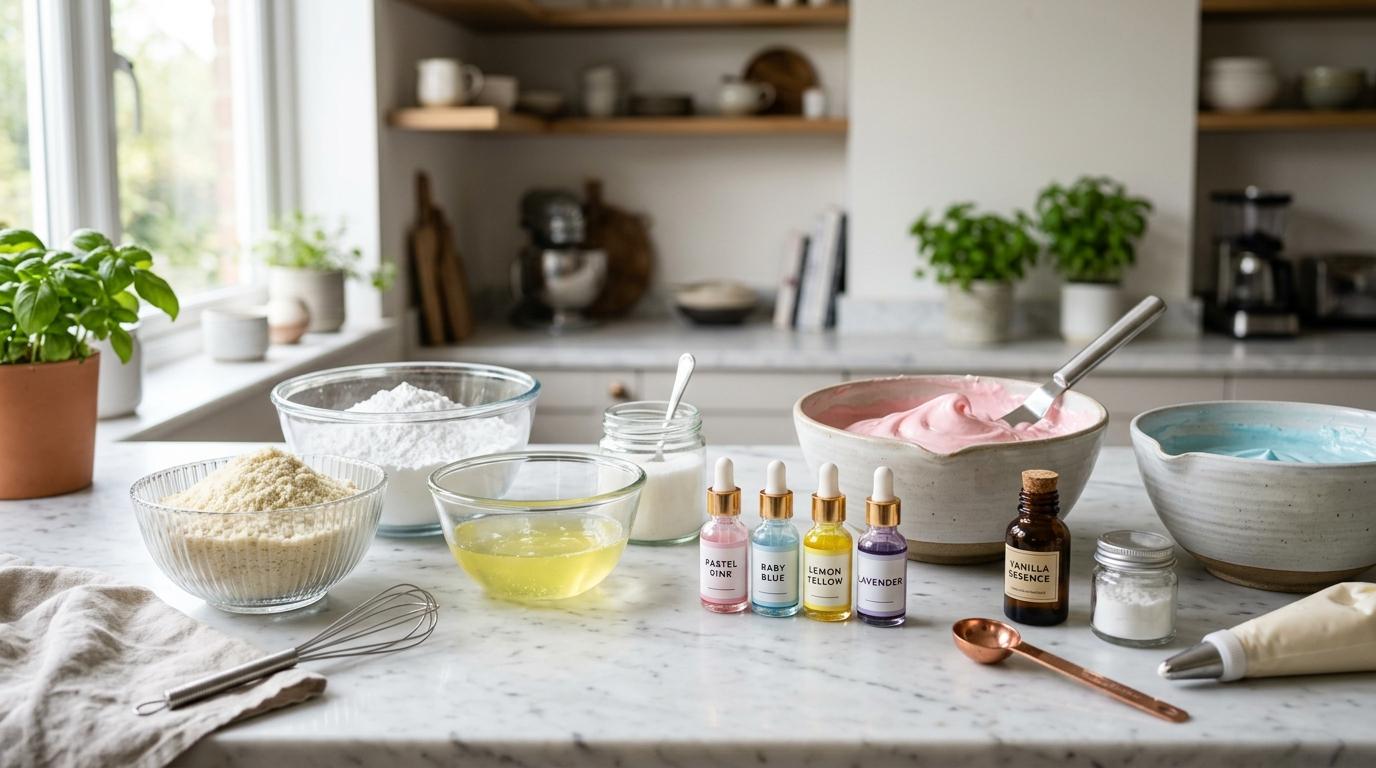
Almond Flour The Base Structure
Almond flour is the main dry ingredient in macarons. It gives structure, flavor, and texture to the shell. The fine grind of almond flour is extremely important because large particles can cause rough surfaces and cracked shells.
Almond flour also replaces traditional wheat flour, making macarons naturally gluten-free. Its fat content helps create a soft and slightly chewy interior.
Egg Whites The Stability Factor
Egg whites are the most critical ingredient in macaron making. When whipped, egg whites trap air and form a stable foam structure called meringue. This foam gives macarons their light and airy texture.
The proteins in egg whites unfold during whipping and create a network that holds air bubbles. This is what helps macarons rise and develop their signature “feet” during baking.
Sugar The Structure Builder
Sugar stabilizes the egg white foam and gives macarons their sweetness. It also helps create the shiny outer shell. Without sugar, the meringue would collapse easily.
There are usually two types of sugar used:
- Granulated sugar for stabilizing egg whites
- Powdered sugar for smooth batter consistency
Sugar also helps control moisture, which is important for proper macaron texture.
Food Coloring & Flavoring Visual and Taste Enhancement
Macarons are famous for their vibrant colors and variety of flavors. Food coloring must be carefully used because too much liquid can affect batter consistency.
Flavorings like vanilla, chocolate, pistachio, or raspberry are added to create different taste profiles without affecting the structure too much.
The Science Behind Perfect Macarons
Making macarons is not just baking it is food science. Every step involves chemical and physical reactions that determine the final outcome.
Meringue Formation and Air Stability
When egg whites are whipped, they form a foam that traps air. This air expands during baking and creates the light texture of macarons. If the meringue is under-whipped, the structure will collapse. If over-whipped, it becomes too dry and unstable.
The Macaron age Process Mixing Science
Macaron age is the process of folding dry ingredients into the meringue. This step is very important because it controls batter consistency.
- Under-mixed batter → thick, cracked macarons
- Over-mixed batter → flat, no feet formation
The goal is a smooth, flowing batter that slowly settles when dropped from a spatula.
Resting Time Formation of Skin Layer
Before baking, macarons are left to rest. During this time, a thin skin forms on the surface. This layer is essential because it traps steam inside during baking, forcing the batter to rise from the bottom and create “feet.”
Humidity plays a big role here high humidity can prevent proper skin formation.
Baking Temperature Controlled Expansion
Temperature control is critical in macaron baking. Too high heat causes cracks, while too low heat prevents proper rising.
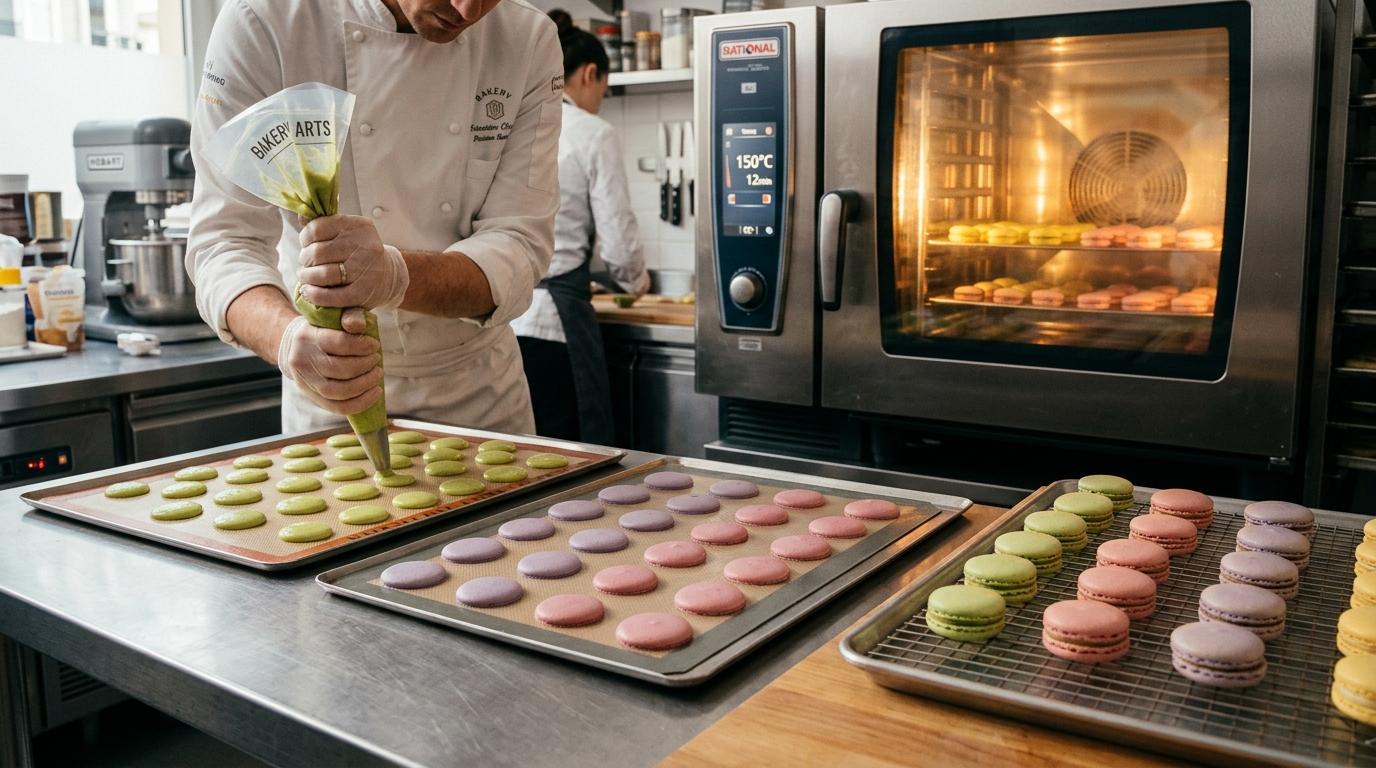
During baking:
- Air inside expands
- Foot structure forms
- Outer shell hardens
This balance creates the perfect macaron shape.
Common Problems in Macarons
Even experienced bakers face challenges when making macarons. Some common issues include:
- Cracked shells due to high oven temperature
- Hollow centers due to unstable meringue
- No feet due to improper resting
- Rough surface due to coarse almond flour
- Flat macarons due to over-mixed batter
Each problem is directly related to ingredient handling or chemical reactions during baking.
Importance of Packaging in Macarons
Macarons are extremely delicate and sensitive to moisture and temperature. Proper packaging is essential to maintain freshness, texture, and appearance during storage and transportation.
High-quality packaging also enhances brand value, especially for bakery businesses selling premium desserts. Custom-designed packaging helps attract customers and improve product presentation.
Companies like Silver Edge Packaging provide premium packaging solutions, including food-safe and visually appealing packaging options for bakery products like macarons. These solutions are especially useful for businesses using custom macaron boxes to protect and present their products in a professional way.
Role of Custom Packaging in Bakery Business
Packaging plays a major role in customer experience. Macarons are often sold as luxury gifts, so presentation is just as important as taste.
Custom packaging helps businesses:
- Improve brand identity
- Protect delicate desserts
- Enhance customer experience
- Increase product value perception
- Stand out in competitive bakery markets
Beautiful packaging turns macarons into premium gift items rather than just desserts.
Conclusion
Macarons are a perfect example of how simple ingredients can create a complex and beautiful dessert when science and precision are applied correctly. Almond flour, egg whites, and sugar all work together through carefully controlled chemical reactions to produce the signature texture and appearance of macarons.
From mixing to baking, every step requires accuracy, patience, and understanding of food science. Along with perfect baking techniques, proper packaging also plays an important role in maintaining freshness and enhancing product presentation.
Whether for home bakers or bakery businesses, mastering both macaron science and presentation ensures a truly premium dessert experience.
 English
Join our community to interact with posts!