
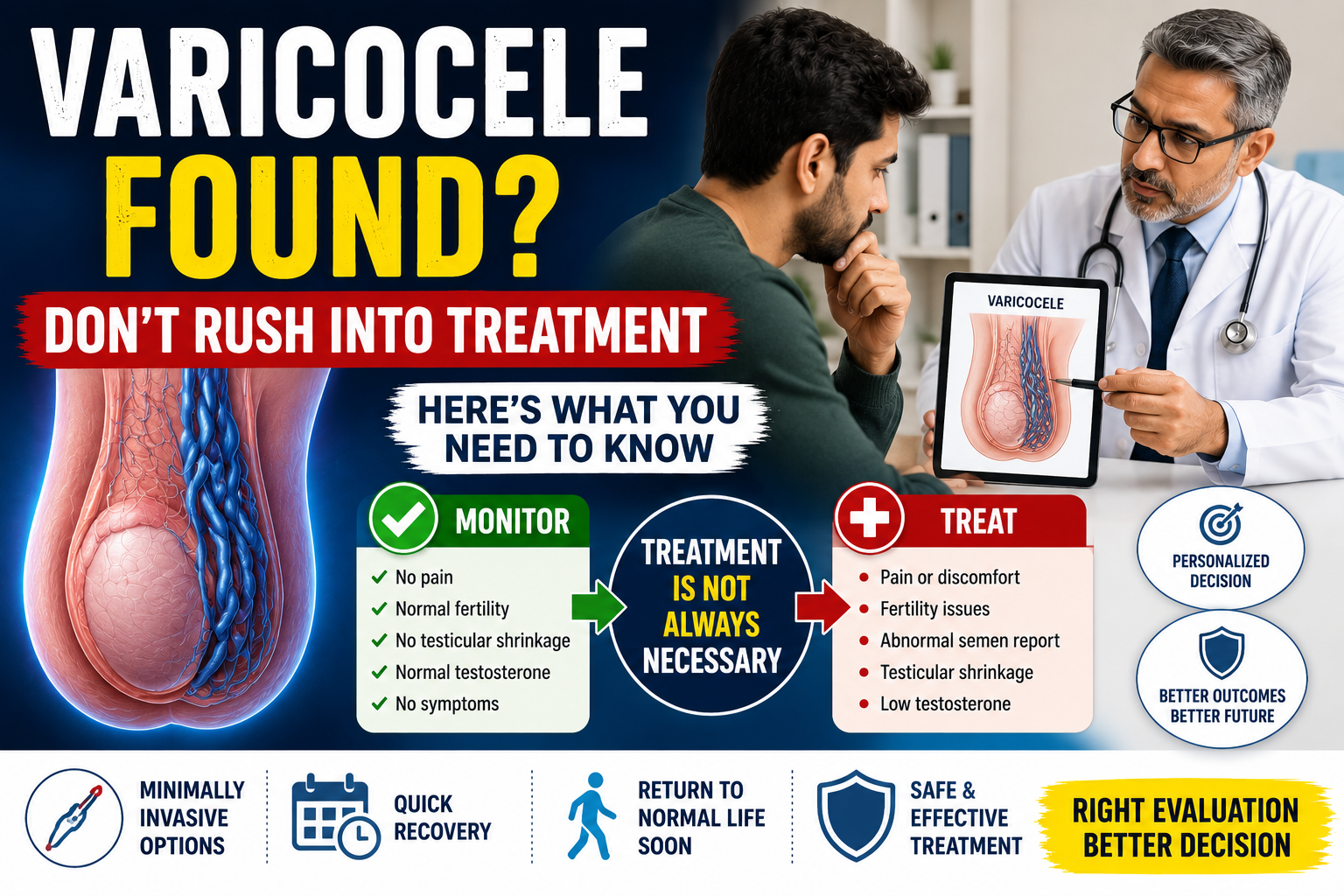
Many men are surprised to learn they have a varicocele. Some discover it during a fertility evaluation, while others notice enlarged veins or mild discomfort in the scrotum. The diagnosis often leads to an immediate question: does every varicocele need treatment?
The answer is no.
A varicocele is a common condition, and many men live with it for years without experiencing significant problems. At the same time, some varicoceles can affect fertility, testosterone levels, or cause persistent discomfort. Understanding the difference is important because treatment decisions should be based on symptoms, reproductive goals, and overall health rather than the diagnosis alone.
For most patients, the key is determining whether the varicocele is actually causing a problem that requires intervention.
What Is a Varicocele?
A varicocele occurs when veins inside the scrotum become enlarged due to abnormal blood flow. These veins are similar to varicose veins that develop in the legs.
Varicoceles are common. According to the American Urological Association, they affect approximately 15% of adult men and are even more common among men being evaluated for infertility.
Most varicoceles develop on the left side because of differences in vein anatomy and blood flow patterns.
Why Are Some Varicoceles Never Treated?
Many men with a varicocele have:
- No pain
- Normal sperm quality
- Normal testosterone levels
- No testicular shrinkage
- No fertility concerns
In these situations, doctors may simply recommend periodic monitoring rather than immediate treatment.
A varicocele alone does not automatically require treatment.
Clinical experience shows that many patients remain symptom-free for years and never develop complications.
When Do Doctors Recommend Treatment?
Treatment is generally considered when the varicocele is causing a measurable problem.
Common reasons include:
Fertility Problems
One of the most common reasons for treatment is infertility.
A varicocele can increase the temperature around the testicle, which may affect sperm production and quality. According to research published in Fertility and Sterility, varicoceles are found in up to 40% of men evaluated for primary infertility.
Persistent Pain or Discomfort
Some men experience a dull ache, heaviness, or discomfort that becomes worse after prolonged standing, exercise, or physical activity.
When symptoms interfere with daily life and conservative measures do not help, treatment may be recommended.
Testicular Shrinkage
In younger patients, doctors sometimes observe reduced growth or shrinkage of the affected testicle.
This may indicate that the varicocele is affecting normal testicular function.
Abnormal Semen Analysis
Even when fertility is not an immediate concern, abnormal sperm parameters may influence treatment decisions.
Can a Varicocele Become Worse Over Time?
Not every varicocele progresses.
However, some may gradually increase in size or begin affecting testicular function.
Most patients are surprised to learn that a painless varicocele can still affect sperm quality.
This is why doctors may recommend follow-up evaluations, particularly for younger men or couples planning future pregnancies.
What Happens If a Varicocele Is Left Untreated?
For many men, nothing serious happens.
The condition may remain stable for years without causing noticeable symptoms.
In other cases, untreated varicoceles may contribute to:
- Reduced sperm quality
- Fertility difficulties
- Chronic discomfort
- Testicular atrophy (shrinkage)
- Lower testosterone production
The likelihood of these problems varies from person to person.
That is why treatment decisions should always be individualized.
Are There Alternatives to Surgery?
Yes.
Modern treatment options have evolved significantly.
One minimally invasive option is varicocele embolization, a procedure performed through a small catheter inserted into a vein. Tiny coils or embolic agents are used to block the abnormal veins and redirect blood flow.
Benefits may include:
- No surgical incision
- Faster recovery
- Less post-procedure discomfort
- Same-day discharge in many cases
For suitable candidates, embolization offers an effective alternative to traditional surgery.
How Do Doctors Decide What Is Best?
Doctors evaluate several factors before recommending treatment.
These include:
- Age
- Symptoms
- Fertility goals
- Semen analysis results
- Testicular size
- Ultrasound findings
A patient with no symptoms and normal fertility may simply require observation. A patient experiencing infertility or persistent discomfort may benefit from treatment.
There is no one-size-fits-all approach.
What Do Doctors Commonly See in Practice?
Many patients become anxious immediately after diagnosis because they assume treatment is mandatory.
In reality, doctors frequently reassure patients that observation is often appropriate.
At the same time, ignoring fertility-related concerns or ongoing symptoms can delay treatment that may improve long-term outcomes.
The goal is not to treat every varicocele. The goal is to treat the varicoceles that are causing meaningful problems.
Conclusion
A varicocele diagnosis does not automatically mean treatment is necessary. Many men experience no symptoms, maintain normal fertility, and never require intervention. Others may develop pain, fertility challenges, or testicular changes that make treatment beneficial.
The most important step is proper evaluation rather than immediate treatment decisions. When symptoms, fertility concerns, or testicular health are affected, early assessment can help identify the most appropriate management approach. Patients seeking expert guidance on vascular and minimally invasive treatment options can explore advanced vascular care and interventional treatment services to better understand available solutions and make informed decisions about their health.
FAQs
Can a varicocele go away on its own?
Most varicoceles do not disappear without treatment. However, many remain stable and never cause significant symptoms.
Is every varicocele dangerous?
No. Many varicoceles are harmless and require only monitoring. Treatment is usually recommended only when symptoms or fertility concerns develop.
Can a varicocele affect fertility?
Yes. A varicocele can reduce sperm quality and production in some men, which may affect fertility.
How is a varicocele diagnosed?
Doctors typically diagnose a varicocele through physical examination and ultrasound imaging.
What is the recovery time after varicocele embolization?
Many patients return to normal activities within a few days, although recovery can vary depending on individual circumstances.
Medical Disclaimer: This article is written for general informational purposes only and does not constitute medical advice. Always consult a qualified medical professional for diagnosis and treatment specific to your condition.
 English
Join our community to interact with posts!