
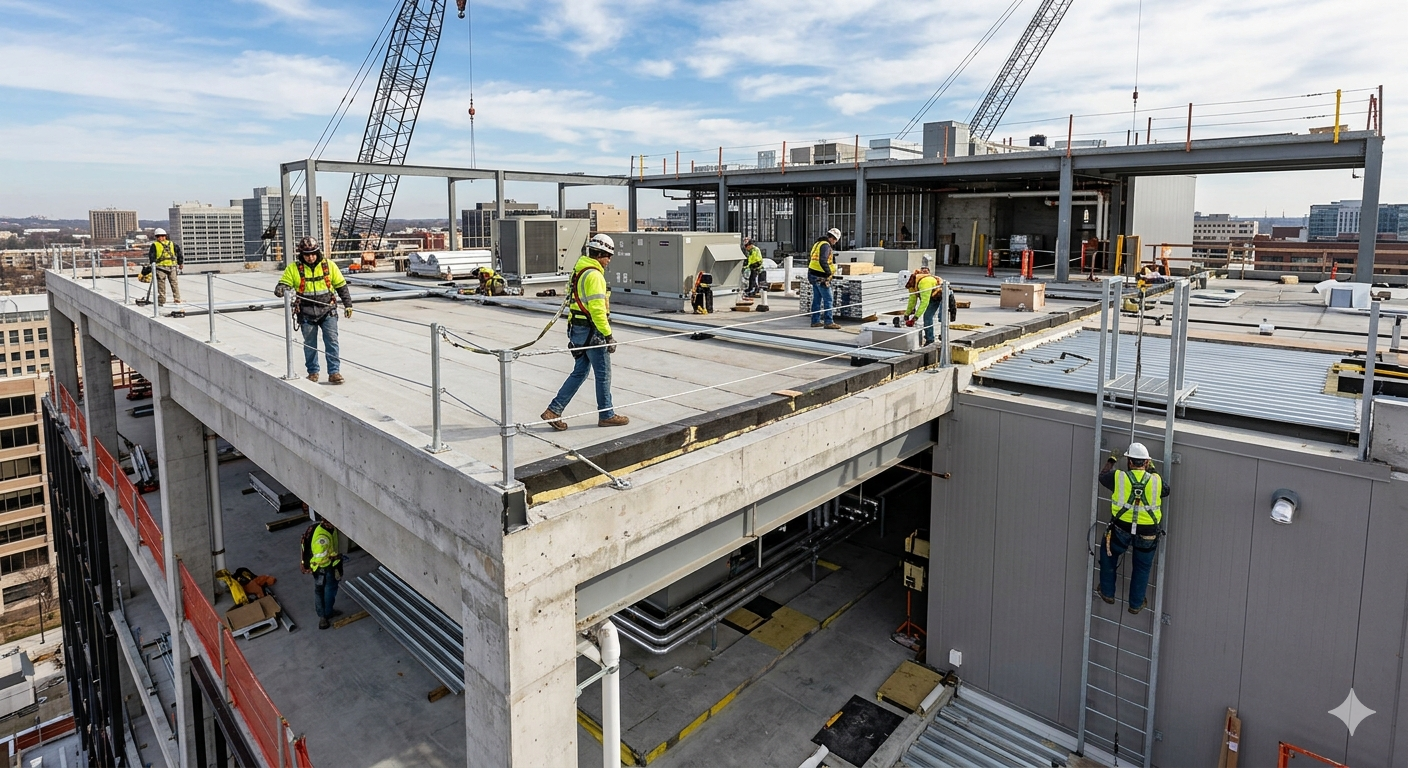
Working at height is one of the leading causes of workplace injuries and fatalities across industries such as construction, manufacturing, warehousing, telecommunications, and maintenance. Whether employees are working on rooftops, scaffolding, ladders, or elevated platforms, implementing reliable fall protection systems is essential for maintaining a safe work environment.
Fall protection goes beyond meeting regulatory requirements—it demonstrates a commitment to employee well-being, minimizes downtime, and helps organizations avoid costly accidents. Modern fall protection solutions combine engineering, safety equipment, and proper training to reduce the risks associated with working at height.
This guide explores what fall protection systems are, the different types available, their key components, and best practices for creating a safer workplace.
What Are Fall Protection Systems?
Fall protection systems are safety measures designed to prevent workers from falling or to safely arrest a fall if one occurs. These systems include a combination of equipment, structural components, procedures, and employee training that work together to reduce fall-related hazards.
A well-designed fall protection system considers the work environment, the tasks being performed, and the level of risk involved. Choosing the appropriate solution helps ensure employees can perform their duties safely while maintaining productivity.
Why Fall Protection Matters
Falls from height remain among the most common causes of serious workplace injuries. Even relatively short falls can result in severe injuries or fatalities.
Implementing effective fall protection systems offers several benefits, including:
- Reducing workplace injuries and fatalities
- Supporting compliance with workplace safety regulations
- Protecting company assets and reputation
- Lowering workers' compensation costs
- Improving employee confidence and productivity
- Creating a stronger safety culture throughout the organization
Safety investments often lead to long-term operational improvements while demonstrating a commitment to responsible workplace practices.
Common Types of Fall Protection Systems
Different work environments require different safety solutions. Understanding the available options helps organizations choose the most effective system for their specific applications.
Guardrail Systems
Guardrails provide passive fall protection by creating a physical barrier around elevated work areas. Since workers do not need to wear specialized equipment to benefit from guardrails, they are considered one of the most effective and user-friendly solutions.
Guardrails are commonly installed around:
- Roof edges
- Mezzanines
- Loading docks
- Elevated walkways
- Platforms
Because they require minimal worker interaction, guardrails help reduce human error.
Personal Fall Arrest Systems (PFAS)
Personal Fall Arrest Systems are designed to stop a worker safely if a fall occurs.
A typical PFAS includes:
- Full-body harness
- Shock-absorbing lanyard
- Self-retracting lifeline (SRL)
- Secure anchor point
- Connecting hardware
These systems distribute fall forces across the body while limiting the distance a worker falls.
Proper inspection, maintenance, and training are essential for ensuring reliable performance.
Horizontal Lifeline Systems
Horizontal lifelines allow workers to move safely across large elevated work areas while remaining continuously connected.
These systems are commonly used on:
- Industrial rooftops
- Bridges
- Aircraft maintenance facilities
- Manufacturing plants
- Distribution centers
By providing greater mobility without disconnecting from the safety system, horizontal lifelines improve both safety and efficiency.
Roof Anchor Systems
Roof anchors serve as secure attachment points for personal fall arrest equipment. Depending on the application, anchors may be:
- Permanent
- Temporary
- Portable
Selecting the correct anchor depends on roof design, worker movement, and expected loads.
Proper installation by qualified professionals is critical for system reliability.
Safety Nets
Safety nets provide collective fall protection by catching workers before they reach the ground.
They are particularly useful when:
- Guardrails cannot be installed
- Workers cover large areas
- Multiple trades operate simultaneously
- High-rise construction projects are underway
Safety nets serve as an additional layer of protection in complex environments.
Key Components of an Effective Fall Protection Program
Installing equipment alone is not enough. A successful fall protection program combines several important elements.
Hazard Assessment
Every worksite presents unique risks. Conducting a thorough hazard assessment helps identify:
- Fall hazards
- Work locations
- Access points
- Environmental conditions
- Structural limitations
The assessment forms the foundation for selecting appropriate safety systems.
Proper Equipment Selection
No single fall protection solution works for every workplace.
Equipment should be selected based on:
- Height of work
- Worker mobility requirements
- Surface conditions
- Number of users
- Industry regulations
- Rescue considerations
Customized solutions often provide the highest level of protection.
Employee Training
Workers should understand how to:
- Properly wear harnesses
- Connect to anchor points
- Inspect equipment
- Recognize hazards
- Follow rescue procedures
- Report damaged equipment
Regular refresher training helps reinforce safe work practices.
Routine Equipment Inspection
Fall protection equipment experiences wear over time.
Routine inspections should include:
- Harness webbing
- Stitching
- Connectors
- Lanyards
- Lifelines
- Anchor points
- Labels and identification
Damaged equipment should be removed from service immediately.
Emergency Rescue Planning
A fall protection plan should always include rescue procedures.
Rescue planning addresses:
- Response time
- Rescue equipment
- Worker communication
- Medical assistance
- Designated rescue personnel
Quick rescue helps reduce the risk of suspension trauma following a fall.
Industries That Rely on Fall Protection Systems
Many industries depend on fall protection to keep employees safe.
Common sectors include:
- Construction
- Warehousing
- Manufacturing
- Oil and gas
- Telecommunications
- Utilities
- Transportation
- Aviation
- Facility maintenance
- Renewable energy
Each industry presents unique hazards that require specialized safety solutions.
Choosing the Right Fall Protection Solution
Selecting the appropriate system requires careful planning.
Organizations should consider:
- Nature of the work
- Frequency of elevated tasks
- Building structure
- Worker movement
- Future maintenance needs
- Applicable safety standards
- Ease of inspection
- Long-term durability
Working with experienced fall protection specialists helps ensure systems are properly designed, installed, and maintained for maximum effectiveness.
Maintaining Long-Term Workplace Safety
Fall protection should be viewed as an ongoing process rather than a one-time installation.
Organizations can strengthen workplace safety by:
- Performing regular risk assessments
- Updating safety procedures
- Replacing worn equipment
- Providing ongoing employee education
- Scheduling professional system inspections
- Reviewing incident reports for continuous improvement
Continuous evaluation helps organizations adapt to changing work environments and emerging safety challenges.
Conclusion
Fall protection systems play a vital role in safeguarding workers who perform tasks at height. From guardrails and lifelines to personal fall arrest systems and roof anchors, the right combination of equipment and training significantly reduces workplace risks.
An effective fall protection program involves more than installing safety equipment—it requires careful planning, routine inspections, employee education, and ongoing maintenance. By investing in comprehensive fall protection solutions, organizations create safer workplaces, improve operational efficiency, and support long-term regulatory compliance.
Prioritizing fall protection today helps protect employees, strengthen workplace safety culture, and reduce the likelihood of preventable accidents in the future.
 English
Join our community to interact with posts!