
Nanofiber technology continues to shape research and industrial innovation across healthcare, filtration, energy storage, textiles, and tissue engineering. At the center of this progress are electrospinning systems that create ultrafine fibers with remarkable precision. When choosing the right equipment, one of the biggest decisions is whether to use a melt electrospinning machine or a solution electrospinning system.
Although both techniques rely on an electric field to produce nanofibers, they differ in materials, processing methods, operating costs, and final fiber properties. Understanding these differences helps researchers and manufacturers invest in equipment that best supports their goals.
In this guide, we compare melt electrospinning and solution electrospinning, explaining how each process works, where each excels, and which option is better for specific applications.
What Is a Melt Electrospinning Machine?
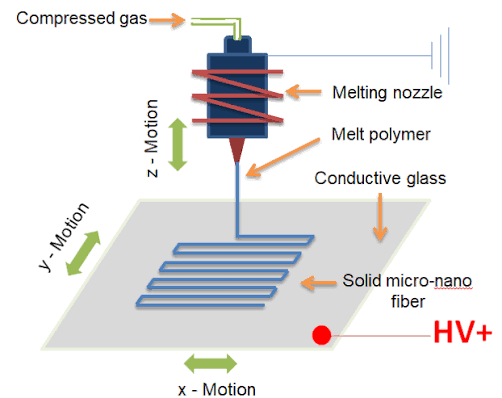
A melt electrospinning machine produces fibers by heating a polymer until it melts. Instead of dissolving the material in a solvent, the machine processes the molten polymer directly. High voltage draws the polymer melt into fine fibers that solidify as they cool.
Since no solvents are required, this method is widely recognized for solvent free electrospinning. It creates a cleaner production environment while reducing concerns related to chemical handling and emissions.
Modern melt electrospinning systems include precise temperature controls, adjustable voltage settings, and stable feeding mechanisms that allow consistent fiber production for research and commercial development.
What Is Solution Electrospinning?
Solution electrospinning uses a polymer dissolved in a suitable solvent. The liquid polymer solution is pumped through a nozzle while a high voltage creates a charged jet. As the jet travels toward the collector, the solvent evaporates, leaving behind solid nanofibers.
This method has been the industry standard for many years because it supports a broad range of polymers and can produce fibers with diameters well below one micron.
Solution electrospinning remains popular in laboratories because of its flexibility and relatively simple setup.
Main Differences Between Melt and Solution Electrospinning
Although both methods rely on electrical forces, the processing conditions are quite different.
| Feature | Melt Electrospinning | Solution Electrospinning |
|---|---|---|
| Material | Molten polymer | Polymer dissolved in solvent |
| Solvent Required | No | Yes |
| Environmental Impact | Lower | Higher due to solvent use |
| Fiber Diameter | Generally larger | Generally smaller |
| Equipment Complexity | Higher temperature control | Simpler heating requirements |
| Safety | Fewer chemical hazards | Requires solvent handling |
| Operating Cost | Lower solvent expenses | Ongoing solvent costs |
The choice depends on production goals, material compatibility, and application requirements.
Benefits of a Melt Electrospinning Machine
A melt electrospinning machine offers several advantages that make it attractive for both research institutions and industrial manufacturers.
Environmentally Friendly
One of the biggest advantages is solvent free electrospinning. Eliminating solvents reduces hazardous waste, lowers emissions, and simplifies laboratory safety requirements.
Lower Operating Costs
Without purchasing, storing, and disposing of solvents, operating expenses can decrease significantly over time.
Better Material Purity
Since there are no solvent residues, fibers remain chemically cleaner. This is especially valuable for medical devices, implants, and pharmaceutical research.
Suitable for Industrial Production
Melt electrospinning is easier to scale because manufacturers do not need large solvent recovery systems or specialized ventilation equipment.
Advantages of Solution Electrospinning
Solution electrospinning continues to be widely used because it provides several important benefits.
Smaller Fiber Diameters
Researchers can produce extremely fine nanofibers that may be difficult to achieve with molten polymers.
Greater Material Selection
Many polymers dissolve in suitable solvents, allowing researchers to experiment with a wide variety of materials and blends.
Established Research Method
Most published electrospinning research has been based on solution processing, making protocols easier to reproduce.
Understanding Polymer Melt Viscosity
One important factor affecting melt electrospinning performance is polymer melt viscosity.
Viscosity measures how easily the molten polymer flows during processing.
If viscosity is too high:
- Fiber formation becomes unstable.
- Flow through the nozzle decreases.
- Fiber diameter increases.
If viscosity is too low:
- The jet becomes unstable.
- Fiber quality may decrease.
- Structural consistency becomes difficult to maintain.
Modern electrospinning systems use accurate temperature control to maintain optimal polymer melt viscosity throughout production.
Applications of Thermoplastic Nanofibers
One reason melt electrospinning continues to grow is its ability to process thermoplastic nanofibers efficiently.
Common thermoplastic polymers include:
- Polycaprolactone
- Polypropylene
- Polyethylene
- Polylactic acid
- Polyurethane
These materials are used in:
- Tissue engineering
- Medical scaffolds
- Air filtration
- Protective textiles
- Battery separators
- Composite materials
Their excellent mechanical properties make them suitable for long term structural applications.
Melt Electrowriting: Precision Beyond Traditional Electrospinning
An exciting advancement in melt electrospinning is melt electrowriting.
Unlike conventional electrospinning, melt electrowriting allows highly controlled fiber placement instead of randomly deposited fibers.
Researchers can build organized fiber structures layer by layer with exceptional accuracy.
Applications include:
- Tissue engineering scaffolds
- Regenerative medicine
- Drug delivery systems
- Biomedical implants
- Customized medical devices
Because of its precision, melt electrowriting is becoming increasingly important for advanced biomedical research.
Biodegradable Fiber Production
Growing environmental awareness has increased demand for biodegradable fiber production.
Many biodegradable polymers perform well in melt electrospinning, including:
- Polylactic acid
- Polycaprolactone
- Polyglycolic acid
These fibers support applications such as:
- Wound dressings
- Drug delivery
- Tissue regeneration
- Sustainable packaging
- Agricultural materials
Producing biodegradable nanofibers without solvents makes melt electrospinning particularly attractive for environmentally responsible manufacturing.
Which Technology Should You Choose?
The right choice depends on your research objectives and production requirements.
Choose a melt electrospinning machine if you need:
- Solvent free processing
- Cleaner manufacturing
- Reduced environmental impact
- Industrial scalability
- Biomedical grade fiber purity
- Lower long term operating costs
Choose solution electrospinning if you require:
- Extremely fine nanofibers
- A broader range of polymers
- Flexible laboratory experimentation
- Established research protocols
Many research laboratories use both technologies depending on the specific project.
Why Choose Electrospintek?
At Electrospintek, we design advanced electrospinning systems that support modern nanofiber research and manufacturing. Our equipment combines precision engineering, reliable performance, and user friendly controls to help researchers achieve consistent results.
Whether your work focuses on solvent based electrospinning, melt processing, or advanced nanofiber applications, our systems are built to deliver accuracy, repeatability, and long term reliability. We also provide technical guidance to help laboratories and manufacturers choose the most suitable equipment for their research goals.
Conclusion
Both melt electrospinning and solution electrospinning are valuable technologies for nanofiber production. The best option depends on your materials, application, and production objectives.
A melt electrospinning machine stands out for its environmentally friendly operation, elimination of solvents, and growing role in biomedical manufacturing and industrial scale production. As demand continues to increase for solvent free electrospinning, thermoplastic nanofibers, melt electrowriting, optimized polymer melt viscosity, and biodegradable fiber production, melt electrospinning is becoming an increasingly important technology for the future of nanofiber engineering.
For researchers and manufacturers seeking dependable electrospinning solutions, Electrospintek offers advanced equipment designed to support innovation, efficiency, and high quality nanofiber production.
 English
Join our community to interact with posts!