
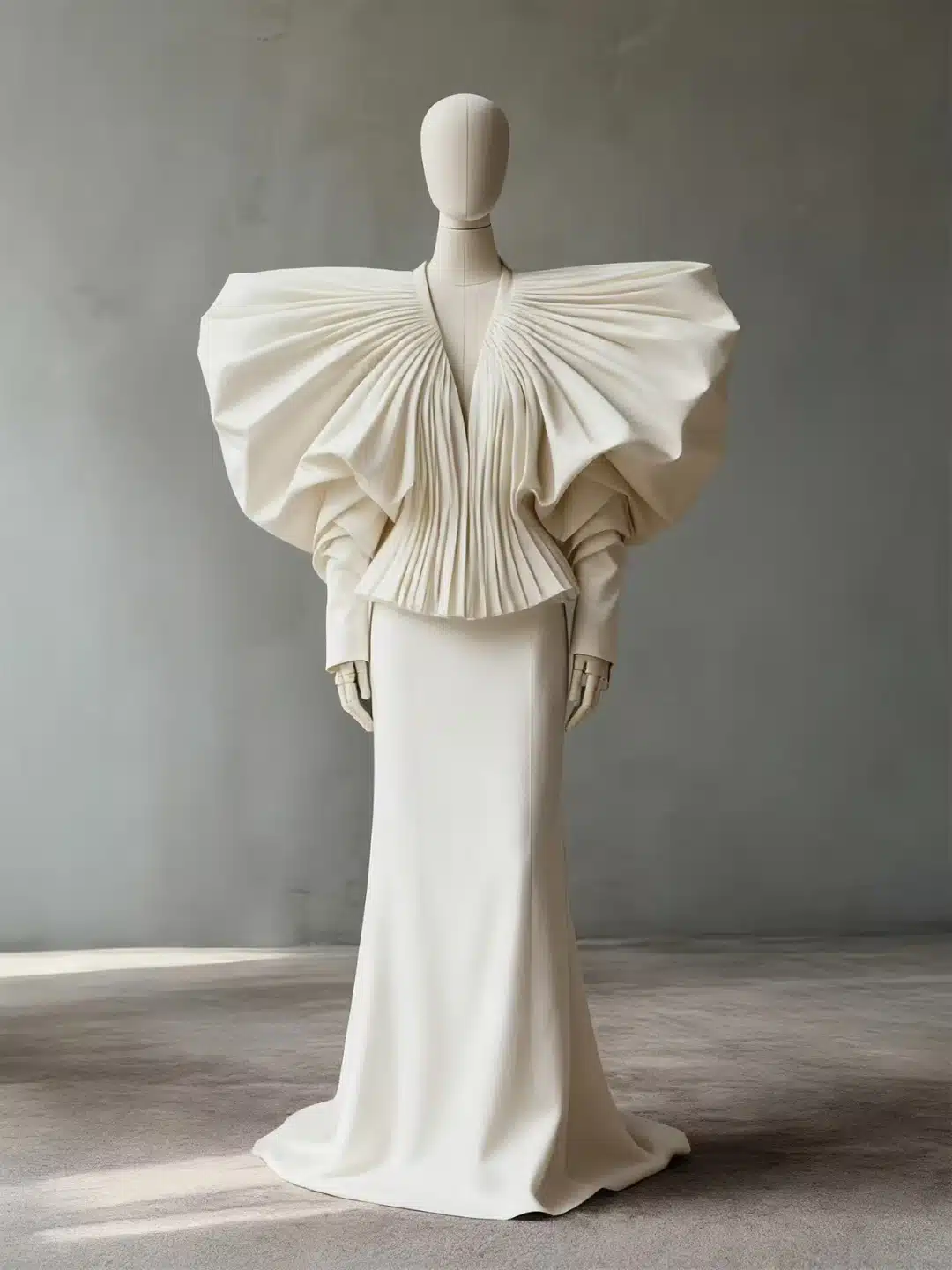
I once had a bride cry in my fitting room, not from stress, but because the dress finally fit her the way she'd imagined for months. That's the moment that separates a haute couture gown from anything you'll find on a rack.
Most people throw the word "couture" around loosely these days. Real couture is a legal term in France, protected by strict rules, and it has almost nothing to do with the sequined "couture collection" dresses sold online for $200.
Here's what the term actually means, why it costs what it costs, and how to think about commissioning one for yourself.
What Makes a Dress Truly Haute Couture
To legally call a garment haute couture, a French fashion house has to be approved by the Chambre Syndicale de la Haute Couture in Paris. That means made-to-order pieces, at least one in-person fitting, and an atelier with a set number of full-time artisans on staff.
No shortcuts. No machines doing the heavy lifting. A single gown can take anywhere from 150 to over 1,000 hours of hand-sewing, beading, and draping before it's finished.
Ready-to-Wear vs. Couture | What's the Real Difference?
Ready-to-wear is built for a size chart. Couture is built for one woman. It's the same gap as a rack suit versus one cut by a tailor who's actually measured your shoulders.
Why Are Haute Couture Gowns So Expensive?
You're not paying for fabric, you're paying for hours. Hand embroidery on a single bodice can take a small team several weeks. Add imported silk, boning, multiple fittings, and the price climbs fast, sometimes into six figures.
Why Custom Couture Dresses Are Having a Moment
Couture used to feel reserved for royalty and red carpets. Not anymore. I've had clients walk in after three failed alteration attempts on an off-the-rack gown that still pulled wrong across the shoulders.
A custom couture dress skips that frustration entirely because it's built around your body from the first sketch, not adjusted after the fact.
Who Actually Books a Custom Gown?
Brides who don't want to see their dress on anyone else. Women heading to a gala or award show. Anyone whose shape just doesn't play nice with standard sizing.
How Does the Process Actually Work?
You start with a consultation, then move to sketches and fabric selection. Next comes a toile, a muslin mockup used to test proportions before touching real fabric. Construction follows, then a final fitting to catch anything that needs adjusting.
Expect six to twelve weeks total, depending on how detailed the design is.
Choosing the Right Women's Formal Wear Dress
Not every event needs a full ballgown. A-line silhouettes flatter a wide range of body types because they nip the waist and skim outward. Mermaid and trumpet cuts do the opposite, they hug close and demand a more dramatic entrance.
Cocktail Dress or Evening Gown | Which One Do You Need?
Cocktail dresses hit above or at the knee for semi-formal settings. Evening gowns go floor-length and belong at black-tie events, weddings, and formal galas.
What Silhouette Works Best for My Body?
Pear shapes tend to look best in A-line or fit-and-flare cuts. Apple shapes often do better with an empire waist that skims rather than clings. Hourglass figures can wear almost anything structured, the waist does the work for you.
What's Trending in Haute Couture Gowns Right Now
Architectural draping is everywhere this season, fabric folds used as structure, not just decoration. Sculptural sleeves and hand-painted details are showing up from Paris to Milan runways.
Sustainability has crept in too. Several houses now use recycled silk and deadstock lace without cutting corners on the hand-finished quality clients expect. And jewel tones, emerald, sapphire, deep burgundy, have quietly overtaken plain ivory as the go-to choice for evening gowns.
Styling a Women's Evening Gown Without Overdoing It
A gorgeous gown can still fall flat if it's styled wrong. If the dress has heavy beadwork, skip the statement jewelry, let the fabric do the talking. Pick heels you can actually stand in for hours, since most formal events involve a lot of mingling.
Why Custom-Made Beats Off-the-Rack
I'll say this plainly: mass-produced formalwear is built for a body that doesn't really exist. Alterations only fix so much before the original structure fights back.
A custom couture dress is built around your actual measurements from day one, not adjusted after the fact to sort of work. If you've got a wedding, gala, or milestone event coming up, that difference shows up in every photo.
We design and hand-craft custom couture gowns and formal dresses built around your body and your event, not pulled off a rack that a dozen other women might be wearing too. If that sounds like what you need, a consultation is the easiest place to start.
FAQ
How much does a haute couture dress cost? Simple designs start around $5,000–$10,000. Elaborate, heavily beaded gowns from top houses can run into six figures.
How long does a custom couture gown take to make? Usually six to twelve weeks, depending on detail and how many fittings are needed.
Do I need to go to Paris for real couture? No. Independent ateliers and custom designers worldwide offer the same hand-finished quality without the Paris markup.
What fabrics are typically used? Silk organza, duchess satin, tulle, chiffon, and hand-beaded lace are the most common, often layered for shape and movement.
Is couture only for weddings? Not at all. Galas, anniversaries, milestone birthdays, and formal portraits are common reasons clients commission one.
What's the difference between couture and made-to-measure? Made-to-measure adjusts an existing pattern to fit you. Couture builds an entirely new pattern from scratch, just for your body.
How do I start the process? Book a consultation, bring reference photos, and come ready to talk fabric, budget, and timeline.
 English
Join our community to interact with posts!