
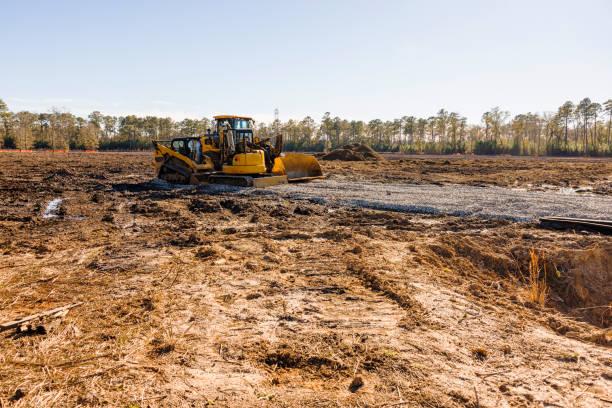
Bad grading is one of those problems that hides for a while. You get the work done, the yard looks fine, and then six months later there's a soggy corner that won't dry out, or worse, water pooling against your foundation after every rain. It's frustrating, and it's usually preventable. If you're planning grading work or just had it done and something seems off, knowing the most common mistakes makes a real difference. Whether you're hiring out or trying to understand what went wrong, good Land Grading Services in Columbus OH starts with understanding what goes wrong before the first shovel hits the dirt.
Mistake 1: Grading Toward the Foundation
This one causes more foundation damage than almost anything else. The ground around your home should slope away from the structure, typically about six inches of drop over the first ten feet. Even a slight tilt inward sends water straight toward the base of the house every single time it rains. Over months and years, that water finds cracks, seeps into the basement, and puts constant pressure on the concrete or block walls below grade.
Most people don't catch this during the job because it looks fine when the soil is dry and freshly moved. The problem only shows up when it rains hard or the soil settles. By then, re-grading costs more because you're also dealing with whatever damage the water already caused. So if you're watching someone grade around your house, pull out a level and check the slope yourself. Don't assume.
Mistake 2: Skipping Soil Compaction
Grading isn't just about moving dirt to the right height. The soil underneath needs to be properly compacted so it stays where you put it. Skip that step and you'll get uneven settling within a year or two, sometimes faster in wet climates. Soft spots turn into low areas, low areas collect water, and suddenly you've got standing puddles in places that were perfectly level when the crew left.
Compaction also matters for anything built on top of the graded area, like a patio, driveway, or shed foundation. Loose, poorly packed soil shifts under weight and load, which cracks concrete and tips structures. It's a step a lot of DIY grading jobs skip entirely because it requires equipment. But it's not optional. Worth doing right the first time.
According to EPA guidelines on stormwater from construction sites, soil disturbance without proper stabilization is one of the leading causes of runoff and erosion on residential and commercial properties alike. That's not just a regulatory concern, it's a practical one for your yard.
Mistake 3: Ignoring Existing Drainage Infrastructure
Here's something that catches people off guard. Your property already has drainage paths built into it, even if you can't see them all. Downspouts route water to specific spots. Swales channel runoff between properties. Underground pipes carry water away from low areas. When you regrade without mapping all of that out first, you risk cutting across buried pipes, filling in swales, or redirecting flow in a way that fights against what's already there.
The result? Water backs up in places it never used to. You end up with drainage problems that look random but actually trace back to the grading conflicting with an old system. Before any serious regrading job, someone should walk the property after a rain and note where water currently flows. Check with your municipality too, because some drainage infrastructure runs under your yard and you won't know it's there until you hit it.
Mistake 4: Removing Too Much Topsoil
Aggressive grading can strip away topsoil entirely. That's a bigger deal than most people realize. Topsoil is the loose, organic-rich layer that holds moisture, supports grass and plants, and binds soil particles together. Once it's gone, you're left with subsoil, which is usually clay-heavy, compacts into a near-impermeable surface, and either sheds water too fast or holds it in puddles. Neither is good.
Bare subsoil also erodes quickly. One heavy rain can carve channels and rills into a freshly graded slope that has no vegetation cover. Those channels get worse with every storm. The fix involves hauling in new topsoil and reseeding, which adds significant cost to a job that should've been done more carefully the first time. A good grading contractor knows how much material to cut and how much to preserve, and they don't just scrape everything flat without thinking about what's underneath.
If you need to Get Land Grading in Columbus OH done properly, make sure whoever you hire has a plan for topsoil preservation or replacement. Ask specifically. Don't assume it's part of the standard scope unless it's written down.
Mistake 5: Not Accounting for Neighboring Runoff
Your property doesn't exist in a bubble. The lots around you have their own slopes, drainage patterns, and impervious surfaces like driveways and rooftops. When your neighbor's yard drains toward yours, or when a nearby elevation funnels water onto your lot during heavy rain, your grading needs to account for that extra volume. A lot of grading plans only consider the property itself and completely ignore what's coming in from outside.
This is especially common in neighborhoods where lots were developed at different times or where streets and curbs redirect water in unexpected ways. You can grade your yard perfectly in isolation and still end up with a soggy mess because you didn't account for 2,000 square feet of runoff coming off your neighbor's roof and driveway. Civitello Construction Services is one contractor in the Columbus area that looks at the full drainage picture before starting work, which is exactly the kind of thinking that prevents these headaches.
To Get Land Grading in Columbus OH right, the contractor should walk the site during or just after a rain event if possible, or at minimum study the surrounding elevation before drawing up a plan. That extra step saves a lot of grief later.
Land Grading Services in Columbus OH done well accounts for all five of these failure points, not just the obvious ones. The mistakes above are common because they're easy to overlook in the moment, but they add up to expensive problems down the road. If something about your yard's drainage seems off, don't wait for it to get worse before getting eyes on it.
Frequently Asked Questions
How do I know if my yard was graded incorrectly?
The most obvious sign is standing water that doesn't drain within 24 to 48 hours after rain. You might also notice water pooling near the foundation, soil erosion on slopes, or soft wet patches in areas that should be dry. Any of those are worth having someone look at sooner rather than later.
How much slope is needed to drain water away from a house?
The general rule is a minimum of 6 inches of drop over the first 10 feet away from the foundation. Some contractors aim for slightly more in areas with heavy rainfall. Anything less than that and you're risking water intrusion, especially once the soil settles and compacts over time.
Can I regrade my yard myself?
Small corrections on flat areas are doable with a shovel and some topsoil. But anything involving slope correction near the foundation, buried drainage lines, or more than a few inches of grade change really needs professional equipment and someone who knows how to read drainage patterns. DIY grading around a foundation goes wrong more often than people expect.
How long does land grading typically take?
A standard residential grading job can take anywhere from a few hours to a couple of days, depending on the size of the lot and how much material needs to move. If there's also drainage infrastructure being installed or repaired, add time for that. Weather matters too, since wet soil is harder to grade accurately.
Will new grading affect my neighbors?
It can, yes. Redirecting water flow on your property can send more runoff onto an adjacent lot if it's not planned carefully. In some areas there are local ordinances about this, and in others it's just a matter of being a decent neighbor. A contractor who thinks about offsite drainage from the start helps you avoid that kind of dispute.
 English
Join our community to interact with posts!