
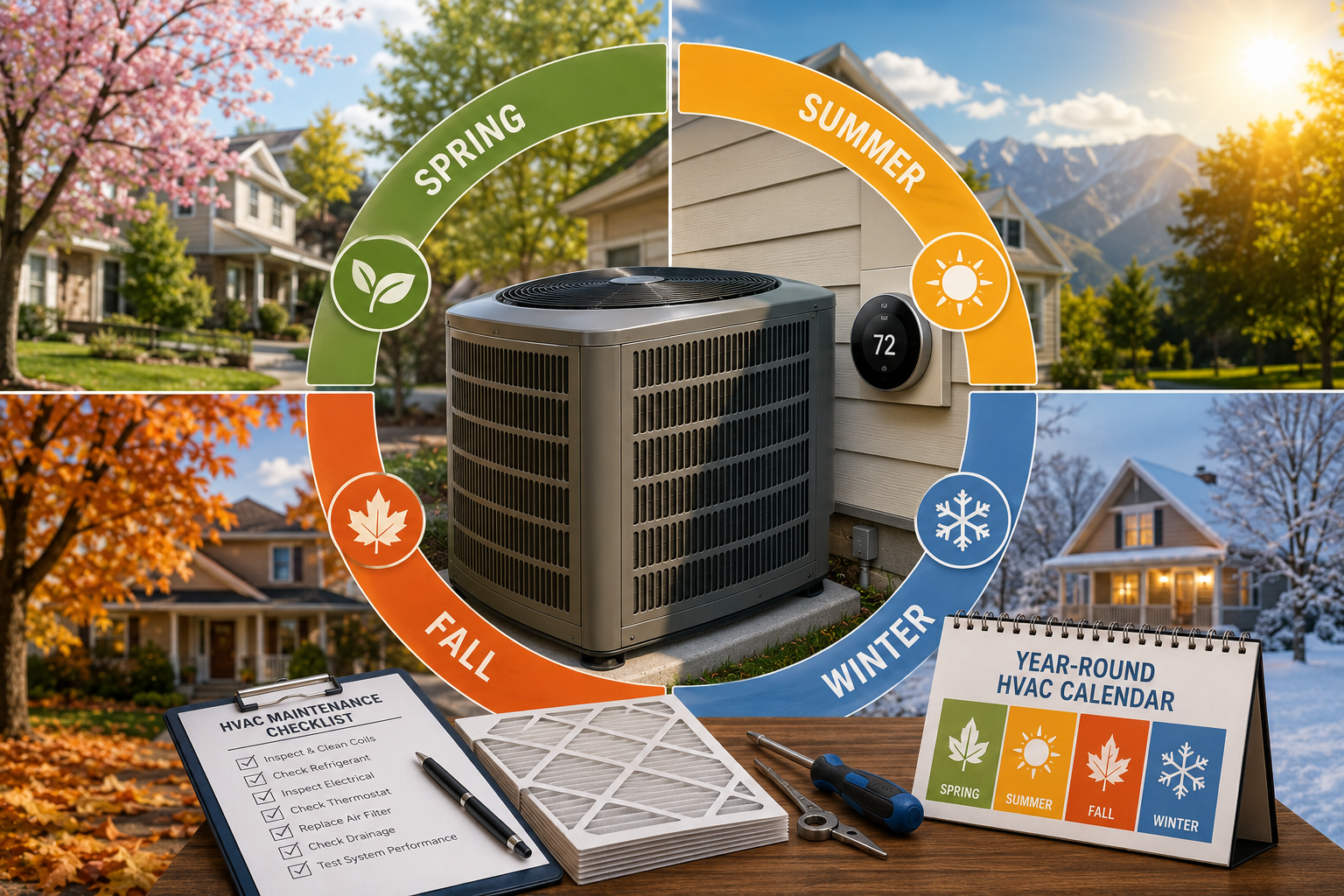
Ask any veteran HVAC technician about their busiest days and you will hear the same two answers everywhere: the first brutal heat wave of summer and the first real cold snap of winter. Those are the days when comfort systems fail in bulk, phone queues stretch for hours, and homeowners pay emergency rates for repairs that a little planning would have prevented entirely.
The professionals who maintain their own homes do not live on that schedule. They treat heating and cooling as a calendar, not a crisis, and they do the right small things in the right months. Here is what that calendar looks like for homes in Calimesa, Yucaipa, and the wider Inland Empire, where triple digit summers and surprisingly chilly winter nights both show up every single year.
Spring: The Cheapest Insurance You Will Ever Buy
Spring is when the smart money moves. Before the first serious heat arrives, book a professional cooling tune up that covers refrigerant charge, electrical connections, condenser and evaporator coils, condensate drainage, and airflow. ENERGY STAR publishes a maintenance checklist that recommends exactly this kind of pre season checkup, and the logic is simple: every failure a technician catches in April is a breakdown that never happens in July.
Spring is also filter season in earnest. After a winter of running heat and a spring of pollen, a fresh filter restores airflow and takes strain off the blower before the system faces its hardest months. While you are at it, clear vegetation at least two feet away from the outdoor condenser and gently rinse the coils with a hose. Ten minutes of yard work measurably improves how hard your system has to work all summer.
Summer: Discipline Beats Heroics
Once the heat arrives, the goal shifts from preparation to discipline. Check the filter monthly, because Inland Empire dust and constant runtime clog filters faster here than national guidelines assume. Keep supply vents open and unblocked, resist the urge to crank the thermostat far below your actual target, and give the system a fighting chance by closing blinds on west facing windows during the afternoon peak.
Summer is also when you should watch your electric bill like an instrument panel. A sudden jump without a usage change is often the first measurable sign of a refrigerant leak, dirty coils, or duct problems. Catching that signal in July and booking a repair visit beats ignoring it until the system collapses in August, when every company in the region is running flat out and appointment windows stretch for days.
Fall: The Season Everyone Skips and Should Not
Fall is the forgotten season of HVAC care in Southern California, and it is quietly the most valuable. This is when your heating system deserves its annual inspection, covering burners, ignition, the heat exchanger, gas connections, and safety controls, all before the first cold night creates the seasonal rush. It is also the ideal window for upgrades you have been postponing, because installers have open schedules and time to do careful work.
One upgrade worth serious consideration during this window is smart thermostat installation, which pays for itself through scheduling and efficiency gains across both seasons. Fall is equally the right time to replace carbon monoxide detector batteries and run the heat for ten minutes on a mild afternoon, so any problems surface while the weather is still forgiving and the repair calendar is still empty.
Winter: Small Vigilance, Big Payoff
Inland Empire winters are mild by national standards, but heating systems here still log real hours, and cold nights in the thirties and forties are routine. Through winter, keep the filter schedule going, listen for new noises during startup, and pay attention to rooms that suddenly heat unevenly, which often signals duct leaks pushing warm air into the attic instead of the living space.
Winter is also when patience protects your wallet. If the system struggles on a cold morning, check the thermostat settings, the filter, and the breaker before assuming the worst. A surprising share of winter service calls end with a technician flipping a switch the homeowner could have flipped, at a price the homeowner did not need to pay.
The Demand Curve Secret Nobody Tells You
Here is the pattern that explains the entire calendar. Searches for hvac near me explode within hours of the first triple digit day and the first cold snap, and the industry's capacity gets consumed almost instantly both times. The homeowners searching on those days get the longest waits, the highest rates, and the most rushed diagnostics of the year, through no fault of the companies involved. Demand simply outruns supply.
The homeowners who booked in the shoulder seasons got the same technicians with more time, better availability, and normal pricing. That is the whole secret. The calendar above is not about being fussy with equipment. It is about deliberately doing your HVAC business during the weeks when you are the only customer in the room, instead of the weeks when you are one of five hundred.
Putting It Together
None of this requires expertise or serious money. Two professional visits a year, one in spring for cooling and one in fall for heating, plus monthly filter checks and a bit of seasonal awareness, will prevent the large majority of breakdowns a Southern California home ever faces. The families sweating through a July failure and the families who cruise through the same July are running the same equipment. They are just running different calendars.
Frequently Asked Questions
How many times a year should HVAC be serviced?
Twice: a cooling tune up in spring and a heating inspection in fall. Each visit prepares the system for its hardest season and catches developing problems while repairs are still cheap and scheduling is still easy. Homes with heavy usage, pets, or dust exposure benefit from extra filter attention between visits.
When is the cheapest time to book HVAC work?
Shoulder seasons, meaning roughly March through May and late September through November in Southern California. Demand is lowest, schedules are open, and both maintenance and replacements happen without the urgency pricing and long waits that peak summer and the first cold snap create.
How often should I change my air filter in a dusty climate?
Check monthly and expect to replace every one to two months during heavy use seasons, rather than the three month interval printed on the package. Inland Empire dust, long cooling runtimes, and pets all shorten filter life, and a clogged filter is the single most preventable cause of system strain.
Do smart thermostats actually save money?
Yes, when they are set up properly. Scheduling heat and cooling around your actual occupancy trims wasted runtime, and features like remote adjustment and usage reports make it easier to spot waste. The savings compound across both heating and cooling seasons, which is why fall installation ahead of winter makes practical sense.
Why do HVAC companies get so busy during heat waves?
Extreme weather pushes every marginal system past its limit at the same time, so failures that built up quietly over months all surface within days of each other. Companies staff for normal demand, not for the spike, which is why homeowners who maintain systems in advance rarely find themselves waiting in that queue.
 English
Join our community to interact with posts!