
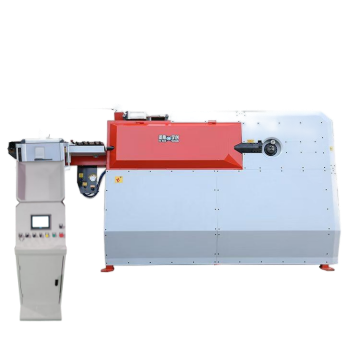
Construction projects demand speed, precision, and reliability at every stage. From residential developments to commercial buildings and large infrastructure projects, properly processed reinforcement steel is essential for creating strong and durable concrete structures. This is why investing in a high-quality rebar bender and cutter has become a smart decision for contractors, fabrication workshops, and construction companies seeking to improve productivity and reduce operating costs.
Traditional methods of cutting and bending reinforcement bars often require multiple machines and skilled operators, increasing labor expenses and processing time. Modern CNC technology has transformed this process by integrating multiple functions into a single machine. A reliable rebar processing solution can straighten, bend, and cut steel bars with remarkable precision, allowing businesses to complete projects faster while maintaining consistent quality.
One of the greatest advantages of advanced CNC equipment is its automation capability. Operators can input multiple processing patterns, enabling the machine to produce identical reinforcement components repeatedly with minimal manual intervention. This not only improves production efficiency but also minimizes material waste caused by human error. According to the manufacturer, the GTW4-12D model combines bending and cutting functions, supports programmable processing, and delivers high-speed, high-accuracy production for demanding construction environments.
Modern construction companies also value equipment that offers flexibility. Whether producing stirrups for beams, reinforcement for columns, or customized steel shapes for unique structural designs, a CNC system can quickly adapt to changing project requirements. The ability to store multiple processing programs further reduces setup time between production runs, making it easier to handle both small and large orders efficiently.
Accuracy plays a vital role in reinforced concrete construction. Even minor variations in bending angles or cutting lengths can affect installation quality and project timelines. Automated servo-controlled machinery helps ensure consistent dimensions throughout every production cycle, reducing the need for costly rework and improving overall structural reliability.
Durability is another important factor when selecting industrial equipment. Heavy-duty construction environments require machines built with high-quality components capable of handling continuous production. Robust frames, premium cutting blades, and dependable electrical systems contribute to longer service life while lowering maintenance requirements. As a result, contractors benefit from improved equipment uptime and a better return on investment.
Automation also contributes to workplace safety. Since the machine performs most repetitive cutting and bending operations automatically, operators spend less time handling steel bars manually. This reduces physical strain, lowers accident risks, and creates a safer working environment while maintaining high production output.
As construction projects continue to become larger and more demanding, manufacturers are increasingly turning to intelligent machinery to stay competitive. Choosing a dependable rebar bender and cutter allows businesses to increase productivity, improve processing accuracy, reduce labor costs, and consistently deliver high-quality reinforcement components. Whether operating a steel fabrication workshop or managing large-scale infrastructure development, investing in advanced CNC rebar processing equipment is a practical step toward greater efficiency and long-term business success.
 English
Join our community to interact with posts!