
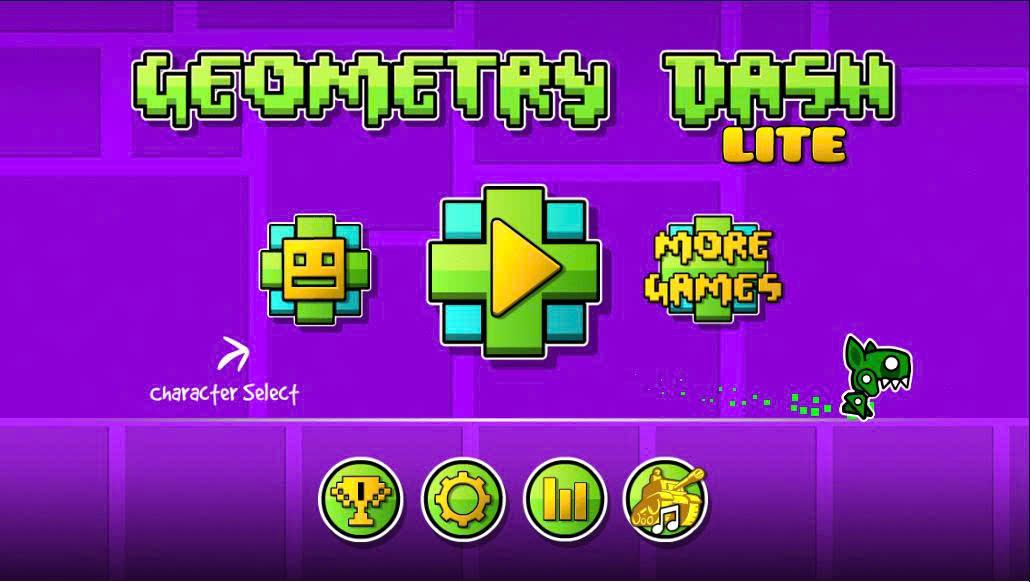
If you've ever scrolled through your gaming library or caught a clip of someone frantically tapping their screen while geometric shapes fly across the background, you've probably witnessed the chaotic beauty of a geometry-based rhythm game. These experiences are deceptively simple on the surface but incredibly rewarding once you understand the flow. Let me walk you through what makes jumping through geometric obstacles such an addictive pastime.
What Makes It Click
At its core, Geometry Dash is about synchronization and timing. You control a small square—or cube, or robot, or any number of creative skins—that moves forward automatically through an obstacle course. Your only job is to make it jump at precisely the right moments. Sounds easy? It's not, and that's exactly why it's so compelling.
The game syncs perfectly with background music, creating an almost hypnotic experience. As you progress, levels get harder, faster, and more creative. Early stages might feature simple spike-filled corridors, but later ones transform into acid-dropping gauntlets or gravity-defying portals that completely flip your perspective. Each jump you make needs to land you safely on platforms while avoiding anything sharp, hazardous, or just plain in the way.
What really hooks players is the feeling of improvement. Those impossible-looking levels that seemed absolutely impossible yesterday suddenly become manageable after a few dozen attempts. Your fingers remember the rhythm. Your eyes anticipate the jumps. Your brain starts thinking in terms of beat patterns rather than visual obstacles.
Understanding the Journey
Most players start with a straightforward premise: reach the end. But Geometry Dash quickly reveals layers of complexity. You'll encounter gravity portals that invert your perspective, speed portals that increase the pace dramatically, and size-changing sections that shift your hitbox.
The beauty lies in how the game teaches you gradually. Early levels introduce one mechanic at a time, letting you get comfortable before mixing things together. By the time you're facing combined mechanics, your muscle memory has already adapted. It's smart game design that respects the player's learning curve.
Beyond the main campaign, there's an entire universe of user-created levels. Community designers have crafted everything from pixel-art homages to famous games to insanely difficult challenge maps. This means the content never really ends—someone's always creating something new.
Strategies That Actually Help
Practice the rhythm first, then the mechanics. It's tempting to memorize every obstacle's position, but the real skill comes from listening to the music. Most levels hint at upcoming jumps through beat changes or audio cues. Train your ears as much as your hands.
Take breaks between attempts. Nothing kills progress faster than frustration. If you've tried a level fifty times and keep failing at the same spot, step away for twenty minutes. Come back fresh, and suddenly that jump doesn't seem impossible anymore.
Watch how others do it. Stumbling over a particular section? Look up a video of someone completing it. You'll pick up techniques you wouldn't discover alone—like holding the jump button longer on certain platforms or releasing at specific audio moments. This isn't cheating; it's learning from the community.
Customize your controls. Whether you play on mobile, computer, or controller, find settings that feel natural. Some players prefer holding a button, others tap repeatedly. Neither way is wrong. What matters is what lets you play longer without your hands getting fatigued.
Remember that deaths teach you. Each failure reveals information—which platform was too slippery, where the hitbox actually is, which audio cue precedes a nasty surprise. Reframe deaths as free data points rather than personal failures.
The Bigger Picture
What makes these geometry-jumping experiences so captivating isn't just technical challenge. It's the combination of immediate feedback, progressive difficulty, auditory-visual harmony, and a sense of genuine accomplishment. There's something special about finally nailing a level you've attempted a hundred times. Your palms might be sweaty, your heart might be racing, but the satisfaction is absolutely real.
The community aspect shouldn't be underestimated either. Sharing replays of your victories, discussing strategies with other players, and tackling community-created levels alongside thousands of others creates genuine connection around a game that, on paper, is just about jumping over obstacles.
Whether you're seeking a casual gaming experience or planning to grind through increasingly brutal custom levels, this type of game meets you where you are. Newcomers can enjoy the vibrant visuals and catchy soundtracks while tackling manageable content. Dedicated players have endless material to master and share.
Final Thoughts
Jumping through geometric obstacles might seem straightforward, but it's actually a carefully constructed dance between rhythm, reflexes, and pattern recognition. The satisfaction of progress—from barely clearing early levels to consistently handling expert content—is worth every frustrating attempt. Start today, embrace the learning process, and remember that everyone was a beginner once. Your best run is coming up in just a few more tries.
 English
Join our community to interact with posts!