
A Civil 3D Course is an excellent way for students, engineers, surveyors, and CAD professionals to develop practical skills in modern civil engineering design. Autodesk Civil 3D is widely used for creating accurate drawings, models, surfaces, alignments, profiles, and construction documentation. Learning this software can help professionals improve productivity and handle complex infrastructure projects more efficiently.
What Is a Civil 3D Course?
A Civil 3D Course provides structured training in Autodesk Civil 3D and its applications in civil engineering and surveying. Instead of focusing only on basic drafting, the course teaches students how to create intelligent designs that connect different project elements. Changes made to one part of a design can automatically update related components, helping reduce errors and saving valuable time.
A well-designed course usually begins with the Civil 3D interface and basic drawing tools before moving toward more advanced engineering workflows. This approach allows beginners to develop their skills gradually while giving experienced CAD users an opportunity to improve their existing knowledge.
Important Topics Covered
A comprehensive Civil 3D Course can cover many important areas of civil engineering design. Students may learn how to create and manage surfaces, work with survey data, develop alignments, and create profiles for roads and other infrastructure projects.
Road design is another important part of Civil 3D training. Learners can understand how to create assemblies, corridors, and sample lines for developing detailed roadway models. They can also learn how to generate cross-sections and calculate quantities.
Grading and earthwork design are also valuable skills. Civil 3D allows users to create grading plans, calculate cut and fill quantities, and analyze existing and proposed ground conditions. These features are particularly useful for construction, land development, and infrastructure projects.
Benefits of Learning Civil 3D
Learning Civil 3D can provide several professional benefits. One major advantage is increased productivity. Automated design features can reduce repetitive drafting work and allow professionals to concentrate more on engineering decisions.
Accuracy is another important benefit. Civil 3D uses dynamic relationships between design objects, which can help reduce inconsistencies when project information changes. This can be especially useful when working on large projects involving roads, drainage systems, land development, and surveying.
Civil 3D skills can also strengthen a professional portfolio. Employers often value candidates who can work efficiently with industry-standard CAD and civil engineering software. For students and beginners, completing practical projects during training can provide useful examples of their abilities.
Who Should Take This Course?
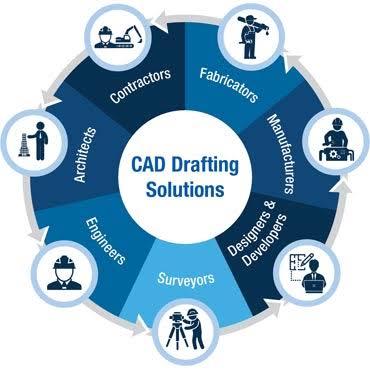
A Civil 3D Course can be suitable for civil engineering students, civil engineers, surveyors, CAD operators, draftsmen, architects involved in infrastructure projects, and construction professionals. Beginners can start with fundamental concepts, while experienced AutoCAD users can expand their skills into specialized civil engineering workflows.
The course can also benefit professionals who already understand traditional 2D drafting but want to move toward three-dimensional and model-based design. Developing these skills can make it easier to adapt to modern project requirements.
Choosing the Right Course
When selecting a Civil 3D Course, learners should consider the course syllabus, practical training, instructor experience, project-based exercises, and the level of support provided. A good course should provide opportunities to practice real-world workflows rather than focusing exclusively on theoretical explanations.
Students should also look for training that covers topics relevant to their career goals, such as road design, surfaces, grading, surveying, corridors, profiles, and quantity calculations.
Conclusion
A Civil 3D Course can be a valuable investment for anyone interested in developing professional civil engineering and CAD skills. By learning surfaces, alignments, profiles, corridors, grading, and other essential workflows, students can become more confident in handling real-world design projects. With consistent practice and project-based learning, Civil 3D knowledge can help learners improve their technical abilities and prepare for opportunities in civil engineering, surveying, construction, and CAD-related careers.
 English
Join our community to interact with posts!