

If you've spent any time reading dog food labels, you've probably noticed that "chicken" or "beef" usually means muscle meat — the stuff we'd eat off a plate ourselves. But in the wild, a dog's ancestors never left the organs behind. Liver, kidney, heart, spleen — these were often the first parts eaten, not the last. For dog owners looking for the best dog food with organ meat, paying attention to this often-overlooked part of the bowl can be an important consideration. At Obey the Paw, it's time dog owners started paying attention to that missing piece of the bowl.
What Exactly Is Organ Meat?
Organ meat, sometimes called "offal," refers to the internal organs of an animal rather than the skeletal muscle. The most common organ meats used in dog food include:
-
Liver — often called nature's multivitamin
-
Kidney — rich in selenium and B vitamins
-
Heart — technically a muscle, but nutritionally closer to organ meat due to its high taurine and CoQ10 content
-
Spleen — dense in iron
-
Pancreas and lung — less common, but still nutrient-packed
Unlike muscle meat, which is mostly protein and fat, organ meat is a concentrated source of vitamins, minerals, and compounds that are hard to find anywhere else in a dog's diet.
Why Dogs Actually Need Organ Meat
A dog fed only muscle meat is a dog missing out on some serious nutrition. Here's why organ meat matters so much:
1. It's loaded with bioavailable vitamins. Liver alone is one of the richest natural sources of vitamin A, vitamin B12, copper, and folate. These nutrients support eye health, nerve function, and red blood cell production — and because they come from a whole food rather than a synthetic additive, a dog's body tends to absorb and use them more efficiently.
2. It supports skin, coat, and immune health. Kidney and spleen bring trace minerals like zinc and selenium to the table, both of which play a role in skin repair, coat shine, and a properly functioning immune system. Dogs with dull coats or frequent skin issues are sometimes simply missing these micronutrients.
3. It provides taurine and CoQ10 for heart health. Heart meat is particularly valuable here. Taurine is an amino acid tied to healthy heart muscle function, and some studies have linked low-taurine diets in dogs to a heightened risk of dilated cardiomyopathy. CoQ10, found abundantly in heart tissue, supports cellular energy production.
4. It mimics a dog's natural ancestral diet. Wolves and wild canids don't eat filet mignon. When they take down prey, organs are consumed early because they're the most nutrient-dense part of the animal. A dog food that includes organ meat is simply closer to what a dog's digestive system evolved to process.
How Much Organ Meat Is Too Much?
Here's the catch: organ meat is powerful, but it's not something you want to overdo. Liver, in particular, is so rich in vitamin A that excessive amounts over time can lead to toxicity, causing joint pain, bone spurs, or digestive upset. This is why balance matters more than volume.
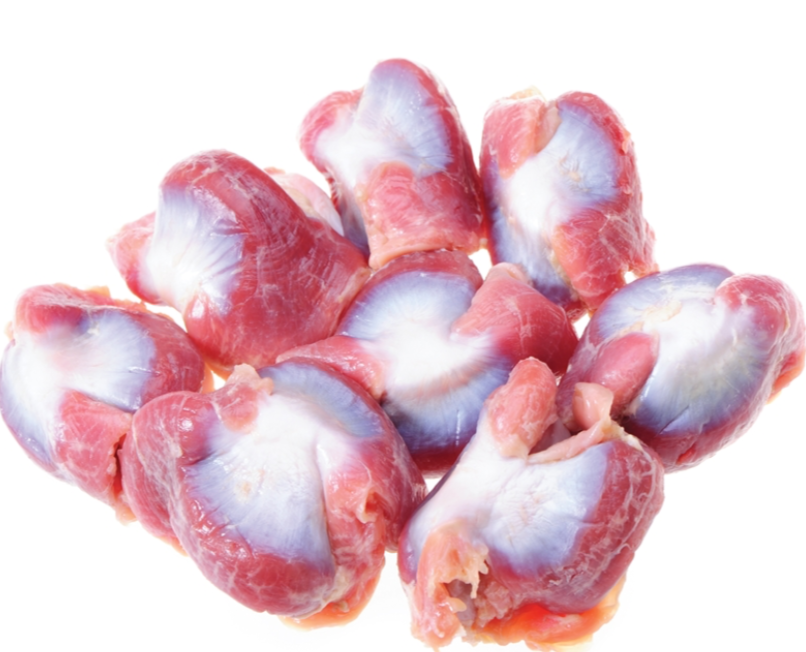
Most veterinary nutritionists suggest organ meat should make up somewhere around 5–10% of a dog's total diet, with liver alone kept to a smaller slice of that. A well-formulated commercial dog food does this math for you, blending organ meat with muscle meat, bone, and other whole-food ingredients so your dog gets the benefits without the risks of overload.
What to Look for When Shopping for Organ-Meat Dog Food
Not all "contains organ meat" labels are created equal. Here's what actually separates a thoughtfully made formula from a marketing gimmick:
Named organ sources. A label that says "chicken liver" or "beef heart" is far more trustworthy than one that simply says "meat by-products," which can be a catch-all for lower-quality, less controlled ingredients.
Variety of organs, not just liver. Liver is popular because it's palatable and nutrient-dense, but a diet that also includes heart, kidney, or spleen delivers a broader nutritional spread.
Sourcing and traceability. Brands that disclose where their meat comes from — and ideally use human-grade or human-grade-equivalent sourcing — tend to have tighter quality control over contaminants and freshness.
Balanced formulation, not just "added" organ meat. Some foods sprinkle in a token amount of organ meat mostly for the marketing appeal. Look for a guaranteed analysis and ingredient ratio that shows organ meat is a meaningful percentage of the recipe, not an afterthought.
No unnecessary fillers. Corn syrup, artificial colors, and excessive plant-based fillers dilute the nutritional density that organ meat is supposed to provide in the first place.
Fresh, Frozen, Freeze-Dried, or Kibble?
Organ meat shows up across every category of dog food:
-
Fresh and frozen raw diets tend to preserve the most nutrients since there's minimal processing, but they require proper storage and handling.
-
Freeze-dried and dehydrated foods retain most of the nutritional value while being shelf-stable and easier to store, making them a popular middle ground.
-
Kibble with organ meat is the most convenient option, though the high heat used in extrusion can reduce some heat-sensitive nutrients like certain B vitamins.
There's no universally "best" format — it depends on your dog's needs, your storage space, and your budget. What matters most is that organ meat is present in meaningful, well-sourced amounts, regardless of format.
The Obey the Paw Approach
At Obey the Paw, our philosophy starts from a simple question: what would a dog choose to eat if given the whole animal, not just the parts that are convenient to package? That's why our recipes are built around a real balance of muscle meat, organ meat, and bone — not organ meat as a garnish, but as a genuine part of the nutritional foundation.
We believe dogs deserve food that reflects how they're actually built to eat, not just what's easiest to manufacture at scale. If you're looking to switch your dog onto a diet that includes real, traceable organ meat in the right proportions, that's exactly the gap we set out to fill.
The Bottom Line
Organ meat isn't a trendy add-in — it's one of the most nutritionally important parts of a dog's ancestral diet, packed with vitamins, minerals, and compounds that muscle meat simply can't replicate on its own. The key isn't just adding organ meat to a formula, but doing it thoughtfully: the right organs, the right ratio, and ingredients you can actually trace back to their source. When you get that balance right, you're not just feeding your dog — you're feeding them the way nature intended.
 English
Join our community to interact with posts!