
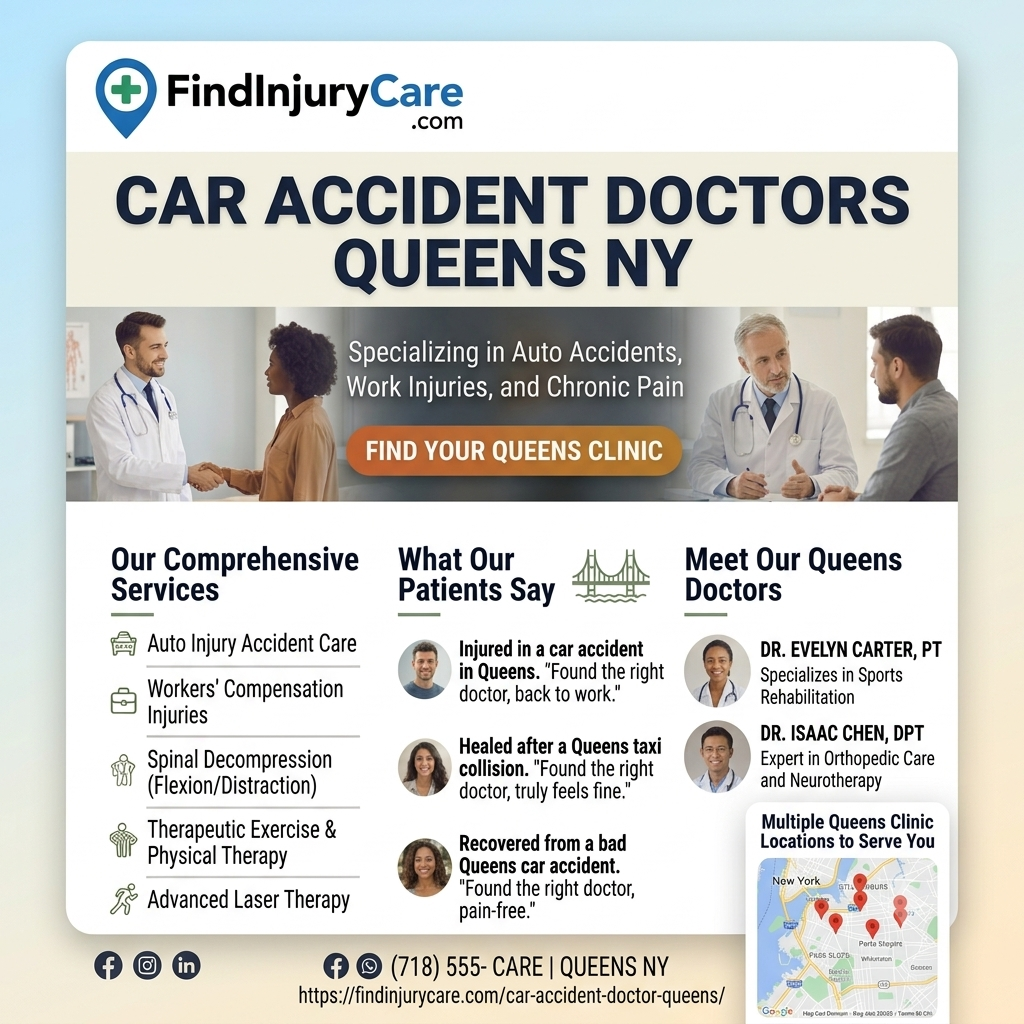
A car accident can lead to injuries in areas of the body including the neck, back, shoulders, knees, hips and more. Some of these injuries might get better on their own over time.. Others can keep causing problems with movement, working, exercising or doing simple daily tasks.
For some people physical therapy is suggested as part of the recovery process after a car accident.. Not everyone needs it right away. The right time to start therapy and the kind of therapy needed depends on each person’s symptoms, medical exam, injury type and overall health.
For those looking for car accident doctors in Queens, NY knowing when physical therapy might help can make a difference in choosing the right care.
Why Might Physical Therapy Be Recommended After a Car Accident?
Physical therapy is designed to help people improve movement and physical function. Depending on the injury, a physical therapist may work with a patient on mobility, flexibility, strength, balance, and functional activities.
After a car accident, physical therapy may be considered when symptoms affect normal movement or daily activities.
A doctor may recommend rehabilitation for problems such as:
- Neck pain or stiffness
- Back pain
- Reduced range of motion
- Muscle weakness
- Shoulder pain
- Joint stiffness
- Certain soft-tissue injuries
- Difficulty walking or moving normally
The appropriate treatment depends on the individual's condition and should be determined by a qualified healthcare professional.
When Should You See a Physical Therapist?
There is no universal timeline for starting physical therapy after a car accident. Some people may be referred soon after their initial medical evaluation, while others may need additional assessment or treatment first.
Physical therapy may be worth discussing with a healthcare provider when:
Pain Continues After the Accident
Ongoing neck, back, shoulder, knee, or other musculoskeletal pain may affect everyday activities. If symptoms continue despite initial care, a doctor may consider whether physical therapy could be useful.
Movement Becomes Difficult
An accident may result in stiffness or reduced mobility. Difficulty turning the neck, bending, walking, reaching, or performing other movements may indicate that rehabilitation should be considered.
Muscle Weakness Develops
Injury and reduced activity can contribute to weakness. When appropriate, a physical therapist can create a gradual strengthening programme based on the patient's condition.
Everyday Activities Become More Difficult
Problems such as difficulty climbing stairs, getting dressed, walking, lifting, or sitting for extended periods may affect quality of life.
A healthcare provider can assess these limitations and determine whether physical therapy is an appropriate part of recovery.
Physical Therapy for Neck Injuries
Neck injuries can occur during certain types of collisions. Whiplash is one example of an injury associated with sudden back-and-forth movement of the neck.
Possible symptoms include:
- Neck pain
- Stiffness
- Headaches
- Reduced neck movement
- Shoulder discomfort
- Upper-back pain
When rehabilitation is appropriate, physical therapy may include carefully selected mobility, strengthening, and postural exercises.
The treatment programme should be individualised rather than based on a one-size-fits-all approach.
Physical Therapy for Back Injuries
Back pain is another common complaint following a motor vehicle accident. Depending on the cause, symptoms may involve muscles, joints, or other structures.
If a doctor determines that physical therapy is suitable, treatment may focus on improving mobility, strength, flexibility, and functional movement.
People with significant back pain should receive an appropriate medical evaluation before beginning exercises, particularly when symptoms are severe or accompanied by neurological changes.
Physical Therapy for Shoulder and Joint Problems
Shoulders, knees, hips, and other joints can be affected during a collision.
Symptoms such as pain, stiffness, weakness, swelling, and restricted movement may interfere with normal activities.
Depending on the injury, a physical therapist may use:
- Range-of-motion exercises
- Strengthening exercises
- Flexibility exercises
- Balance activities
- Functional movement exercises
- Gradual activity progression
The exercises selected should be based on the patient's evaluation and recovery needs.
What Happens Before Physical Therapy Begins?
In many cases, patients first undergo a medical evaluation. A doctor can review the accident, medical history, symptoms, and physical findings.
Depending on the situation, the healthcare provider may recommend:
- Physical therapy
- Diagnostic testing
- Medication when appropriate
- Activity modifications
- Additional medical monitoring
- Referral to another specialist
Not every patient needs imaging or physical therapy. Treatment decisions should be based on the individual's medical condition.
What Happens During the First Physical Therapy Visit?
The first appointment generally involves an assessment of the patient's physical condition.
The therapist may evaluate:
- Range of motion
- Strength
- Flexibility
- Balance
- Movement patterns
- Pain levels
- Functional limitations
Based on the assessment, the therapist may develop a rehabilitation programme.
Patients should communicate openly about pain or discomfort during treatment. If an exercise causes unusual or worsening symptoms, the therapist should be informed.
How Long Will Physical Therapy Take?
The length of physical therapy varies from person to person.
Some people may need a relatively short course of rehabilitation, while others may require ongoing treatment. Factors that can affect the duration include:
- Type of injury
- Severity of symptoms
- Functional limitations
- Overall health
- Progress during treatment
- Response to rehabilitation
A healthcare provider can reassess the patient's progress and modify the treatment plan when necessary.
Can You Start Physical Therapy Without Seeing a Doctor?
Whether someone should begin physical therapy directly depends on the circumstances and the requirements of the healthcare provider or therapy practice.
After a significant car accident, an appropriate medical evaluation can be particularly important because some injuries may require treatment other than physical therapy.
A doctor can help determine whether rehabilitation is appropriate and whether further diagnostic evaluation or specialist care is necessary.
Don't Ignore Delayed Symptoms
Some accident-related symptoms may not become noticeable immediately. A person may initially feel fine and later develop soreness, stiffness, headaches, or restricted movement.
Delayed symptoms should not automatically be assumed to be minor. New, persistent, or worsening symptoms should be discussed with a healthcare professional.
Keeping track of when symptoms begin and how they change can help patients provide useful information during medical and physical therapy appointments.
When Is Physical Therapy Not the First Priority?
Physical therapy is not appropriate as the first step for every post-accident symptom.
Someone with a suspected fracture, serious head injury, significant neurological symptoms, breathing difficulties, severe chest pain, or another potentially serious condition may require urgent medical evaluation instead.
Emergency medical care may be necessary for symptoms such as:
- Loss of consciousness
- Severe confusion
- Seizures
- Difficulty breathing
- Severe chest pain
- Significant bleeding
- Sudden weakness or numbness
- Severe or worsening headache
- Repeated vomiting
- Suspected serious fracture
- Severe neck or back pain
When symptoms appear life-threatening, emergency medical services or an emergency department should take priority over arranging routine physical therapy.
How to Find the Right Physical Therapist in Queens, NY
People searching for car accident doctors Queens NY may also need rehabilitation services as part of their recovery.
When looking for a physical therapist or healthcare provider in Queens, patients may consider:
Experience
Look for providers with relevant experience evaluating and treating musculoskeletal injuries.
Location
A convenient location can make attending multiple rehabilitation sessions easier, especially for people experiencing pain or mobility limitations.
Services
Patients can check whether the practice offers physical therapy and other services that may be relevant to their condition.
Appointment Availability
Ask about new-patient appointments, office hours, and follow-up scheduling.
Communication
Patients should feel comfortable asking questions and discussing changes in symptoms with their healthcare team.
Insurance and Billing
Patients can ask the practice about accepted insurance plans and its billing procedures before beginning treatment.
Questions to Ask About Physical Therapy
Before starting rehabilitation, patients may want to ask:
- Why has physical therapy been recommended?
- What is the goal of treatment?
- How often should I attend?
- What exercises will I need to perform at home?
- Which activities should I avoid?
- How will progress be measured?
- When should I report worsening symptoms?
- Will I need to see another healthcare professional?
Understanding the purpose of treatment can help patients participate more effectively in their recovery.
How Find Injury Care Can Help
Finding appropriate medical and rehabilitation services after a car accident can be challenging, especially when someone is dealing with pain or reduced mobility.
Find Injury Care provides resources to help individuals explore injury-related healthcare options. People searching for car accident doctors Queens NY can use the platform to learn more about available providers and care resources.
A healthcare professional can evaluate accident-related symptoms and determine whether physical therapy or another treatment approach may be appropriate.
Final Thoughts
Physical therapy could be recommended after a car accident if pain, tightness, weakness, limited movement or other physical issues keep getting in the way.. There is no one-size-fits-all schedule. Everyone heals differently.
The best choice is to get symptoms checked by a healthcare provider. Then follow the advice given by trusted professionals. For anyone searching for car accident mri doctor in queens finding a doctor who understands their condition can be a key step toward healing.
To learn more about finding help after an injury visit Find Injury Care. This resource can help people in Queens, NY understand their options, for treatment and rehabilitation.
 English
Join our community to interact with posts!