
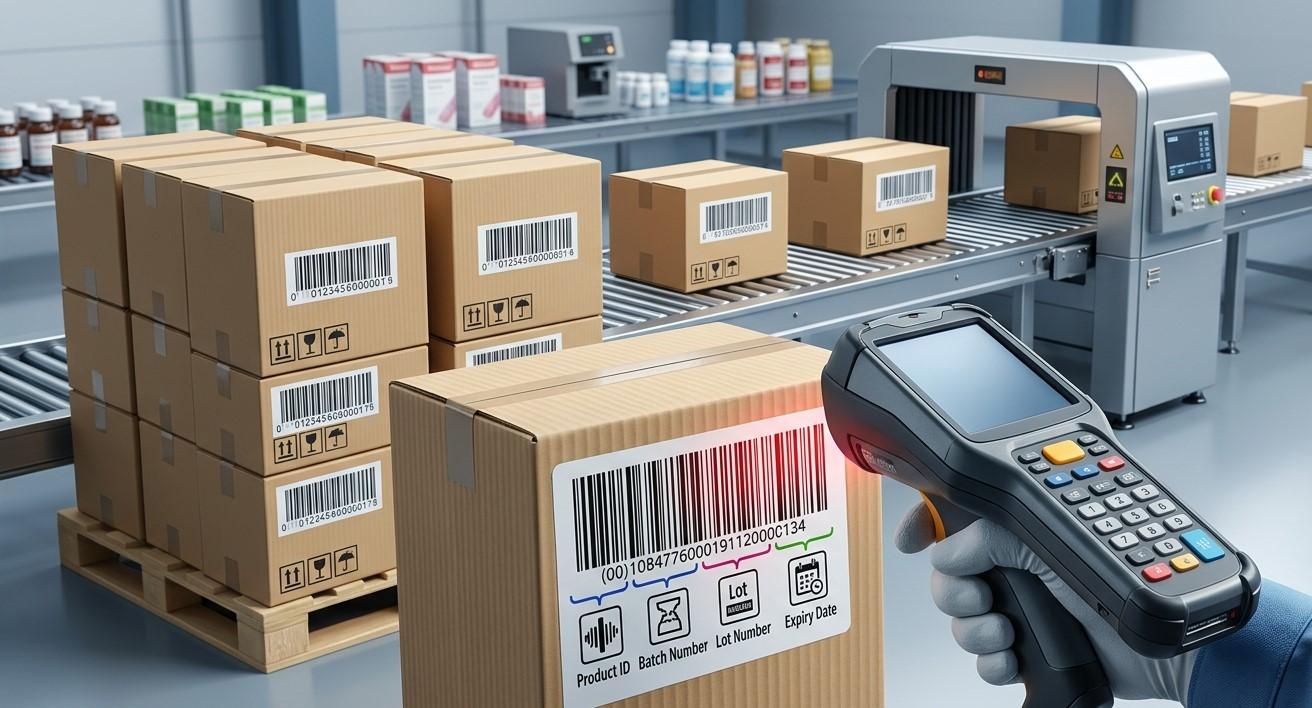
Accurate batch and lot number tracking is essential for businesses that manufacture, store, distribute, or sell products that require detailed traceability. From manufacturing and pharmaceuticals to food, beverages, healthcare, chemicals, and distribution, businesses need to know where products came from, where they are stored, and where they have been shipped. Pointus Solutions provides modern identification and tracking solutions that can help businesses improve these processes. Companies looking to Shop Barcode equipment and reliable Printing Products can use barcode technology to create a more organized and accurate approach to batch and lot number management.
Batch and lot tracking allows businesses to associate products with specific production or inventory groups. When barcode labels containing batch or lot information are scanned during receiving, production, storage, picking, shipping, or returns, businesses can maintain a detailed record of product movement. When integrated with inventory management or ERP software, barcode technology can provide greater visibility and help reduce manual tracking errors.
What Are Batch and Lot Numbers?
Batch and lot numbers are identification references assigned to groups of products or materials that share specific characteristics or production information.
Although the terms are sometimes used interchangeably, their exact meaning can vary between industries and organizations.
A batch number may identify products manufactured during a particular production run, while a lot number may identify a specific group of materials or inventory produced, purchased, or handled together.
These identifiers can be associated with information such as:
- Production date
- Expiration date
- Supplier
- Raw materials
- Manufacturing line
- Production shift
- Quality inspection results
- Storage location
- Quantity produced
- Distribution information
Tracking these details helps businesses maintain better control over their inventory and product history.
Why Batch and Lot Tracking Is Important
Without an organized tracking system, businesses may struggle to identify which products belong to a specific production or supply group.
This can create problems when:
- A product quality issue is discovered
- A supplier reports a problem
- A product recall is required
- Inventory needs to be quarantined
- Products approach their expiration date
- Customers request traceability information
Accurate batch and lot tracking helps businesses identify affected inventory more quickly and limit unnecessary disruption.
How Barcode Technology Supports Batch and Lot Tracking
Barcode technology provides a standardized way to capture batch and lot information.
A barcode label can contain or reference information such as:
- Product code
- Batch number
- Lot number
- Serial number
- Expiration date
- Production date
When a worker scans the barcode, the inventory or ERP system can retrieve the associated information.
For example, a warehouse employee receiving a shipment can scan the product barcode and record the batch number, quantity, and storage location. When the same inventory is later picked for shipment, the barcode can be scanned again to record which batch was dispatched.
This creates a traceable record from receiving through distribution.
Choosing the Right Barcode Format
Different applications may require different barcode formats.
Common options include:
Code 128
Code 128 can encode a relatively large amount of alphanumeric information and is commonly used in logistics and inventory applications.
GS1-128
GS1-128 is designed to encode standardized information such as product identifiers, batch or lot numbers, quantities, and expiration dates using application identifiers.
Data Matrix
Data Matrix is a 2D barcode that can store information in a compact space, making it useful for small products and components.
QR Codes
QR codes can store various types of information and can be scanned using many modern devices.
The appropriate barcode format depends on the information requirements, available label space, scanner capabilities, software, and industry standards.
Creating Barcode Labels With Batch and Lot Information
The quality of barcode labels has a direct impact on scanning reliability.
A typical batch or lot label may include both human-readable information and a machine-readable barcode.
For example:
Product: Industrial Filter
Batch: B240825
Lot: L00872
Expiry: 08/2028
The barcode can encode the relevant identification information while the printed text allows employees to visually verify the information.
Businesses should select label sizes and materials according to the product and operating environment.
Using Barcode Printers for Batch and Lot Labels
Barcode printers are an important part of a batch and lot tracking system. They allow businesses to produce labels when products are manufactured, received, repackaged, or transferred.
Depending on the application, businesses may use:
- Desktop barcode printers
- Industrial barcode printers
- Direct thermal printers
- Thermal transfer printers
- Mobile label printers
Organizations looking to Shop Barcode printers should consider printing volume, label size, resolution, connectivity, and environmental conditions.
The correct Printing Products can help businesses maintain clear, durable, and scannable labels throughout the product lifecycle.
Batch and Lot Tracking in Manufacturing
Manufacturers often need to track raw materials and finished goods by batch.
During production, barcode scanning can associate raw materials with a specific manufacturing batch.
For example:
- Raw materials are received.
- Each material is assigned or captured with a batch or lot number.
- Materials are stored in designated locations.
- Workers scan materials before production.
- The production system records which materials were used.
- A finished-product batch is created.
- Finished goods receive barcode labels.
- Products are stored and distributed using barcode scanning.
This process creates a connection between incoming materials and finished products.
Improving Warehouse Traceability
Warehouses can use barcode technology to track batch and lot information during every inventory movement.
A typical workflow may include:
Receiving → Put-Away → Storage → Picking → Packing → Shipping
At each stage, employees can scan the product barcode and location barcode.
This provides visibility into where specific batches or lots are located.
It can also help businesses avoid mixing incompatible or restricted inventory groups.
Supporting Expiration Date Management
Many products have limited shelf lives. Examples include food products, medicines, cosmetics, chemicals, and certain industrial materials.
Batch and lot barcodes can include or reference expiration information.
When inventory is scanned, the warehouse management system can identify products approaching their expiration date.
Businesses can then apply inventory rotation methods such as:
- FIFO — First In, First Out
- FEFO — First Expired, First Out
FEFO is particularly useful when expiration dates are more important than simple receiving dates.
Barcode scanning can help employees identify the correct inventory during picking and reduce the risk of shipping products that are close to or beyond their usable dates.
Improving Product Recall Management
Product recalls are one of the most important reasons for maintaining accurate batch and lot records.
If a manufacturer discovers that a particular batch has a quality problem, it needs to determine which products are affected.
With barcode-based traceability, businesses can search inventory and transaction records to identify:
- Affected batch numbers
- Current warehouse quantities
- Customer shipments
- Distribution locations
- Production dates
- Related inventory
This can make recall management more targeted and organized.
Instead of reviewing large amounts of paper documentation, businesses can use digital records to locate relevant inventory.
Reducing Manual Data Entry Errors
Manual recording of batch and lot numbers can create transcription errors.
Employees may accidentally:
- Enter an incorrect digit
- Reverse characters
- Select the wrong batch
- Forget to record a lot number
- Enter information into the wrong inventory record
Barcode scanning reduces the amount of information employees need to type manually.
Instead of entering a long identification code, the employee can scan the barcode and allow the system to capture the information automatically.
This can improve data consistency and reduce administrative work.
Integrating Barcode Tracking With ERP and Inventory Systems
Barcode technology becomes more powerful when integrated with business software.
An ERP, warehouse management system, inventory system, or manufacturing platform can store batch and lot information alongside product records.
The system can track:
- Current inventory
- Batch and lot numbers
- Storage locations
- Production records
- Purchase orders
- Sales orders
- Shipment information
- Expiration dates
- Returns
- Quality status
When employees scan products, these records can be updated according to the configured workflow.
Mobile Barcode Scanning for Batch Tracking
Mobile barcode scanners and rugged handheld computers allow employees to capture batch and lot information directly in warehouses and production areas.
Mobile devices are useful for:
- Receiving inspections
- Production material verification
- Inventory transfers
- Cycle counting
- Picking
- Packing
- Shipping
- Returns
Wireless connectivity can allow information to move between the warehouse floor and the central inventory system, depending on the organization's infrastructure.
Best Practices for Batch and Lot Barcode Tracking
Businesses can improve their tracking systems by following several best practices.
1. Standardize Identification Rules
Create consistent rules for generating batch and lot numbers.
2. Use Appropriate Barcode Formats
Choose barcode symbologies based on data requirements, label size, scanner capabilities, and industry needs.
3. Label Products Clearly
Include both machine-readable barcodes and human-readable information when appropriate.
4. Verify Barcode Quality
Test printed labels to ensure they can be scanned reliably.
5. Train Employees
Make sure employees understand when batch and lot information must be scanned and recorded.
6. Maintain Accurate Locations
Use location barcodes to track where specific batches and lots are stored.
7. Integrate With Business Software
Connect barcode scanning with ERP, WMS, inventory, or production systems to reduce duplicate data entry.
8. Perform Regular Audits
Regularly compare physical inventory with system records to identify discrepancies.
Key Benefits of Barcode-Based Batch and Lot Tracking
A properly implemented barcode system can provide businesses with several benefits:
- Improved inventory traceability
- Faster product identification
- Better inventory accuracy
- Reduced manual data entry
- Improved expiration management
- More efficient recalls
- Better warehouse visibility
- Faster receiving and shipping
- Improved production tracking
- More reliable inventory records
These benefits can help organizations create more consistent and controlled inventory processes.
Conclusion
Batch and lot number tracking is an important part of inventory control, manufacturing traceability, quality management, and supply chain operations. Barcode technology provides a practical method for capturing and tracking this information as products move through production, storage, distribution, and customer fulfillment.
By combining barcode labels, printers, scanners, mobile computers, and inventory software, businesses can create a connected tracking process that improves visibility and reduces manual errors. From monitoring expiration dates to identifying affected products during a recall, barcode systems can provide valuable information throughout the product lifecycle.
Pointus Solutions can help businesses implement modern barcode and identification solutions according to their operational requirements. Whether your organization wants to Shop Barcode scanners and printers or needs dependable Printing Products for batch and lot labels, selecting the right technology can help build a more accurate, traceable, and efficient inventory management process.
 English
Join our community to interact with posts!