
Building applications that respond to real world conditions can make a huge difference in user experience. Weather data is one of the most useful types of real time information, especially for travel platforms, ecommerce stores, and mobile apps. With an api free weather, developers can easily bring live forecasts into their JavaScript applications without complex setups.
Services like OpenWeather and Weatherstack have made it simple to access reliable weather data through clean and structured APIs.
What Is a Weather API
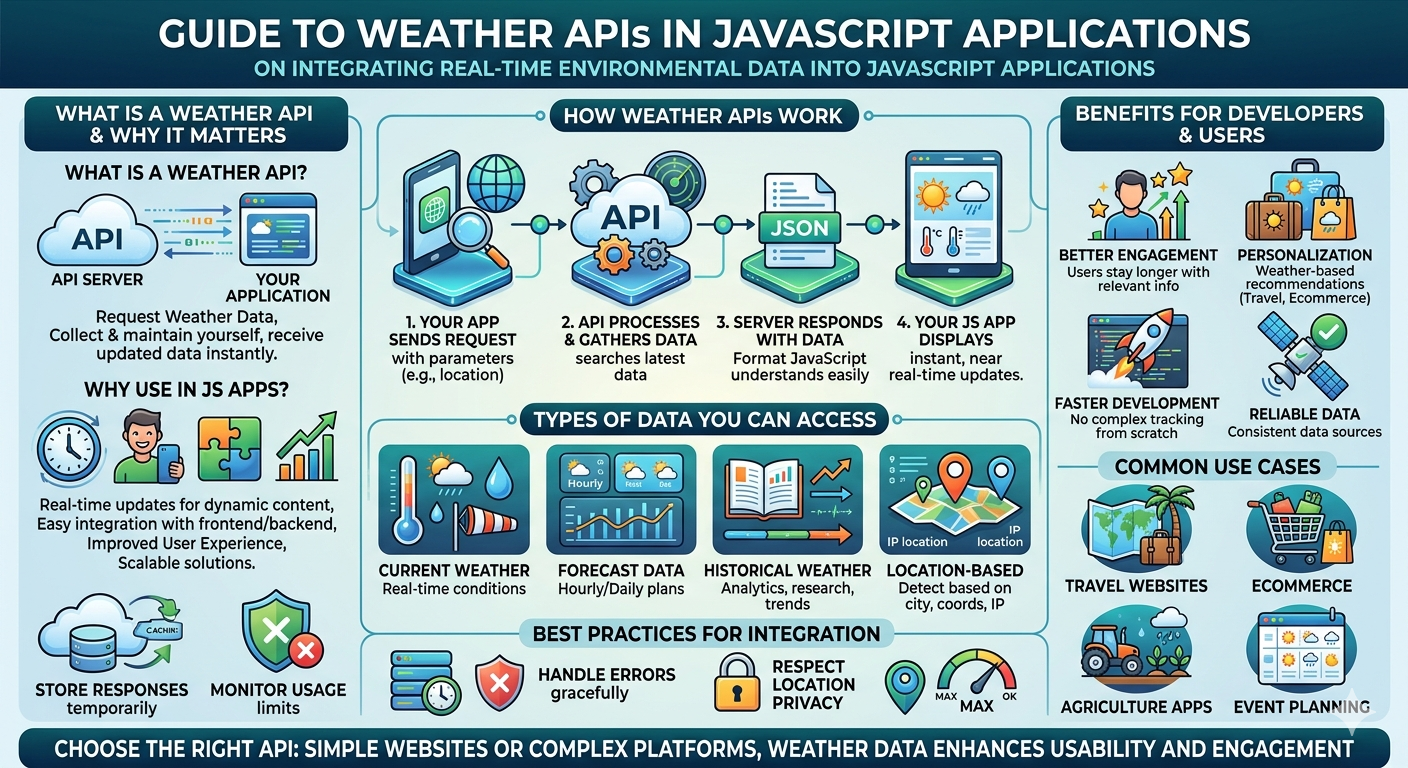
A weather API is a service that allows applications to request weather data from external servers. Instead of collecting and maintaining weather information yourself, you can connect to an API and receive updated data instantly.
This data can include temperature, humidity, wind speed, precipitation, and even forecasts for upcoming days. The information is usually delivered in a format that JavaScript applications can easily process and display.
Why Use Weather APIs in JavaScript Applications
JavaScript is widely used for building interactive web applications. Integrating weather data enhances functionality and creates more engaging experiences for users.
Here are a few reasons why developers use weather APIs:
Real time updates help users make informed decisions
Improved user experience with dynamic content
Easy integration with frontend and backend systems
Scalable solutions for both small and large applications
Whether you are building a simple weather widget or a complex travel platform, weather APIs can add real value.
How Weather APIs Work
Understanding how a weather API works makes it easier to use it effectively. The process is straightforward and designed for speed.
Your application sends a request to the API with parameters such as location
The API processes the request and gathers the latest weather data
The server responds with structured data in formats like JSON
Your JavaScript application displays this data to the user
This process happens in seconds, allowing you to provide near real time weather updates.
Types of Weather Data You Can Access
Weather APIs offer a wide range of data points that can be used in different applications.
Current Weather Data
This includes real time information about temperature, humidity, wind speed, and visibility.
Forecast Data
You can access hourly or daily forecasts to help users plan ahead.
Historical Weather Data
Useful for analytics, research, and trend analysis.
Location Based Data
APIs can detect weather conditions based on city, coordinates, or IP location.
Benefits of Using Weather APIs
Integrating weather data into your application offers several advantages for both developers and users.
Better User Engagement
Users are more likely to stay on platforms that provide relevant and real time information.
Personalization
Weather based recommendations can improve customer experience, especially in ecommerce and travel apps.
Faster Development
Developers do not need to build complex weather tracking systems from scratch.
Reliable Data Sources
Trusted providers ensure consistent and accurate data delivery.
Popular Use Cases
Weather APIs are used in many real world applications. Some of the most common examples include:
Travel websites showing weather conditions for destinations
Ecommerce platforms recommending seasonal products
Agriculture apps helping farmers monitor conditions
Event planning platforms adjusting schedules based on forecasts
These use cases show how versatile weather APIs can be.
Getting Started with a Weather API
Using a weather API in JavaScript does not require advanced technical knowledge. Most providers offer simple onboarding steps.
You start by signing up and getting an API key. This key is used to authenticate your requests. Once you have access, you can begin requesting weather data based on location.
Many platforms also provide documentation and sample responses, which makes it easier to understand how to structure your application.
Best Practices for Integration
To ensure your application performs well, it is important to follow a few best practices.
Store API responses temporarily to reduce repeated requests
Handle errors gracefully so users do not see broken data
Use location data carefully to maintain user privacy
Monitor usage limits to avoid interruptions
Following these practices helps maintain a smooth and reliable user experience.
Challenges You Might Face
While weather APIs are easy to use, there are some challenges to consider.
Rate limits can restrict how often you can fetch data
Data accuracy can vary depending on the provider
Network delays may affect real time updates
Choosing a reliable API provider and optimizing your requests can help overcome these issues.
Future of Weather APIs
Weather APIs are evolving with new technologies. Artificial intelligence and machine learning are being used to improve forecast accuracy. Real time data is becoming faster and more detailed.
As applications become more personalized, weather data will play an even bigger role in shaping user experiences. Businesses that integrate these features early will have a strong advantage.
Weather APIs make it easy to bring real time environmental data into JavaScript applications. They simplify development while adding meaningful functionality that users appreciate.
Choosing the right current weather api allows you to build smarter applications that respond to real world conditions. Whether you are creating a simple website or a complex platform, weather data can enhance both usability and engagement.
FAQs
1. What is a weather API used for
A weather API is used to access real time and forecast weather data. It helps applications display temperature, humidity, and other environmental conditions to users.
2. Do I need coding skills to use a weather API
Basic JavaScript knowledge is helpful, but many APIs provide clear documentation that makes integration easier even for beginners.
3. Are free weather APIs good enough for projects
Free weather APIs are suitable for small to medium projects. For larger applications or higher accuracy, paid plans may offer better performance and more features.
 English
Join our community to interact with posts!