
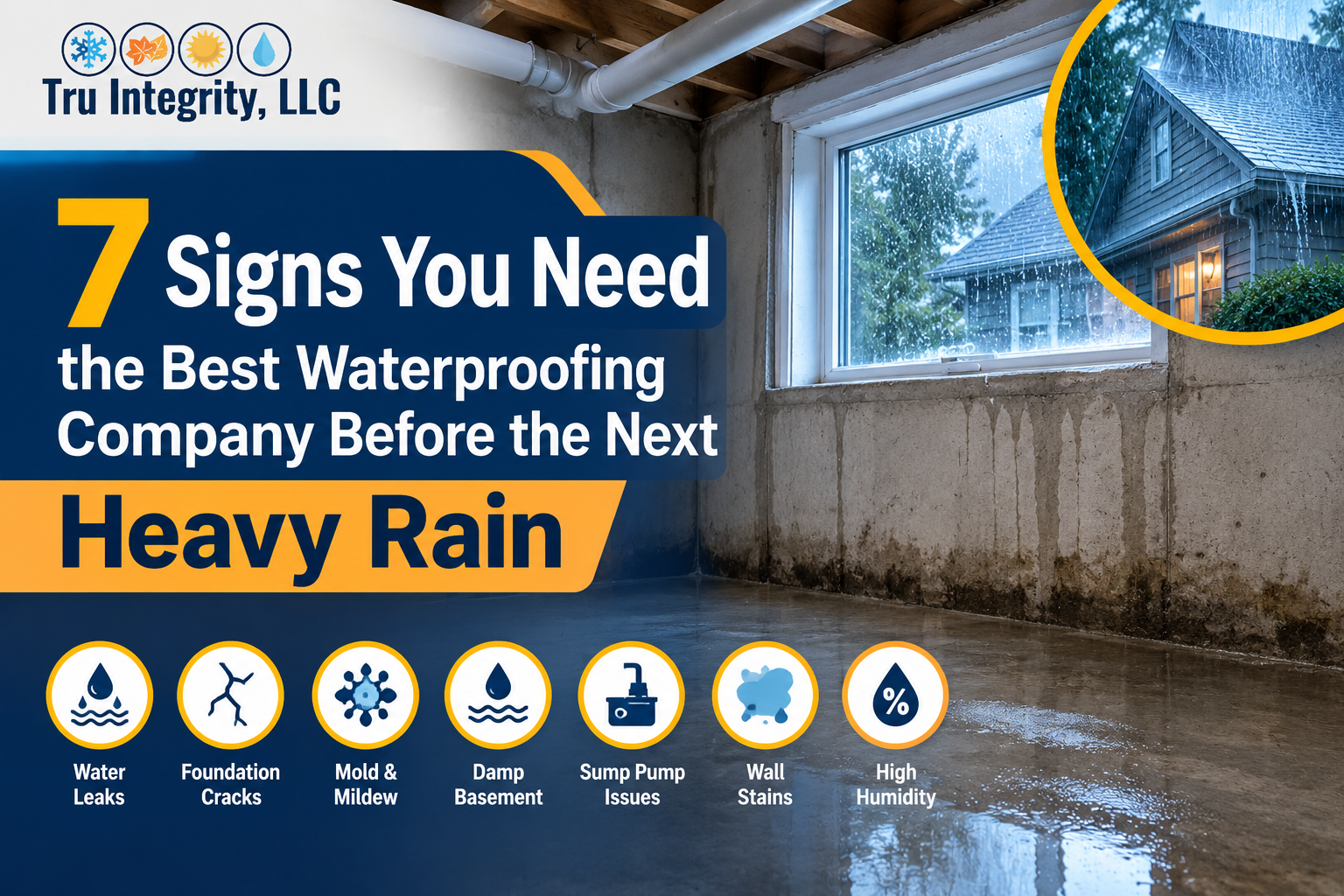
Heavy rain has a way of exposing problems your basement has been hiding for months. A small crack or a poorly draining yard may seem harmless on a dry day. Once the ground is saturated, that same weak spot can turn into a steady stream of basement water intrusion.
The good news is that most basements give warning signs first. If you learn to spot them early, you can act before a minor issue becomes expensive damage to your belongings, flooring, and foundation. Many homeowners start by searching for the best waterproofing service providing company in their area, and knowing what to look for makes that search much easier.
1. Water Leaks or Visible Damp Patches on Basement Walls
Dark stains, wet patches, or streaks running down the wall are classic signs of water seepage. Concrete and block walls are porous, so groundwater pressing against the foundation can find its way through tiny gaps, joints, or cracks.
The cause is often a combination of poor exterior drainage, aging wall sealants, or hydrostatic pressure from saturated soil. A single damp spot after a storm may point to one entry point, while several patches suggest a broader problem. If moisture keeps returning, waterproofing basement walls is usually more effective than wiping and repainting. A professional can trace where the water is coming from and recommend a fitting solution.
2. Standing Water or Persistent Dampness on the Basement Floor
Puddles near the walls, a damp slab, or water bubbling up through floor cracks all signal that moisture is getting in from below. Even a floor that dries quickly but gets wet again after every storm deserves attention.
Water often enters at the joint where the floor meets the wall, or through cracks in the slab. Because floors are harder to inspect once finished or covered, problems can go unnoticed for a long time. A professional assessment helps determine whether waterproofing the basement floor, improving interior drainage, or addressing the soil conditions outside is the right path.
3. Musty Odors and Persistent Basement Humidity
If your basement smells like wet cardboard or a damp towel, trust your nose. Musty odors usually mean excess moisture is lingering, and that creates conditions where mold and mildew can grow.
Humidity can come from hidden seepage, condensation, or poor ventilation. A dehumidifier can help with moisture control, but it treats the symptom rather than the source. If the smell returns after you dry the space out, it’s time to look for where the moisture is coming from. Persistent odors, especially alongside visible mold, are a good reason to call in a professional.
4. Cracks in Basement Walls or Floors
Not every crack is an emergency. Thin, hairline cracks are common as concrete cures and settles, and many stay dry. However, cracks that are widening, leaking, or accompanied by shifting or bowing walls deserve a closer look.
Pay attention to horizontal cracks, stair-step cracks in block walls, and cracks that show moisture after rain. These may point to water intrusion or foundation cracks linked to soil pressure. You can monitor small cracks by marking their ends with a pencil and date. If they grow or keep leaking, have a professional assess them. Proper crack repair addresses the cause, not just the surface.
5. Peeling Paint, Bubbling Finishes, or White Mineral Deposits
When moisture moves through a wall, it pushes against whatever finish is on it. Paint may peel, drywall may bubble, and wood paneling may warp.
You might also notice a white, chalky residue called efflorescence. It forms when water carries minerals to the surface and then evaporates, leaving the deposits behind. Efflorescence isn’t harmful on its own, but it’s a reliable indicator that water is passing through the wall. Repainting over it rarely lasts, since the underlying foundation moisture is still there.
6. Water Entering Through Basement Windows or Foundation Joints
Sometimes the problem starts outside. Clogged window wells, deteriorated window seals, downspouts that dump water beside the foundation, and soil that slopes toward the house can all send water straight toward your basement.
Check for water collecting near the foundation after rain, and look at gutters, downspout extensions, and window wells. Cleaning gutters and directing runoff away from the house are practical steps any homeowner can take. Still, if water continues to enter at window frames or where the wall meets the floor, you may need drainage solutions or joint sealing done by an experienced contractor.
7. Previous Basement Flooding or Recurring Water Problems After Rain
If your basement has flooded before, or leaks every time a big storm rolls through, don’t assume it was a one-time event. Water follows the path of least resistance, and that path rarely disappears on its own.
Cleaning up repeatedly is exhausting and costly. Identifying the underlying cause, whether it’s grading, drainage, cracks, or wall and floor entry points, is far more effective than drying out after each storm. Recurring problems are one of the clearest signs that it’s time for a professional inspection.
Why Hiring a Professional Waterproofing Company Before Heavy Rain Matters
The best time to fix a leak is before the storm, not during it. A qualified team can inspect your basement, look at exterior drainage, and identify likely water entry points. From there, they can recommend targeted repairs rather than a one-size-fits-all fix.
Professional basement waterproofing services may include crack repair, wall and floor waterproofing, drainage improvements, and moisture control measures. The right combination depends on your home’s age, soil, and the source of the water. Choosing the best waterproofing service providing company means finding one that diagnoses the problem first and explains its recommendations clearly. Acting before heavy rain also gives you time to schedule work calmly instead of reacting to an emergency.
How to Choose the Right Basement Waterproofing Contractor
Not all contractors approach the job the same way. As you compare options, consider the following:
- Experience: Ask how long they’ve worked on basements like yours and what types of problems they commonly address.
- A real inspection: A trustworthy contractor examines your basement and property before recommending anything.
- Clear recommendations: They should explain why a solution fits your situation, not just push one product.
- Written estimates: Look for itemized quotes that spell out the scope of work.
- Warranties, where offered: Ask what is covered and for how long, and get the terms in writing.
- Customer reviews: Read feedback from independent sources to understand others’ experiences.
Be cautious of anyone who promises instant, permanent results without looking at your home.
Can Epoxy Flooring Help Protect Your Basement?
Epoxy flooring is a durable, attractive finish that can resist stains, abrasion, and everyday wear. It can transform a bare concrete basement into a clean, usable space. But it’s important to understand that epoxy is a floor coating, not a complete waterproofing system.
If water is actively entering through cracks, joints, or the slab, or if hydrostatic pressure is pushing moisture upward, an epoxy coating may bubble, peel, or fail. Moisture conditions should be tested and the underlying cause addressed before any coating goes down. When combined with a proper assessment, epoxy waterproofing flooring services can be a smart finishing step after the water issue is resolved, providing a durable and easy-to-clean surface.
Protect Your Basement Before the Next Heavy Rain
Basements rarely fail without warning. Damp walls, musty air, widening cracks, and repeated leaks are all signals worth taking seriously. Addressing them early can help you avoid bigger repairs and keep your home’s lower level dry and usable.
If you’re looking for the best waterproofing service providing company to inspect your basement, Tru Integrity LLC is a professional basement waterproofing and home improvement provider that homeowners can contact to learn about relevant solutions. Visit their website to ask about an assessment before the next storm arrives.
Frequently Asked Questions (FAQs)
1. What are the first signs of basement water damage?
Early signs include damp patches on walls, musty odors, peeling paint, white mineral deposits, and small puddles after rain. These often appear before more serious flooding.
2. How can I prevent water from entering my basement during heavy rain?
Keep gutters clean, extend downspouts away from the foundation, and make sure soil slopes away from the house. Clear window wells and seal visible gaps. These steps help, but they may not resolve underlying drainage or structural issues.
3. When should I hire a professional basement waterproofing company?
Call a professional if leaks recur, cracks widen, mold appears, or water pools in the basement. It’s also wise to schedule an inspection before the rainy season if you’ve had problems in the past.
4. Can waterproofing basement walls and floors stop recurring leaks?
When the right solution is matched to the actual source of water, it can significantly reduce recurring leaks. Results depend on proper diagnosis, drainage, and installation.
5. Does epoxy flooring provide complete basement waterproofing?
No. Epoxy is a durable floor finish, but it doesn’t stop active water intrusion or hydrostatic pressure on its own. Moisture issues should be assessed and resolved before applying it.
 English
Join our community to interact with posts!